
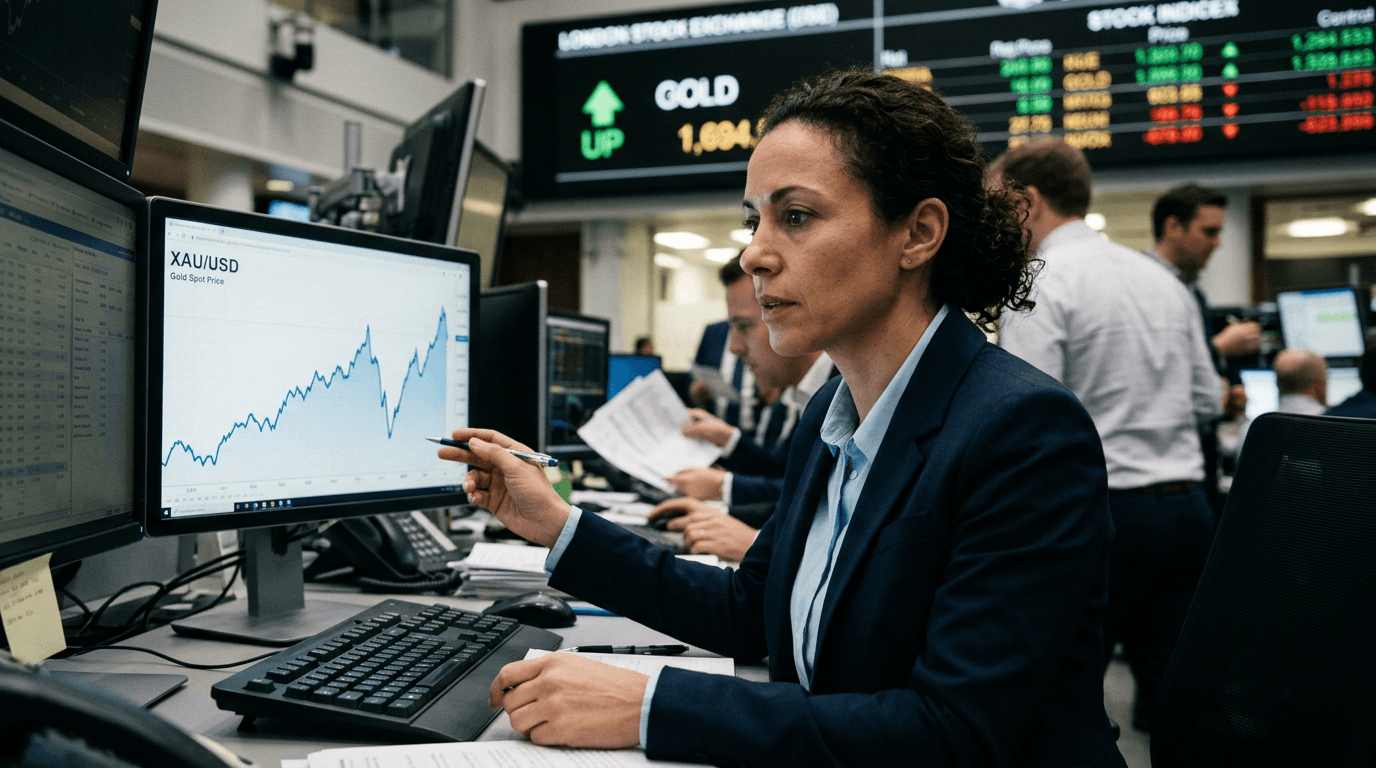
Gold’s latest rebound is a reminder that, in moments of stress, investors still reach for the oldest hedge in the book. After a sharp downdraft in the prior session, prices clawed back losses as geopolitical tensions flared and US data disappointed, sending capital back into traditional safe havens. The move has helped pull real yields lower and reignited interest in gold futures, underscoring how quickly sentiment can flip when risk perceptions change.
Safe-haven Demand Is Back In Focus
Gold’s safe-haven label isn’t just a cliché; it reflects how the metal tends to behave when uncertainty rises. When headlines hint at escalating conflict, trade disruptions, or political instability, investors reassess the balance of risk in their portfolios. Equities and higher-yielding assets suddenly look more vulnerable, while gold’s lack of credit risk and long history as a store of value become more attractive.
The latest bounce was driven by a familiar recipe: heightened geopolitical tensions and weaker US macro data. Softer economic releases raised questions about the durability of growth and the timing of future policy moves, while geopolitical risks revived fears of supply disruptions and financial contagion. In that environment, allocations to gold function both as insurance and as a way to express a view that the current regime of relatively stable inflation and steady growth may be under pressure.
Importantly, the rebound does not erase the preceding sell-off; instead, it highlights the push-and-pull forces acting on the metal. On one side sit risk-off flows and structural demand from central banks and long-term investors. On the other are the headwinds of higher nominal yields, a still-firm dollar, and periodic profit-taking after strong rallies. The interaction between these forces is what creates the volatility traders see day to day.
Macro Backdrop: Real Yields, Dollar, And Policy Expectations
Gold’s recovery coincided with a pullback in real yields, the inflation-adjusted returns on government bonds. When real yields fall, the opportunity cost of holding a non-yielding asset like gold declines, often giving the metal a tailwind. Weaker US data nudged markets to price in a slightly more dovish policy path, supporting that move in real yields and lending further support to bullion.
The US dollar remains another key variable. A strong dollar typically weighs on gold, which is priced in dollars globally, making it more expensive for non-US buyers. Conversely, any sign of dollar fatigue or renewed concerns about fiscal sustainability can invite renewed gold buying. Recent price action suggests that while the dollar backdrop is still a headwind, it is no longer overwhelming safe-haven flows when geopolitical risk spikes.
Against this backdrop, major institutions continue to project a constructive medium-term outlook for gold. Research houses, including J.P. Morgan Global Research, see central bank and investor demand remaining robust, with forecasts for elevated purchases through 2026 and beyond. That structural bid provides context for short-term swings: even when prices correct, long-term demand trends may still be quietly tightening the overall supply-demand balance.
What The Rebound Signals For Market Sentiment
The speed of the latest recovery offers useful information about underlying sentiment. A shallow dip that is quickly bought often signals that investors are looking for excuses to add exposure rather than cut it. In futures markets, renewed long positioning following a sell-off can indicate that speculative traders still see favorable risk–reward, especially when volatility creates opportunities to buy dips rather than chase breakouts.
At the same time, the fact that it took fresh geopolitical headlines and weaker data to spark the bounce shows how dependent gold remains on catalysts. Passive, steady buying from long-term allocators may be supportive, but it is the incremental flows triggered by news that drive short-term price action. For traders, that means the tape can quickly shift from complacency to fear and back again, with gold acting as a barometer of market anxiety.
For portfolio managers, the rebound reinforces the idea that gold remains an effective hedge not just against inflation, but also against “unknown unknowns” in the macro and geopolitical landscape. Allocations do not have to be large to be meaningful; even modest exposure can reduce portfolio drawdowns in risk-off episodes, provided it is sized and timed thoughtfully.
Implications And Takeaways For Traders
For traders operating in live or simulated environments, the latest move in gold carries several practical implications:
1) Respect the macro calendar and headline risk Gold is highly sensitive to economic data and geopolitical news. Employment reports, inflation prints, central bank meetings, and major political events can all trigger abrupt repricing. Building a trading plan that accounts for scheduled releases—and adjusts position sizing around them—can help manage gap risk.
2) Watch real yields and the dollar, not just the gold chart Gold does not trade in isolation. Monitoring US real yields, the dollar index, and broader risk sentiment (equities, credit spreads, volatility indices) provides context for whether a move is likely to extend or fade. For example, a gold rally that coincides with falling real yields and a softening dollar has a stronger macro backbone than a move driven purely by intraday technical flows.
3) Differentiate between structural and tactical drivers Central bank buying, ETF flows, and long-term investor demand form the structural backdrop. Geopolitical headlines, data surprises, and positioning squeezes provide tactical catalysts. Traders who can distinguish between these layers are better able to decide whether to fade spikes, ride momentum, or step aside.
4) Balance conviction with risk management Safe-haven flows can be powerful but also reversible. Using clear stop-loss levels, defining risk per trade, and avoiding over-leverage are essential—especially when trading a volatile asset that reacts to news outside any single trader’s control.
STRATEGIES TO NAVIGATE GOLD’S VOLATILITY
In practice, traders can respond to the current environment with a mix of directional and risk-management strategies:
Short-term intraday traders may focus on trading around key levels established during the prior session’s sell-off and the subsequent rebound. Breaks above or rejections from these levels can offer high-probability setups, especially when confirmed by changes in volume and order flow.
Swing traders might look for confirmation that the recovery is more than a one-day event. That could include a series of higher lows, stabilization in real yields, or evidence that ETF inflows are picking up again. Combining technical signals with macro triggers can help filter out noise.
For those focused on portfolio hedging, staggered entries can reduce timing risk. Rather than allocating all at once after a spike in geopolitical tension, scaling into positions over time allows for flexibility if the news cycle calms or if policy expectations shift.
Simulated trading environments are particularly useful in this context. They allow traders to test how different strategies—trend-following, mean reversion, news-driven approaches—perform during periods of heightened volatility without putting capital at risk. Tracking performance across multiple gold regimes (rallies, corrections, consolidations) can build the confidence and discipline needed when transitioning to real markets.
CONCLUSION: GOLD’S ROLE IN A FRAGILE REGIME
Gold’s recovery of its prior session losses is less about one day’s price action and more about what it reveals: safe-haven demand remains alive whenever the macro and geopolitical backdrop looks fragile. The metal continues to sit at the intersection of real yields, currency dynamics, risk sentiment, and structural demand from central banks and investors.
For traders and investors, the message is clear. Gold is not a one-way bet, but a dynamic asset whose role can shift between offensive opportunity and defensive hedge. Staying attuned to cross-asset signals, respecting the impact of news, and integrating disciplined risk management can turn episodes like this rebound from sources of anxiety into opportunities for informed decision-making—whether in live markets or in a simulated trading environment designed to sharpen your edge.