
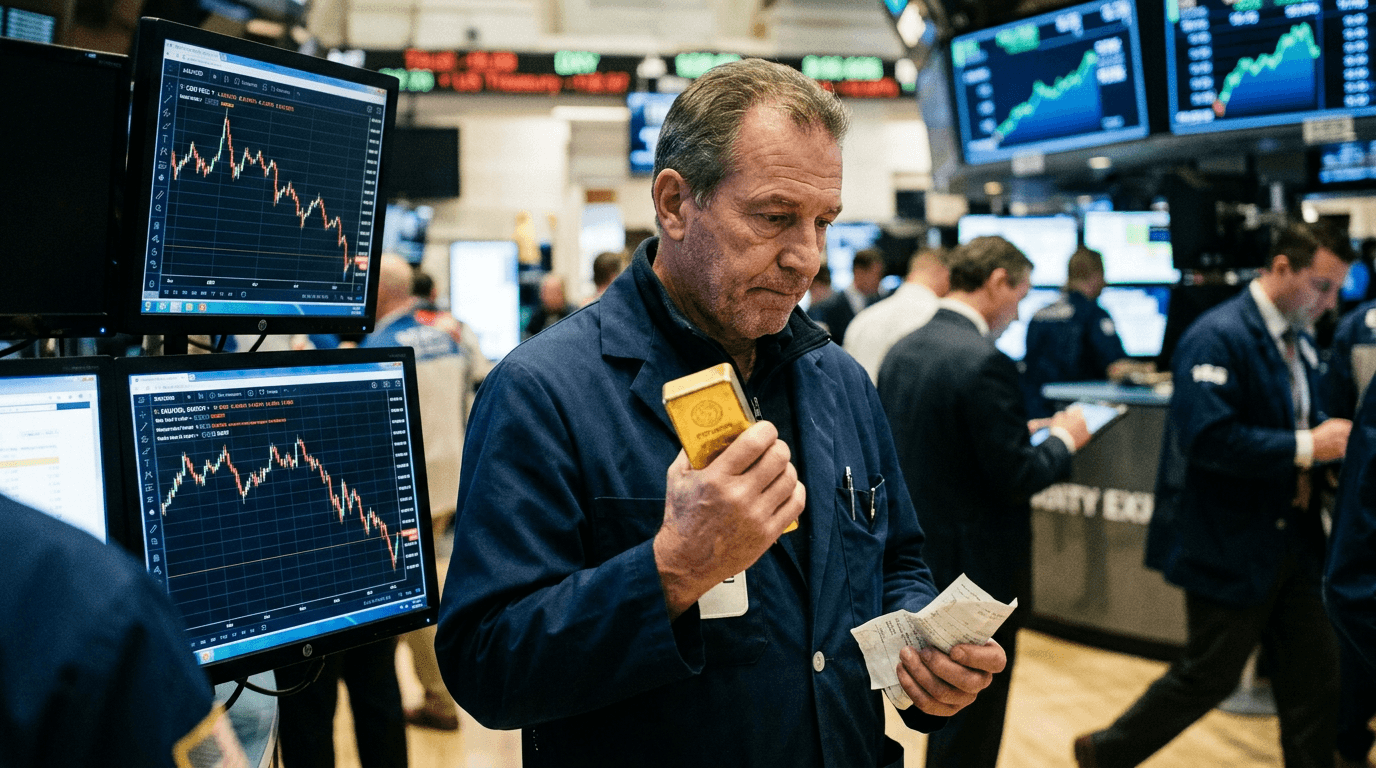
Gold prices staged a modest recovery this week as geopolitical tensions and weaker economic data reignited safe-haven demand, yet the precious metal remains on track for its first weekly loss in five weeks. This contradiction illustrates one of the most complex dynamics in modern markets: traditional safe-haven flows are competing with structural headwinds that have proven just as powerful. For traders monitoring bullion markets, understanding what's driving this paradox is essential for positioning through the remainder of 2026.
The Rebound Mechanics
Gold futures settled approximately 0.8% higher at $4,568.50 per ounce as investors rotated capital toward defensive assets amid lingering Middle East tensions and uncertainty surrounding the fragile U.S./Iran ceasefire. The geopolitical risk premium that typically supports precious metals during periods of international conflict has reasserted itself, drawing institutional capital into bullion as portfolio insurance against equity market volatility.
Central banks have been particularly active, with China extending its gold accumulation streak to 14 consecutive months. This structural demand for physical gold provides a persistent floor beneath prices and reflects confidence among major policy institutions in the longer-term value of precious metals. The rebound this week benefited from technical buying as well, with bargain hunters taking positions after prices tested support levels near $4,100 earlier in the month.
The Weekly Decline Puzzle
Despite these tailwinds, gold remains caught in an unusual bind. The rebound's inability to build lasting momentum reflects a fundamental shift in what's currently driving capital allocation decisions. Rising U.S. Treasury yields have emerged as gold's most formidable opponent, increasing the opportunity cost of holding a non-yielding asset. When government bonds offer attractive risk-adjusted returns without requiring investors to take on additional risk, the relative case for bullion deteriorates.
A stronger U.S. dollar has compounded this headwind. As the dollar appreciates, gold becomes more expensive for international buyers whose returns are denominated in other currencies. This dynamic has proven potent enough to overwhelm safe-haven flows, suggesting that near-term financial conditions matter more to market participants than longer-term geopolitical risks. The market is essentially making a trade-off between immediate yield considerations and crisis protection, with yield currently winning.
Context Matters For Perspective
Placing recent price action in proper context reveals resilience beneath the surface volatility. Gold peaked near $5,500 per ounce earlier in 2026, representing the best start to a year in decades. The subsequent decline of approximately 25 percent brought prices to multi-week lows but has now stabilized in the $4,500 to $4,650 range. This consolidation pattern is typical after sharp rallies and does not indicate a fundamental breakdown in the underlying bull case.
The first quarter of 2026 demonstrated that gold's structural appeal remains intact. Central bank demand tightened available supply, while geopolitical uncertainty persisted throughout the period. Real yields remain suppressed by market expectations for additional Federal Reserve rate cuts, a condition that typically supports precious metals valuations. Major investment banks including JPMorgan, HSBC, and Morgan Stanley have maintained or raised 2026 price targets, with JPMorgan projecting gold could reach $6,300 by year-end.
The Yield-rate Dynamics Ahead
Current market pricing suggests two Federal Reserve rate cuts for 2026, a forecast that has shifted multiple times as inflation data and growth signals have sent conflicting messages. This uncertainty creates choppy conditions for gold, but it also provides a potential catalyst for sustained strength if rate-cut expectations accelerate. Should inflation remain elevated and force the Fed to delay or reduce its rate-cut schedule, the opportunity cost calculation that currently pressures gold would improve considerably.
Conversely, if the dollar continues strengthening on the back of higher yields, gold will face persistent headwinds regardless of geopolitical developments. The key for traders lies in monitoring yield spreads and the Fed funds futures market as proxies for rate expectations. When real yields turn negative or when the market begins pricing in more aggressive rate cuts, safe-haven flows should overcome resistance and propel gold higher.
What Traders Should Watch
This week's rebound should not be mistaken for the beginning of a sustained rally, nor should the weekly decline be interpreted as the start of a bear market. Instead, current price action reflects the natural tension between multiple powerful forces competing for influence over asset allocation. Geopolitical risk remains genuinely elevated, institutional safe-haven demand is real, and central bank buying continues to absorb supply. Simultaneously, financial conditions—particularly yields and dollar strength—are exerting restraining pressure.
The path forward likely involves continued volatility as markets debate inflation versus growth concerns and recalibrate monetary policy expectations. However, the fundamental structure supporting higher gold prices remains in place. Trading this environment requires patience and disciplined position management rather than chasing short-term momentum.
Gold's current weakness represents a pause in a longer-term appreciation trend rather than a reversal of the underlying bull case. Traders should recognize that temporary price weakness does not invalidate the structural demand from central banks or the cushion provided by genuine geopolitical uncertainty. The weekly loss may ultimately prove to be merely a speed bump on the path toward the higher price targets projected by major financial institutions.