
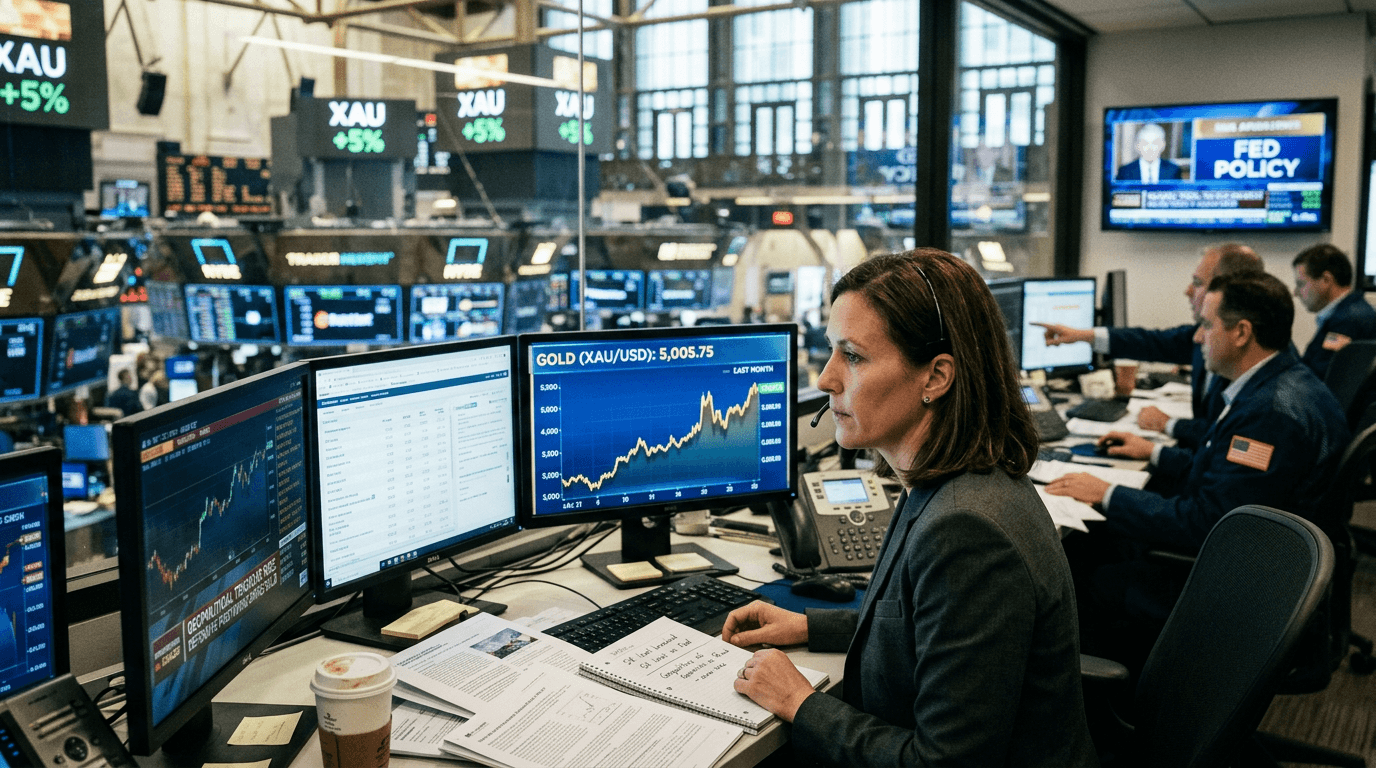
Gold has staged a meaningful recovery in recent weeks, climbing back above the $5,000 per ounce level as investors seek refuge from market turbulence and escalating geopolitical tensions. Yet this rebound tells a more complicated story than a simple flight to safety. While renewed demand for defensive assets has propelled prices higher, persistent inflation concerns linked to rising energy costs are capping gains and creating a tension between two powerful market forces. Understanding this dynamic is critical for traders navigating today's uncertain landscape.
The Safe-haven Rally Takes Hold
Gold's recent strength reflects a classic response to market stress. Equity volatility, currency fluctuations, and mounting risk aversion have driven investors back toward traditional safe-haven assets. When stock markets experience sharp corrections and uncertainty spreads across financial markets, gold becomes an attractive alternative for capital seeking stability. This pattern has played out repeatedly in 2026, with each period of heightened risk pushing additional flows into bullion.
Geopolitical developments have amplified this dynamic considerably. Tensions in key regions, including Middle East instability and broader international uncertainty, remind investors of the unpredictable nature of global markets. These risks lack easy resolution, making gold's defensive appeal particularly compelling. Unlike equities or currencies, which can suffer from specific geopolitical or economic events, gold benefits from the broadest possible interpretation of what constitutes a crisis. From the trader's perspective, this expansive appeal explains why the metal has recovered so reliably despite macroeconomic headwinds.
The recovery above $5,000 per ounce is technically significant as well. This level represents a psychological and chart-based support that had held during recent weakness. When prices rebounded through this barrier, it triggered additional technical buying as traders recognized the formation. Technical levels matter because they're watched by large institutional market participants, creating self-fulfilling dynamics that can sustain price moves.
The Inflation Ceiling
What makes this rebound particularly interesting is what it hasn't done. Despite recapturing $5,000, gold hasn't launched toward the record highs near $5,600 seen earlier in 2026. This stalling reflects powerful countervailing forces, with inflation concerns chief among them. Rising oil prices, particularly stemming from geopolitical disruptions, have pushed inflation expectations higher. When inflation accelerates, it typically puts pressure on real returns across asset classes, including gold, unless central banks respond with rate cuts or other accommodative policies.
The relationship between inflation and gold is more nuanced than investors sometimes assume. While gold is traditionally viewed as an inflation hedge, it doesn't automatically rise in lockstep with price increases. Higher inflation can actually pressure gold prices if it leads to higher real interest rates or reduced central bank easing. In the current environment, the concern is precisely this: that elevated oil-driven inflation will force the Federal Reserve to maintain higher rates for longer, dampening gold's appeal relative to interest-bearing alternatives.
The US dollar has compounded this dynamic. A stronger dollar makes gold more expensive for international buyers, reducing demand from abroad. The dollar's resilience, supported by expectations of elevated US interest rates, has created significant headwinds. For gold to break decisively higher, these factors need to shift. Either the Fed must convincingly signal a pivot toward easing, or inflation expectations must moderate, allowing real interest rates to fall.
Central Bank Demand Provides Foundation
Despite these headwinds, gold maintains meaningful support from an often-overlooked source: official central bank purchases. Major institutions continue accumulating bullion reserves as a strategic asset, driven by geopolitical risks and shifting monetary policy dynamics. Chinese central bank purchases have been particularly consistent, reinforcing gold's structural demand floor. This official buying creates a backstop beneath prices, even when sentiment turns cautious. For traders, this represents a key consideration: the market dynamics supporting gold involve layers beyond simple risk-on, risk-off sentiment.
The Practical Trading Landscape
For active traders, the current environment demands careful calibration. Gold has proven its resilience as a defensive asset, supporting positions above $5,000. However, inflation-driven uncertainty means additional upside may face resistance. Several actionable approaches emerge from this framework. Monitoring safe-haven flows during equity weakness can signal favorable entry points for tactical positions. Watching dollar movements provides early warning signals for directional bias, as weakness typically favors gold. Following central bank activity and commentary on monetary policy offers crucial context for assessing the outlook.
Technical levels remain valuable guides. The $5,000 support and recent highs around $5,200-5,300 provide reference points for position management. Risk-reward calculations should account for the fact that breakouts above resistance may prove challenging given inflation headwinds, while support levels could attract buyers seeking value.
The Balanced Outlook
Gold's recent rebound demonstrates the metal's enduring appeal during uncertain times. Safe-haven demand remains potent enough to drive meaningful rallies when risk aversion peaks. Yet this recovery also highlights the constraints imposed by the current macroeconomic environment. Inflation concerns and interest rate expectations are genuine factors that limit upside and create downside risk if sentiment shifts.
For traders and investors, this suggests a balanced approach. Gold offers genuine portfolio benefits during market stress, but expectations should remain measured. The metal's role as a portfolio hedge remains valid, while its near-term directional potential hinges on how inflation and Fed policy ultimately evolve.
---