
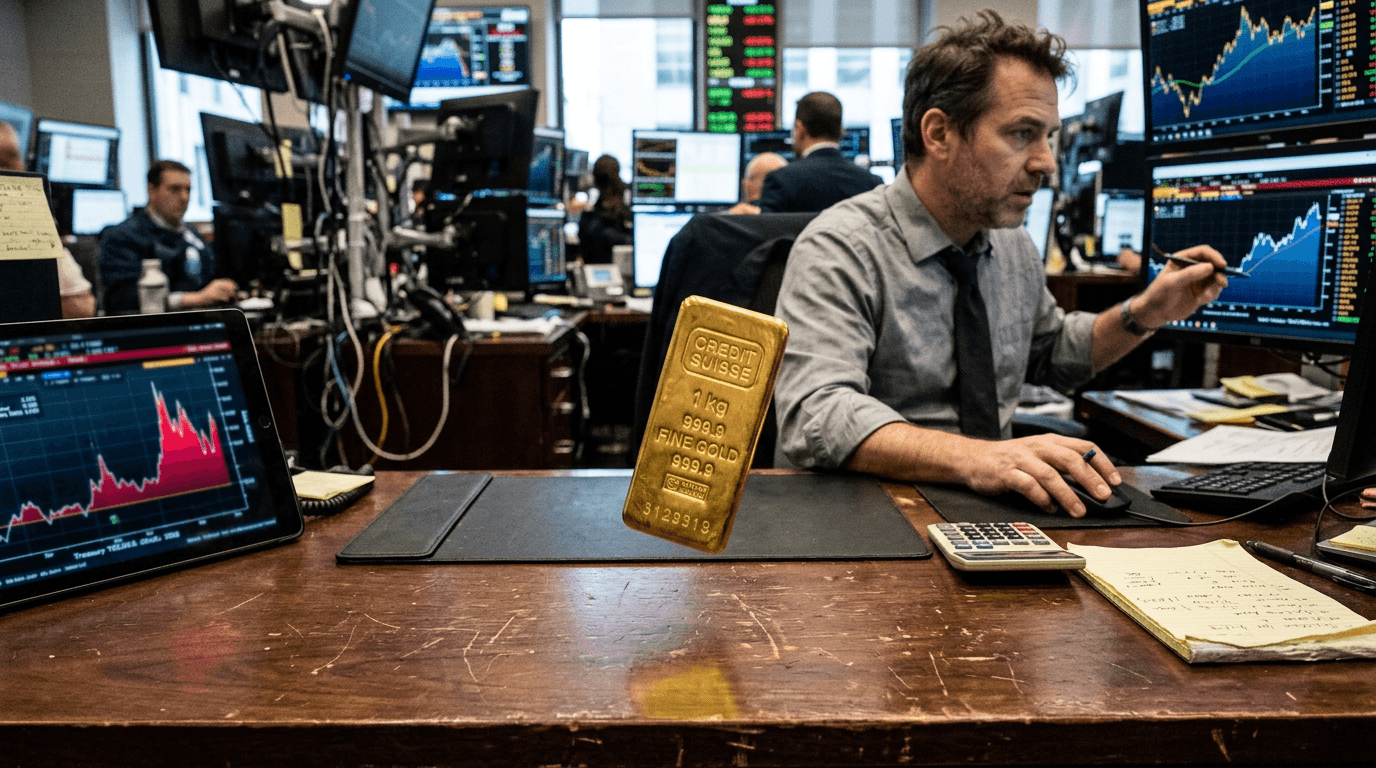
Gold has bounced as risk sentiment deteriorates, reminding investors why the metal still commands a premium during periods of stress. Yet despite the latest safe-haven bid, prices remain on track for a second consecutive weekly loss, underscoring how tougher macro conditions are quietly reshaping gold’s risk–reward profile in 2026.
Safe-haven Demand Returns
Each time geopolitical tensions flare or markets wobble, gold’s traditional role as a crisis hedge comes back into focus.
Recent bouts of stress — from renewed tensions in key energy-producing regions to lingering uncertainty around major power conflicts — have pushed investors toward defensive positioning. When headlines turn darker, capital tends to rotate out of cyclical risk assets and into perceived stores of value. Gold, with its long history as a monetary anchor and portfolio hedge, is usually first in line.
Flows into bullion-backed products, increased retail interest, and short covering from leveraged traders collectively supported a rebound after a sharp pullback. For many participants, the logic is straightforward: if the range of potential outcomes widens, especially around geopolitical or policy risk, holding some allocation to gold can help buffer tail events in broader portfolios.
But this time, the safe-haven rally is colliding with a very different macro backdrop than in previous crises. That’s why, even as prices recover from recent lows, the market is still headed for a weekly loss.
How Gold Can Rally And Still Finish The Week Lower
At first glance, it can seem contradictory that gold is “rebounding” while remaining on track for a weekly decline. The explanation lies in how markets price risk across different timeframes.
Earlier in the week, gold suffered a sizeable drop as traders recalibrated expectations for central bank policy and repriced risk across global assets. That initial sell-off created a deep enough hole that even a later surge in safe-haven demand hasn’t entirely filled it.
Think of it in three layers
1. Early-week macro repricing Stronger economic data and hawkish commentary from policymakers led markets to trim expectations for the number and timing of interest-rate cuts. That pushed real yields higher and supported the US dollar — both typically headwinds for gold. Prices fell sharply as systematic and macro funds adjusted positions.
2. Mid-week stabilization Once the initial adjustment in rates and FX had run its course, selling pressure in gold began to slow. Value-oriented buyers and long-term allocators stepped back in, viewing the lower levels as an opportunity to rebuild hedges.
3. Late-week safe-haven bid Escalating geopolitical anxiety and renewed volatility in risk assets triggered a more classic flight-to-safety. That drove the visible rebound — but not enough to fully reverse the earlier drawdown, leaving gold still weaker on the week.
For traders, the lesson is crucial: weekly performance can mask sizable intraday and intraweek swings. A “down week” doesn’t mean there was no robust demand; it often means opposing forces have been fighting for control at different points in time.
Macro Headwinds: Oil, Rates, And The Dollar
The safe-haven tailwind is real, but it is running into three powerful macro headwinds: rising oil prices, reduced rate-cut bets, and a firmer US dollar.
Rising oil prices Crude’s move higher amplifies inflation concerns and complicates the central-bank narrative. Higher energy costs feed into broader price pressures, raising the risk that inflation remains sticky. Historically, persistent inflation can be supportive for gold, but the short-term effect is more nuanced. If markets fear central banks will lean more hawkish to contain energy-driven inflation, they may push yields higher — a negative for non-yielding assets such as gold.
Reduced rate-cut expectations Not long ago, markets were pricing multiple rate cuts over the coming year. As data has surprised on the upside and inflation has proven less cooperative, those expectations have been pared back. The result is a “higher for longer” interest-rate environment. Elevated real yields increase the opportunity cost of holding gold, since bullion does not generate income. When that cost rises, some investors rotate to interest-bearing alternatives like Treasuries, putting a ceiling on gold rallies.
Stronger US dollar Gold is priced globally in dollars. When the dollar appreciates, gold becomes more expensive for holders of other currencies. This tends to dampen non-US demand and can offset safe-haven inflows from dollar-based investors. A firm dollar also signals tighter global financial conditions, reinforcing the drag from higher rates.
Together, these factors explain why, even with visible stress in geopolitics and risk assets, gold’s upside has been capped. The market is balancing fear-driven buying against a macro environment that is structurally less friendly to sustained, unchecked rallies.
Trading Implications: Navigating A Rebound In A Downtrend
For active traders — whether in live markets or simulated environments — gold’s current behavior offers several practical lessons.
Differentiate time horizons A market that is down on the week but rebounding into the close often reflects competing narratives. Shorter-term traders may focus on the momentum of the rebound, while swing and positional traders remain anchored to the broader trend of lower weekly closes. Align trade duration with the driver you’re trading: macro policy themes tend to dominate over days and weeks; headline-driven safe-haven flows may matter most over hours.
Watch real yields, not just nominal rates Gold’s sensitivity is strongest to real (inflation-adjusted) yields. A rise in nominal yields that is offset by rising inflation expectations is different from a move in real yields. Monitoring breakevens and inflation swaps alongside bond yields can help clarify whether rate moves are truly negative for gold.
Respect key technical zones When fundamentals send mixed signals, technical levels often gain importance. Areas where gold previously found support or resistance can become focal points for order flow. Rebounds that stall below prior resistance zones suggest rallies are more likely to be corrective than the start of a new trend. In contrast, a decisive break through such levels — especially on rising volume — can signal that safe-haven demand is overwhelming macro headwinds.
Risk management over prediction Gold’s dual role as both a macro asset and a crisis hedge makes it uniquely sensitive to surprise events. That argues for disciplined position sizing, clear invalidation levels, and scenario planning. Traders should consider how portfolios might behave if either side of the tug-of-war (rates vs. risk aversion) suddenly dominates.
What To Watch Next
The path for gold from here will hinge on which force proves more persistent: geopolitical stress and risk aversion, or firm growth and higher-for-longer policy.
Key watchpoints include
- Upcoming inflation and labor data that could shift rate expectations
- Central-bank communication that clarifies the trajectory of policy easing
- The evolution of tensions in key geopolitical hotspots
- Developments in energy markets, particularly whether oil continues to grind higher or stabilizes
If macro data softens and rate-cut expectations revive while geopolitical risks remain elevated, gold could find a more durable base and potentially break its pattern of weekly losses. Conversely, if economic resilience and hawkish rhetoric persist, rallies driven by safe-haven flows may continue to fade into broader consolidation or downside.
For now, the latest rebound, set against a still-negative weekly print, tells a clear story: in 2026, gold is no longer trading on a single narrative. It sits at the intersection of competing forces — fear versus yield, insurance versus opportunity cost. Understanding that tension is essential for anyone looking to trade, hedge, or allocate to the metal in a disciplined way.