
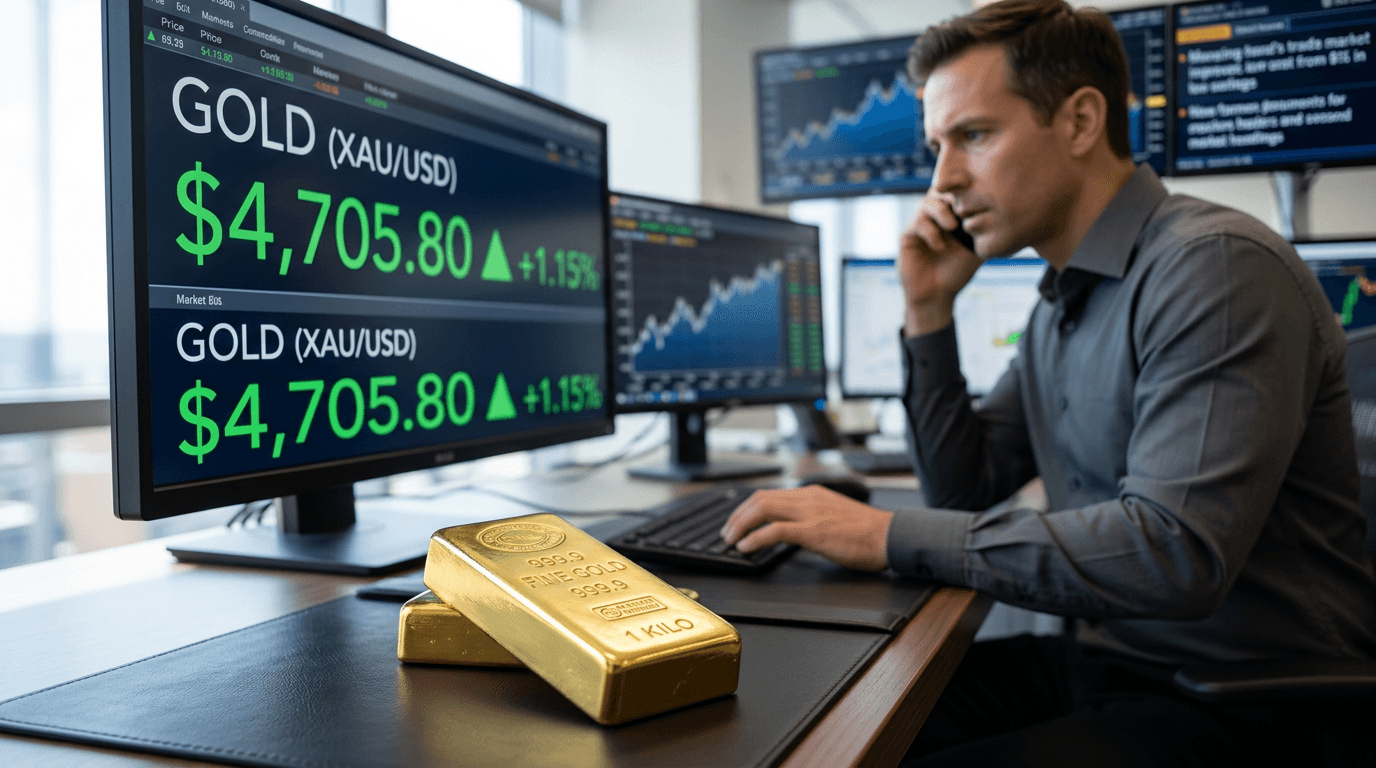
Gold has experienced a significant rebound, climbing back above the $4,700 per ounce mark this week due to heightened safe-haven demand amidst escalating geopolitical tensions and changing market dynamics. This resurgence highlights a core principle in global markets: during periods of uncertainty, investors gravitate towards assets that are perceived as secure stores of value. For traders engaging with the markets and utilizing SimFi platforms, this recovery provides crucial insights into how macroeconomic factors and geopolitical events shape commodity prices, offering opportunities for simulation-based learning and strategic anticipation.
Drivers Of Safe-haven Demand
The recent uptick in gold prices illustrates a traditional safe-haven buying pattern. As global tensions rise and economic uncertainty intensifies, investors move their capital towards assets like gold, which have a long-standing reputation for preserving value during times of crisis. Market analysis indicates a substantial increase in demand for safe-haven assets, spurred by rising geopolitical tensions, particularly those related to instability in the Middle East. This behavior is not arbitrary—it follows predictable trends that traders can analyze and prepare for.
Currently, multiple factors contribute to this uncertainty. The situation in the Middle East, especially around the Strait of Hormuz, has sparked concerns regarding energy supply. Tehran's control over this crucial waterway, coupled with restricted international traffic, poses real threats to global oil supplies. As risks in energy prices increase, so do concerns about inflation, prompting investors to diversify their portfolios by adding precious metals.
Geopolitical Tensions And Market Volatility
A key driver for this week's gold recovery is the cautious optimism surrounding potential progress in US-Iran peace talks. Recent reports indicate that Iranian Foreign Minister Abbas Araghchi was set to arrive in Islamabad, with sources suggesting a "high likelihood of a breakthrough" in the ongoing negotiations between the United States and Iran. This development creates an intriguing scenario: the mere possibility of reduced tensions can generate buying opportunities for traders who recognize that markets often preemptively price in relief scenarios.
Nonetheless, the situation remains fluid. The continued blockade of the Strait of Hormuz keeps energy prices elevated, sustaining inflation risks that bolster ongoing safe-haven demand for gold. Earlier in the week, gold prices had dipped towards $4,700 as markets contended with the uncertainty, but the rebound reflects a recalibration of risk perceptions as peace negotiations progressed. This pattern—volatility followed by directional moves based on news—is precisely the kind of price action that traders can practice identifying and capitalizing on within simulated environments.
Impact On Federal Reserve Expectations
The interplay between geopolitical tensions and monetary policy has significant implications for traders. Elevated oil prices resulting from Middle East concerns feed into inflation expectations, which, in turn, influence Federal Reserve policy decisions. When energy prices surge and inflation risks mount, markets tend to lower expectations for aggressive interest rate cuts, which has historically supported gold prices. Gold, which does not yield interest income, becomes more attractive when rate cut expectations are dampened by inflation pressures.
Current market conditions suggest this mechanism is active. Elevated oil prices due to the Strait of Hormuz situation bolster inflation expectations, keeping Fed rate cut bets restrained. This creates a conducive environment for gold, even as a stronger US dollar might typically exert downward pressure on the precious metal. Understanding these interconnected relationships—between geopolitical events, energy markets, inflation expectations, and monetary policy—is critical for developing genuine trading expertise.
Key Takeaways For Traders
The recent recovery in the gold market provides several key insights for traders monitoring commodity markets:
Firstly, geopolitical developments directly impact commodity prices through various channels, including direct supply concerns, inflation expectations, currency effects, and monetary policy implications. Traders who comprehend these connections gain an analytical edge.
Secondly, safe-haven demand remains a formidable force in times of uncertainty. When multiple risk factors converge—geopolitical tensions, energy supply concerns, and inflation risks—precious metals draw sustained buying pressure, supporting prices over extended periods.
Thirdly, the timing of news is crucial. The market had already factored in a bearish scenario before the recovery, creating an opportunity for traders who anticipated positive developments. The emergence of possible peace progress prompted relief buying.
Finally, volatility around significant levels like $4,700 creates trading opportunities for those utilizing simulation platforms to refine their identification and execution skills. Understanding support and resistance levels, recognizing inflection points, and positioning ahead of likely moves are core trading competencies.
Looking Forward
Gold's recovery above $4,700 reflects the ongoing interaction between various macroeconomic and geopolitical forces influencing commodities markets in 2026. The performance of the precious metal will likely remain sensitive to developments concerning Middle East tensions, energy prices, inflation trajectories, and Fed policy signals. Traders who consistently analyze these factors and practice decision-making in simulated settings will be best equipped to navigate the opportunities and challenges presented by continued volatility in precious metals markets.