
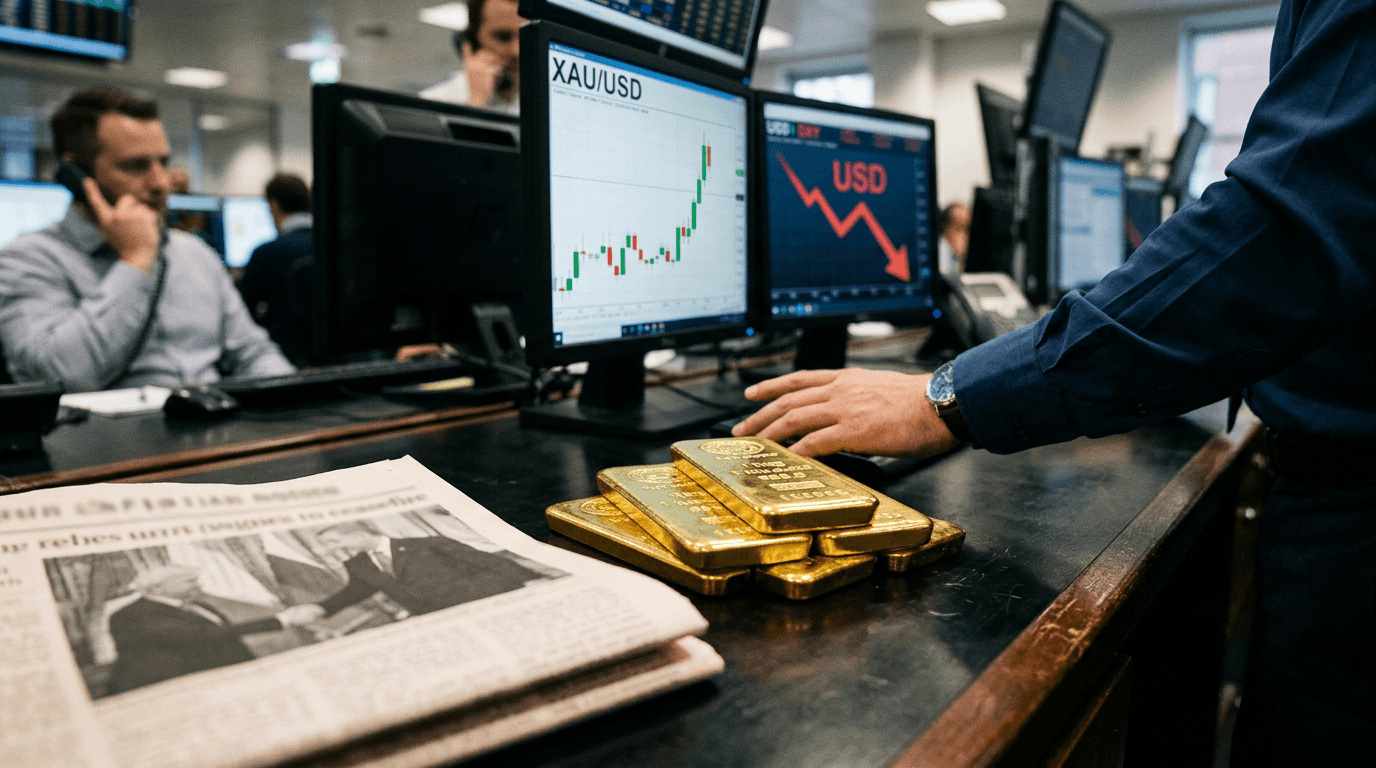
Gold prices have recently soared to unprecedented heights, reaching between $4,777 and $4,850 per ounce, as investors navigate a confluence of unexpected macroeconomic factors. This surge is driven by a surprising catalyst: the progress toward a US-Iran ceasefire and dovish signals from the Federal Reserve, which have collectively weakened the US dollar. Traditionally seen as a headwind for gold, the dollar's decline has paradoxically bolstered demand for this classic safe-haven asset, challenging conventional market expectations and prompting traders and investors to rethink their strategies.
The Unexpected Link Between Peace And Precious Metals
Geopolitical de-escalation usually implies reduced demand for safe-haven assets like gold. Yet, the current scenario paints a more complex picture. As US-Iran tensions eased with ceasefire talks, investors felt encouraged to move away from the dollar, reallocating capital into riskier assets. This shift, ostensibly beneficial for equities, inadvertently provided a boost to gold by weakening the dollar.
Historically, the dollar thrives during global uncertainty, but as the perceived risk premium decreased, so did the currency's strength. Investors, now less reliant on dollar safety, redirected capital to riskier ventures, dampening dollar demand. For gold, this dollar depreciation was advantageous. Globally priced in dollars, a weaker dollar makes gold more accessible to international buyers, enhancing its attractiveness in regions like Asia and Europe where purchasing power improves.
The Federal Reserve's Influence
Beyond geopolitical developments, the Federal Reserve's dovish tone has further lifted gold's appeal. Expectations of fewer interest rate hikes have diminished the opportunity cost of holding non-yielding assets like gold, making it more attractive compared to interest-bearing options like Treasury bonds.
With falling interest rate forecasts, the dollar weakens further, amplifying gold prices. The sharp decline in Treasury yields, driven by reduced rate-hike expectations, has drawn investors to gold as protection against currency devaluation and fiscal uncertainties that accompany prolonged low rates. This interplay of lower real rates and a weaker dollar has been potent enough to counteract traditional geopolitical risk factors.
Underlying Structural Support
Beyond immediate market reactions, structural factors continue to support gold prices. Central banks, particularly in BRICS countries, are actively increasing their gold reserves, providing market stability and supporting higher prices. Bank of America predicts gold could reach $5,000 per ounce by 2026, citing ongoing dollar weakness, rising US debt, and central bank demand as key drivers.
Gold's status as an inflation hedge remains crucial amid persistent macroeconomic uncertainties. With concerns about currency devaluation and fiscal imbalances, investors increasingly view gold as a strategic portfolio asset. Its capacity to maintain purchasing power across various market conditions remains attractive to savvy investors managing risks.
Market Technicals And Trading Trends
Gold futures have jumped by $92.50 per ounce (+2.0%) to settle at $4,777.20, fueled by a combination of dollar weakness, lower Treasury yields, and eased inflation concerns. Trading volumes in gold futures and ETFs have surged, reflecting a significant shift in investor sentiment. Technical analysis indicates a robust breakout, with gold surpassing key resistance levels, suggesting potential for further rallying.
However, traders should remain vigilant as ceasefire volatility poses a risk. Reports of potential agreement breaches could trigger rapid price reversals, with initial announcements causing sharp upward movements followed by reversals amid doubts about the agreement's durability.
Implications For Traders And Investors
This gold rally exemplifies how modern financial markets react to intricate, interconnected forces. Successful traders recognize that peace isn't necessarily bearish for gold. They understand the underlying macroeconomic drivers and adjust their positions accordingly. The combination of a weakening dollar, dovish central bank signals, and structural central bank support creates a strong foundation for higher gold prices, even amidst reduced geopolitical tensions.
Looking ahead, market participants should stay agile, monitoring diplomatic developments, Federal Reserve communications, and currency fluctuations—the true influencers of gold's trajectory. Gold's dual role as both a crisis hedge and currency safeguard ensures its ongoing relevance in diversified investment strategies, underscoring its significance in today's intricate macroeconomic landscape.