
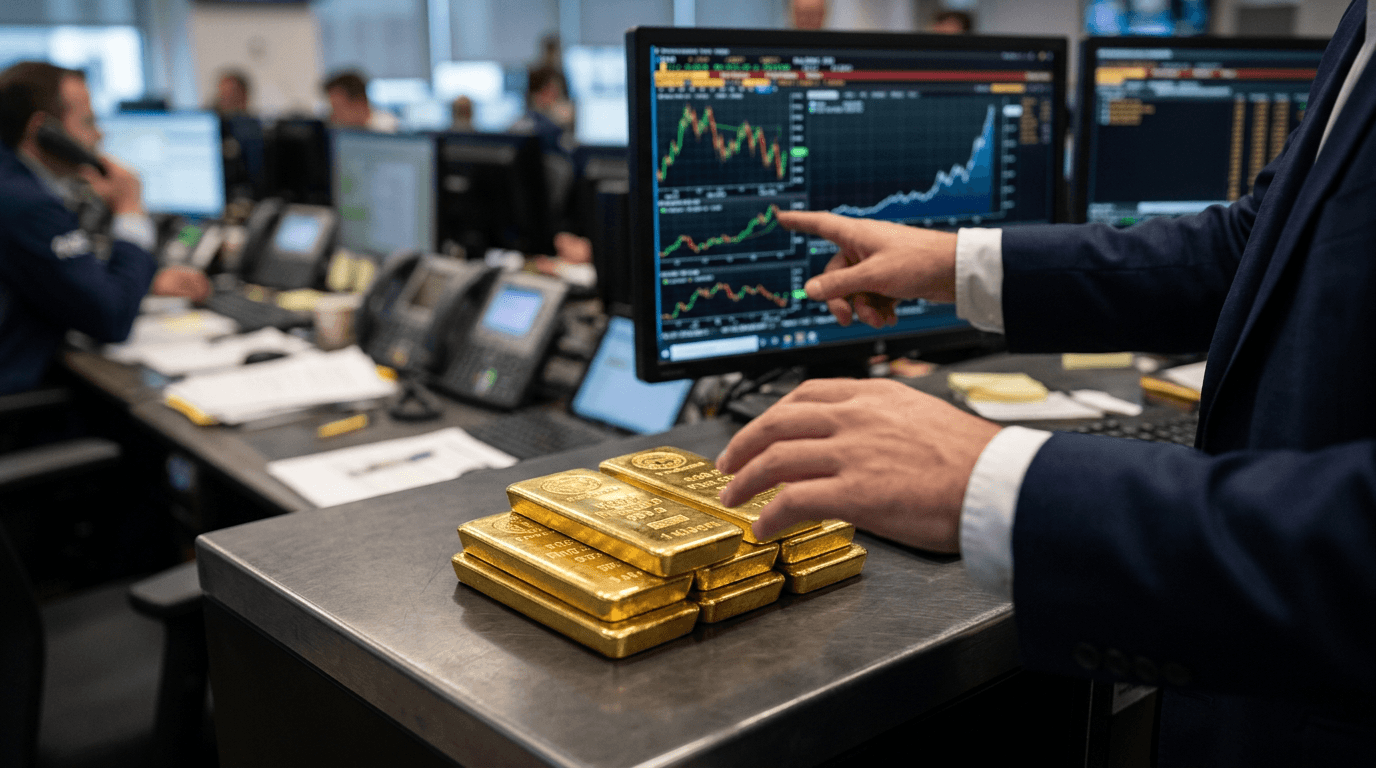
Gold's Role as a Safe Haven in Volatile Markets
In today's turbulent financial landscape, gold continues to stand out as a prime safe-haven asset. Its steady rise underscores a significant shift in how investors assess risk and guard their wealth. Amidst persistent geopolitical tensions and escalating economic uncertainties, gold emerges as the preferred choice for those aiming to shield their assets from potential upheaval.
A Convergence of Factors Boosting Gold Demand
A unique blend of factors has crafted a perfect scenario for gold's ongoing climb. Historically, times of geopolitical instability and economic strain have driven investors toward precious metals, and the current global circumstances are no different. As market volatility grows, gold's reputation as a time-tested refuge attracts capital away from fluctuating equities.
Simultaneously, the prospect of declining interest rates from key central banks is reshaping investment strategies. Gold's lack of interest yield becomes appealing in a landscape where traditional fixed-income investments offer diminishing returns. The U.S. Federal Reserve's anticipated rate cuts make bonds and savings accounts less attractive, tipping the scales further in favor of gold.
Central Banks Fuel Structural Demand
What distinguishes the present gold cycle is the robust demand from institutions, particularly central banks, previously apathetic to precious metals. Around the globe, central banks are actively reducing their reliance on dollar-denominated assets. China and India are at the forefront, aggressively purchasing gold to decrease their dependency on U.S. currency and securities.
This is not mere speculation. Forecasts suggest central banks will acquire about 60 tonnes of gold monthly through 2026, with China maintaining its purchasing momentum for 15 consecutive months. This institutional demand forms a solid foundation, ensuring that price dips attract more buying rather than panic selling. The extensive scale of central bank acquisitions fuels momentum that retail investors can leverage.
The Impact of Dollar Weakness
Currency fluctuations significantly influence gold's appeal. Typically, gold prices move inversely to the U.S. dollar, and a weakening dollar enhances gold's attractiveness to global investors. Beyond exchange rate dynamics, a declining dollar signifies deeper concerns about the stability of dollar-based assets.
Geopolitical tensions, including fears of U.S. sanctions and asset seizures, are prompting sovereign wealth funds and central banks to seek alternative value stores. When nations question the safety of holding dollars, they naturally gravitate towards gold, a universally accepted, politically neutral asset. This diversification trend is expected to persist as long as global tensions remain high.
ETF Inflows and Rising Retail Interest
Western gold ETFs have accumulated around 500 tonnes since early 2025, surpassing predictions based on traditional interest rate models. This surge indicates a fundamental shift in capital allocation, beyond temporary trading strategies. Both individual and institutional investors increasingly view gold as crucial for portfolio diversification.
The robustness of ETF inflows points to a growing retail recognition of gold's value proposition. Demand for physical gold bars and coins remains strong, and the accessibility of gold through ETFs has broadened participation in the precious metals market. This ease of access and heightened awareness have cultivated a new demand segment not as prominent in earlier cycles.
Analysts' Bullish Outlook and Price Projections
Market analysts generally maintain a positive outlook on gold's prospects. Goldman Sachs, for instance, increased its year-end 2026 gold price target to $5,400 per ounce, up from an earlier estimate of $4,900, showing confidence in sustained demand across diverse buyer segments. Some analysts predict gold could exceed $5,500 per ounce shortly, driven by ongoing central bank accumulation and institutional interest.
The macroeconomic environment continues to favor rising gold prices. Global liquidity is on the rise, the dollar remains weak, and the imbalance between safe-haven demand and supply in financial markets is unresolved. While analysts acknowledge potential pullbacks and volatility, the prevailing consensus leans towards sustained appreciation.
Key Insights for Investors
For those tracking this market, several crucial insights emerge. Firstly, the gold rally is rooted in genuine concerns about currency stability and geopolitical risks, rather than speculative mania. Secondly, the involvement of central banks and ETFs provides a structural support level absent in typical speculative bubbles. Lastly, gold's inverse correlation with equity volatility enhances its value for portfolio diversification in uncertain times.
The current gold surge transcends a mere commodity rally; it signifies a reevaluation of risk in the global financial system and a structural shift towards hard assets that may persist throughout 2026 and beyond.