
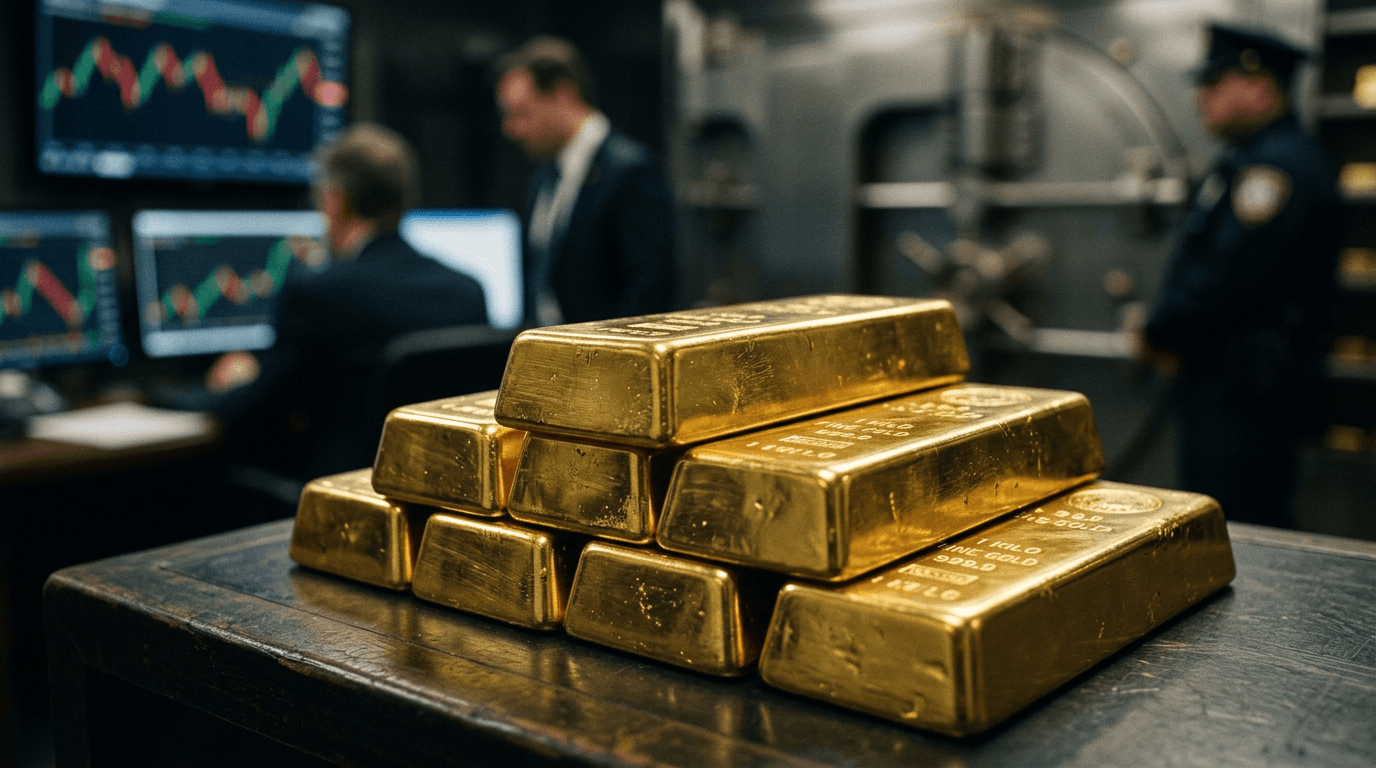
Gold markets have experienced a dramatic surge in recent days, with prices climbing to unprecedented levels as escalating Middle East tensions drive investors toward safe-haven assets. The precious metal has emerged as the primary beneficiary of heightened geopolitical uncertainty, signaling a significant shift in market sentiment and investor behavior during a period of global instability.
The catalyst for this remarkable rally is unmistakable: coordinated military strikes by U.S. and Israeli forces on Iranian infrastructure beginning in late February 2026, followed by Iranian retaliation and fears of broader regional conflict. As investors grapple with the uncertainties surrounding military escalation, energy supply disruptions, and potential economic fallout, gold prices have responded decisively, climbing above $5,350 per ounce and testing levels that would have seemed impossible just weeks ago.
Understanding The Gold Surge: Geopolitical Triggers And Market Mechanics
The immediate driver behind gold's ascent is straightforward: geopolitical risk. On February 28, 2026, the U.S. and Israel launched coordinated strikes targeting Iranian military and nuclear facilities, an operation that dramatically escalated tensions in a region already simmering with conflict. The death of Iran's Supreme Leader on March 1 further intensified concerns about potential retaliation and regional destabilization.
As news of these developments spread through global markets, investors executed a classic "flight to safety" strategy. Rather than holding stocks, bonds, or currency that carry counterparty risk, market participants rapidly rotated capital into gold—an asset that historically maintains value during times of systemic uncertainty. The psychological impact cannot be overstated. When geopolitical risk rises suddenly, investors don't deliberate; they act. Gold prices reflected this urgency, surging more than 2% in a single trading session and establishing new highs on March 4, 2026.
What makes this moment historically significant is the speed and magnitude of the move. Gold climbed from around $5,100 to test $5,400 per ounce within days, effectively recalibrating what the market now considers "fair value" for the precious metal. Analysts have noted that once gold breaches major psychological thresholds during active conflicts, it rarely retreats quickly. The underlying geopolitical grievances remain unresolved, providing structural support for prices well above pre-conflict levels.
Safe-haven Demand: Why Gold Outperforms In Crisis
The concept of safe-haven demand reveals something fundamental about how markets function under stress. During normal economic conditions, investors often overlook gold because it generates no cash flow and carries an opportunity cost relative to dividend-paying stocks or interest-bearing bonds. However, during crises—especially geopolitical ones—these financial metrics become secondary to a more primal concern: capital preservation.
Gold's appeal as a safe-haven asset rests on several pillars. First, it carries zero counterparty risk. Unlike bank deposits or bonds, which depend on institutional solvency, gold maintains intrinsic value regardless of who issues it or what nations do with their currencies. Second, it is tangible and portable, making it valuable across borders during times when trust in financial institutions erodes. Third, it has a 5,000-year history as a store of value, embedding deep psychological and institutional confidence.
Central banks and sovereign wealth funds have been particularly active in accumulating gold throughout this period, as larger institutions move to protect their reserves against currency debasement and systemic instability. This institutional demand provides substantial support beneath the market, suggesting that the rally is not merely speculative but reflects serious capital flows from entities with significant assets to protect.
Historical precedent underscores this dynamic. During the 1970s energy crisis and geopolitical upheaval, gold appreciated more than 2,300%. Following the 2008 financial crisis, gold gained 170%. Even during the COVID-19 pandemic, which triggered uncertainty about long-term economic outcomes, gold appreciated 40%. The current environment—combining active military conflict, potential energy supply disruptions, and currency concerns—taps into all these historical risk factors simultaneously.
Energy Prices And Broader Economic Consequences
While gold captures headlines, the Iran conflict has equally dramatic implications for oil markets. The threatened closure of the Strait of Hormuz, through which approximately 20% of global oil supply flows, has pushed Brent crude to over $81 per barrel, with analysts warning that sustained disruptions could drive prices toward $100 per barrel or higher.
This oil surge compounds the risk environment that makes gold attractive. Energy inflation directly feeds into consumer price inflation, eroding purchasing power and potentially forcing central banks into difficult policy choices. Historically, this combination—rising energy prices coupled with geopolitical uncertainty—has driven some of gold's most significant rallies. The market is effectively pricing in the possibility that oil-driven inflation could accelerate, making tangible assets increasingly valuable.
The Dow Jones Industrial Average declined 0.83% on March 3, 2026, while gold simultaneously rallied, exemplifying the negative correlation between equity risk and gold value. This inverse relationship is precisely why institutional investors use gold as a portfolio hedge.
Analyst Forecasts And What Investors Should Watch
The analyst community has responded to current developments with increasingly bullish gold forecasts. JPMorgan projects gold could reach $6,300 by the end of 2026 in a base case scenario, with upside potential to $8,500 if macroeconomic conditions deteriorate further due to war-related disruptions. Goldman Sachs forecasts $5,400 by year-end with "significant upside risk." Deutsche Bank sees $6,000, while UBS targets $6,200 by mid-year.
These forecasts reflect the recognition that gold's current price reflects not merely panic, but a fundamental reassessment of geopolitical baseline risk. The question facing investors is no longer whether gold rises further, but rather how much higher it goes and how long elevated prices persist.
Key metrics to monitor in coming weeks include any escalation or de-escalation signals from regional parties, OPEC responses to energy disruptions, central bank policy statements, and monthly bullion purchase reports from major economies. The current momentum suggests that "buy-on-dip" strategies have returned, with investors treating weakness as opportunity rather than signal to exit.
Positioning For Uncertainty
For traders and investors on SimFi platforms, the gold surge offers both opportunity and caution. The technical break above key Fibonacci retracement levels suggests further upside potential, particularly if geopolitical tensions persist. However, sharp reversals are possible if diplomatic breakthroughs emerge. Portfolio diversification toward gold—whether through spot prices, futures, or mining equities—remains prudent during periods when geopolitical risk dominates market dynamics.
The current environment underscores a fundamental truth: in times of genuine systemic uncertainty, the ancient art of gold accumulation remains as relevant as ever. The market has spoken, and its message is clear: safe-haven assets command premium valuations when the future becomes genuinely uncertain.
---