
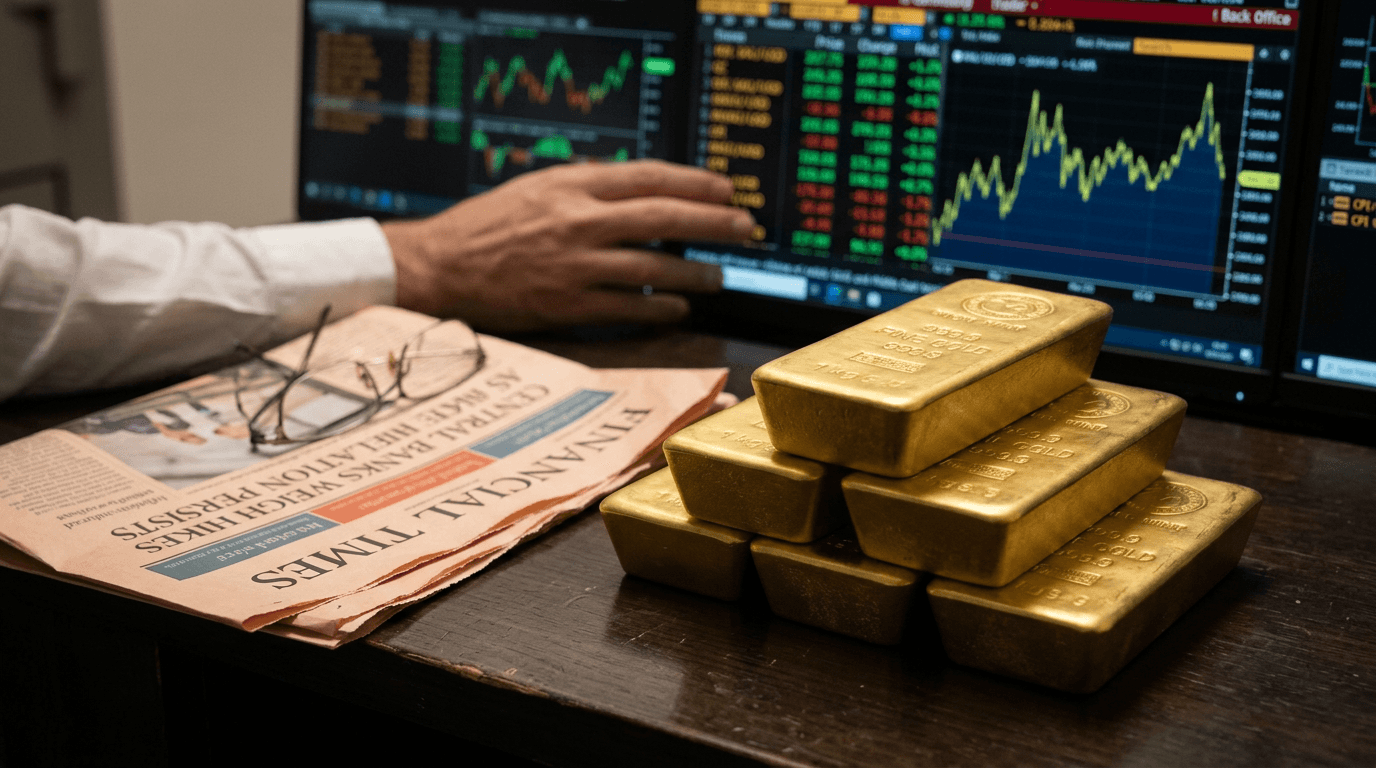
Navigating Gold's Intriguing Paradox: Safe-Haven Strength Meets Inflation Headwinds
Gold prices are currently caught in a fascinating paradox, as they advance on safe-haven demand yet face potential declines due to inflationary pressures. This complex scenario underscores the tension in global markets, where uncertainty and inflation concerns are at odds. Understanding the true drivers of gold's price action requires a nuanced analysis.
The Steadfast Safe-Haven Demand
Gold's role as a safe-haven asset remains robust, even as macroeconomic pressures challenge its stability. Recent price gains, including a rise to $4,511 per ounce, highlight investors' ongoing reliance on precious metals as a refuge during uncertain times. Middle East tensions and geopolitical instability continue to drive this demand, with central banks playing a pivotal role in sustaining interest. Despite broader market challenges, gold's appeal as a strategic asset during volatility remains strong, demonstrated by past surges to record highs above $5,000 per ounce.
The Oil-Inflation Conundrum
The paradox in gold's price action emerges from oil-driven inflation concerns that are undermining its safe-haven appeal. The Iran conflict has pushed crude oil prices above $100 per barrel, reigniting inflation fears that divert focus from precious metals. This dynamic complicates gold's investment thesis, as rising energy costs and bond yields, coupled with a stronger U.S. dollar, create headwinds that outweigh safe-haven demand. The specter of stagflation poses a particular challenge, potentially constraining growth and elevating borrowing costs, historically difficult conditions for gold.
Technical Insights and Market Structure
To comprehend gold's current trajectory, attention to technical levels and market structure is essential. Support levels hover around $4,500 and $4,000, with resistance at $4,600, $4,700, and the crucial $5,000 mark. The pullback from March highs over $5,400 to current levels suggests consolidation, which, while concerning, may indicate a healthy market structure. The fact that gold maintains support amidst macro headwinds highlights its resilience, bolstered by central bank buying.
Looking Ahead: A Bullish Long-Term Outlook
Despite recent weaknesses, financial institutions like JP Morgan and Bank of America remain optimistic about gold's long-term prospects, forecasting prices of $6,300 and $6,000 per ounce by 2026, respectively. The path forward hinges on geopolitical developments and potential moderation in oil prices or inflation risks. Investors should note that weaker growth prompting fiscal or monetary stimulus could present significant upside for gold, even amid short-term volatility.
The current challenging environment reinforces gold's strategic value in diversified portfolios. Its safe-haven appeal persists despite weekly declines, offering traders and long-term investors a potential opportunity to strengthen positions ahead of anticipated gains in the latter half of 2026.
NEWSIMPACTSCORE: 6