
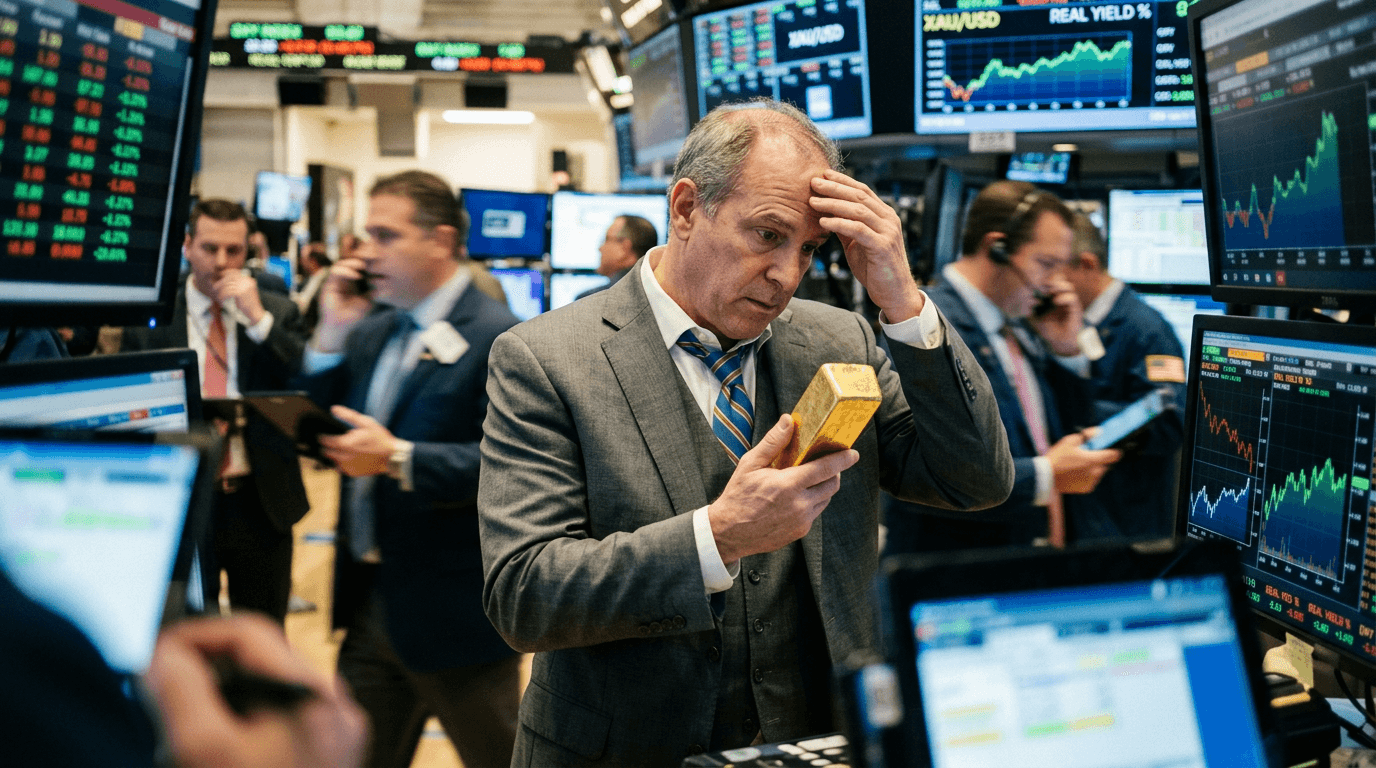
Gold’s latest rebound is a reminder that its safe-haven appeal is alive and well – but not enough, for now, to prevent the first weekly loss in five weeks. As tensions in the Middle East and uncertainty around the US–Iran conflict escalate, investors have rotated back into defensive assets, lifting spot and futures prices off their intraday lows. Yet the metal remains below recent peaks, reflecting a deeper macro tug-of-war: haven flows are pushing one way, while a stronger dollar and rising real yields pull in the opposite direction.
SAFE-HAVEN DEMAND RETURNS – BUT WITH A CATCH
In periods of geopolitical stress, the market’s playbook is familiar: de-risk equities and credit, rotate into perceived “insurance” assets like gold, the US dollar, and high-grade sovereign bonds.
The latest flare-up in Middle East tensions has activated that script. Headlines around shipping risks, energy supply disruptions, and the fragile US–Iran backdrop have stirred a fresh bout of risk aversion. That has translated into renewed buying interest in gold, particularly during headline-driven sessions when volatility spikes.
But this time, the bounce is not translating into a clean up-week.
The reason is simple: gold is not trading in a vacuum. While safe-haven flows support dips, the broader macro backdrop has turned less friendly. Stronger US data, stickier inflation concerns, and a recalibration of rate-cut expectations are pushing real yields higher and lending support to the dollar. Those forces directly compete with gold, which offers no yield and is typically priced in dollars.
The result is a choppy pattern: sharp intraday rebounds when geopolitical anxiety flares, followed by selling pressure as yields grind higher and the greenback firms. Safe-haven demand is working, but it is being partially offset, leaving gold on course for a weekly decline despite the visible midweek recovery.
WHAT’S DRIVING THE WEEKLY LOSS?
To understand why gold can rebound and still log a negative week, it helps to break the move into phases rather than looking only at the final print.
First, the early-week macro repricing. Markets have been trimming expectations for how fast and how far central banks, especially the Federal Reserve, will cut rates. Stronger growth data and hawkish commentary have pushed real yields higher and supported the dollar. That combination is typically a headwind for gold, and much of the week’s downside was concentrated during this phase as systematic and macro funds adjusted positions.
Second, a period of stabilization. As the initial repricing in rates and FX settled, heavy selling in gold began to slow. Value-oriented buyers and long-term allocators stepped in, viewing the lower levels as an opportunity to rebuild or add to hedges. Price action became more two-sided, with smaller intraday ranges replacing the earlier sharp drop.
Third, the late-week safe-haven bid. Emerging headlines around Middle East flashpoints and US–Iran tensions triggered a more classic flight-to-safety. Futures volumes picked up as shorts were covered and dip-buyers leaned into the move. Spot prices recovered much of their intraday losses, confirming that defensive demand is still there whenever risk sentiment deteriorates.
However, the damage from the early-week selloff created a hole deep enough that even a strong later rebound could not fully reverse it. On a weekly chart, that shows up as the first loss in five weeks. On an intraday chart, it looks like violent swings in both directions.
For traders, the key lesson is this: “down on the week” does not mean there was no demand. It means opposing forces hit the market at different points in time, with macro headwinds ultimately having the upper hand – for now.
WHY GOLD’S SAFE-HAVEN ROLE STILL MATTERS
Some traders interpret a negative week during a geopolitical flare-up as a sign that gold’s safe-haven status is “broken.” The recent behavior suggests something more nuanced.
Gold is still behaving as a hedge in stress moments. When risk assets wobble on Middle East or US–Iran headlines, gold tends to catch a bid. That is visible in intraday reversals from session lows, spikes in short-dated futures activity, and stabilizing flows into bullion-backed products.
However, safe-haven trading is now occurring against a macro backdrop that systematically caps rallies. Higher real yields increase the opportunity cost of holding gold. A firm dollar mechanically pressures dollar-denominated commodities and signals tighter global financial conditions. Concerns that inflation might prove sticky raise the odds that central banks will stay cautious on easing, reinforcing those higher yields.
The key takeaway: gold’s insurance function is intact at the micro (event-driven) level, but its medium-term trend is being constrained by macro factors. That distinction matters for position sizing and time horizon. Gold may spike on a headline, but without a shift in rates or FX, those spikes can fade faster than in prior cycles.
Trading Implications: Volatility Over Direction
For short-term traders, the current environment is less about a clean directional trend and more about trading volatility within a macro range.
Three features stand out
1) Larger intraday swings Safe-haven flares can produce fast $20–$50 moves in a short window, especially when they collide with thin liquidity or clustered stop levels. Gold may trade lower on the week, yet offer multiple high-volatility intraday opportunities both long and short.
2) Headline sensitivity Markets are cycling between focusing on data and focusing on geopolitics. Economic surprises move yields and the dollar; geopolitical headlines move risk sentiment and safe-haven demand. Gold sits at the intersection of both, reacting quickly to whichever narrative dominates on a given day.
3) Mean reversion around macro levels Key technical areas aligned with macro themes (e.g., previous highs/lows near major yield or dollar turning points) become magnets. Breakouts that are not supported by a shift in yields or FX often fade back into the range.
In practice, this means day traders and short-term swing traders in simulated or live environments may find more edge in tactical strategies – fading extremes, trading around levels, and respecting volatility bands – rather than simply chasing moves in the direction of the latest headline.
How Traders Can Position In A Tug-of-war Market
Whether you are trading in a simulated funding environment or managing a discretionary account, the current gold setup calls for a structured playbook.
First, separate timeframes clearly. On an intraday basis, respect the safe-haven bid: sharp drops into support during risk-off headlines may offer tactical long opportunities, with tight risk parameters. On a multi-day basis, recognize that higher yields and a stronger dollar remain dominant headwinds, arguing for caution in extrapolating short squeezes into new secular highs without confirming macro shifts.
Second, anchor trades to macro catalysts. Map out the calendar of key data (inflation, labor, growth releases) and central bank events that can move yields and the dollar. Combine that with known political and geopolitical milestones. When data support lower yields and a softer dollar while tensions remain elevated, gold rallies are more likely to extend. When data push yields higher even as tensions simmer, expect rallies to struggle and fade.
Third, size for volatility, not just direction. With gold futures and CFDs seeing larger intraday ranges, risk management should adjust. Smaller position sizes, wider but clearly defined stop levels, and pre-planned profit targets can help you stay in the game when price action is noisy.
Finally, think in scenarios rather than single forecasts. Scenario A: Economic data soften and central banks lean more dovish while geopolitical risk stays elevated – gold could break its pattern of weekly losses and resume its upward trend. Scenario B: Growth remains resilient, inflation stays sticky, and policymakers signal fewer or later cuts – rallies driven by safe-haven flows are likely to remain choppy and vulnerable to reversals.
In both scenarios, gold will still respond to stress. The difference is how long those reactions last before macro gravity reasserts itself.
Conclusion
Gold’s rebound on safe-haven demand, even as it posts its first weekly loss in five weeks, captures the reality of 2026’s trading landscape: markets are no longer driven by a single narrative. Geopolitical tension, shifting rate expectations, and a powerful dollar are pulling the metal in different directions.
For traders, the opportunity lies in understanding that tension rather than fighting it. Gold remains a key barometer of global risk sentiment, but its price is now equally a reflection of the evolving path of real yields and currencies. The more precisely you can map that tug-of-war, the better positioned you’ll be to turn volatility – not just direction – into a source of potential edge.