
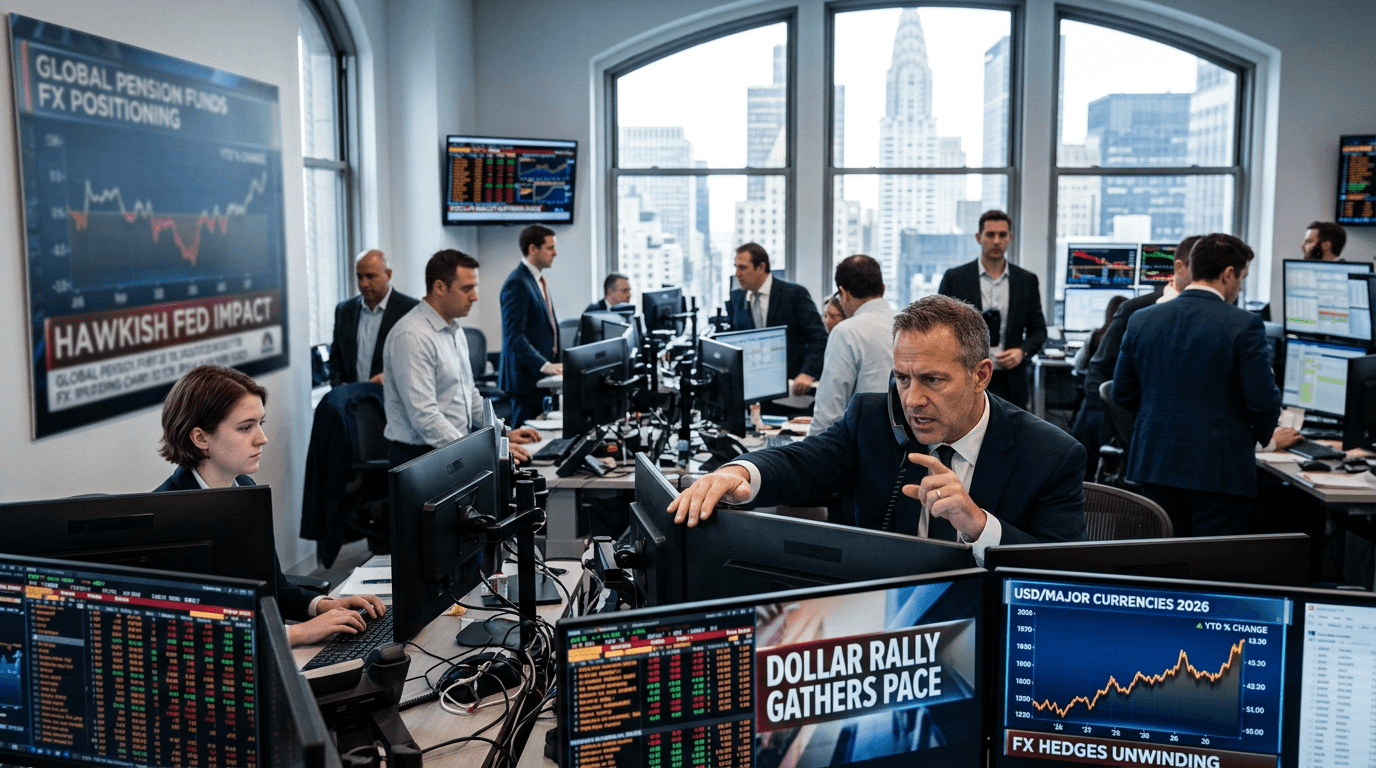
The 2026 U.S. dollar rally has shifted from a short-term reaction trade to a structural theme, powered by a hawkish Federal Reserve and now reinforced by global pension funds reworking their foreign exchange hedging strategies[11]. As large asset owners unwind protection put on during last year’s market unrest, they are inadvertently adding fuel to an already robust dollar trend.
Hawkish Fed: The Core Driver Of Dollar Strength
The foundation of this year’s dollar move is the Federal Reserve’s sharp pivot back toward tighter policy, with markets now pricing higher rates rather than cuts[2][8]. New Fed Chair Kevin Warsh’s debut meetings have been interpreted as some of the most hawkish in decades, with policymakers signaling at least one rate increase by year-end and several calling for more if inflation remains sticky[3][6][7].
Futures markets now embed meaningful probabilities for rate hikes into the second half of 2026, with investors assigning high odds to a move by September[1][5][8][10]. As a result, U.S. Treasury yields, especially at the front end, have pushed higher, widening interest rate differentials versus Europe and Japan and making dollar assets more attractive to global investors[1][5][7].
The U.S. dollar index has broken out to around 101–102, its highest levels in roughly 13 months, reversing weakness seen earlier and re-establishing the greenback as one of the strongest major currencies[1][5][8][10]. This backdrop is often framed as “American exceptionalism”: solid U.S. growth, relatively higher yields, and persistent demand for U.S. assets in a world where many other central banks are easing or signaling caution[3][9].
Key takeaway: As long as the Fed maintains a hiking bias and U.S. data stay resilient, interest rate and growth differentials are likely to keep the dollar supported, even if short-term sentiment swings.
Global Pension Funds Rework Fx Hedges
The new twist in the 2026 dollar story is the behavior of global pension funds and large institutional investors. After last year’s “Liberation Day” market unrest, many funds increased FX hedges on their overseas holdings to protect against heightened currency volatility and perceived dollar vulnerability[11]. Those hedges often involved selling dollars forward or using derivatives to neutralize currency risk on U.S. exposures.
With the dollar now rallying on a more hawkish Fed and worries about dollar weakness fading, these same institutions are pulling back on those hedges[11]. Mechanically, that means:
- Reducing hedge ratios on U.S. dollar assets.
- Closing out prior short-dollar forward positions.
- Rebalancing FX overlays that had been tilted against the dollar.
In practice, unwinding a hedge that involved selling dollars typically requires buying dollars back, either in spot or derivatives markets. This flow adds incremental demand for the greenback on top of the existing interest-rate-driven bid, supporting broad USD strength across major pairs[11].
For multi-asset portfolios, this shift also reflects a changed risk calculus. A stronger, more stable dollar makes unhedged U.S. exposures less threatening, and higher U.S. yields improve the carry profile of dollar-denominated assets. The result is a reconfiguration of global portfolio flows, with less pressure to neutralize currency risk and more willingness to accept dollar exposure as a source of potential return[9][11].
Key takeaway: Hedge unwinds are a “second-round” support for the dollar—less visible than Fed decisions, but powerful because they originate from large, slow-moving pools of capital.
Impact On Major Currency Pairs And Futures Positioning
Dollar strength and hedge reversal are showing up across the FX complex. The euro and yen have both struggled as the dollar pushes higher, with the yen hovering near multi-decade lows as rate differentials and safe-haven demand collide[1][5][10]. In Europe, where policy is more balanced and growth softer, the stronger dollar is pressuring EUR/USD toward the lower end of recent ranges.
In currency futures and options, positioning has shifted toward a more constructive view of the dollar. Traders are:
- Adding net long exposure to dollar indices and major USD crosses, reflecting the hawkish Fed narrative[6][7][8].
- Pricing in higher implied volatility around upcoming Fed meetings, given reduced forward guidance and uncertainty over the pace of hikes[6][8].
- Reassessing carry trades that previously favored non-dollar currencies, as the U.S. yield advantage widens[7][8].
Emerging-market currencies are also feeling the ripple effects. A stronger dollar typically tightens global financial conditions, raises funding costs for dollar borrowers, and can prompt a reassessment of FX risk in higher-yielding markets[3][9]. While some EM central banks may attempt to lean against currency pressure, the combination of Fed hawkishness and institutional hedge unwinds can keep the dollar’s broad trade-weighted strength intact.
Key takeaway: Dollar strength is not confined to a single pair; it is a broad theme reshaping FX, futures, and carry strategies across both developed and emerging markets.
What Traders And Investors Should Watch Next
For traders and investors, this environment creates both opportunity and risk. Several indicators merit close attention:
- Fed communications and data: Inflation prints, labor-market data, and remarks from key Fed officials will determine whether markets keep pricing additional hikes or shift back toward a pause[2][6][8].
- Dollar index levels and technicals: The DXY’s hold above prior resistance around the 101 area is a key sign that the medium-term uptrend remains intact[1][5][8].
- Hedge ratio disclosures and institutional flows: Commentary from large pension funds and asset managers on FX risk management can reveal whether hedge unwinds are still in early stages or maturing[11].
- Volatility and risk sentiment: Equity selloffs or geopolitical tensions can reinforce safe-haven demand for the dollar, amplifying the impact of policy expectations[1][10].
For simulated and real-money traders alike, this backdrop favors strategies aligned with the dollar’s structural tailwinds—such as selective long-USD positions against lower-yielding currencies—while remaining nimble around key data and Fed events.
Key takeaway: Staying on top of Fed pricing, institutional flow trends, and key technical levels can help traders distinguish between tactical pullbacks and genuine turning points in the dollar rally.
Conclusion: A Rally With Structural Underpinnings
The 2026 U.S. dollar rally is no longer just about short-term rate speculation. A distinctly hawkish Fed, reinforced by “American exceptionalism” in growth and yields, has put the greenback back at the center of global markets[3][6][8][9]. The latest development—global pension funds reversing FX hedges put on during past turbulence—adds a structural layer of support that could extend the dollar’s strength into the second half of the year[11].
For market participants, the message is clear: policy and positioning are working in the same direction. Until the Fed’s stance softens or institutional flows materially change, the dollar’s role as a dominant currency and portfolio anchor looks set to persist, shaping FX strategies, futures positioning, and global capital allocation well beyond the next meeting.