
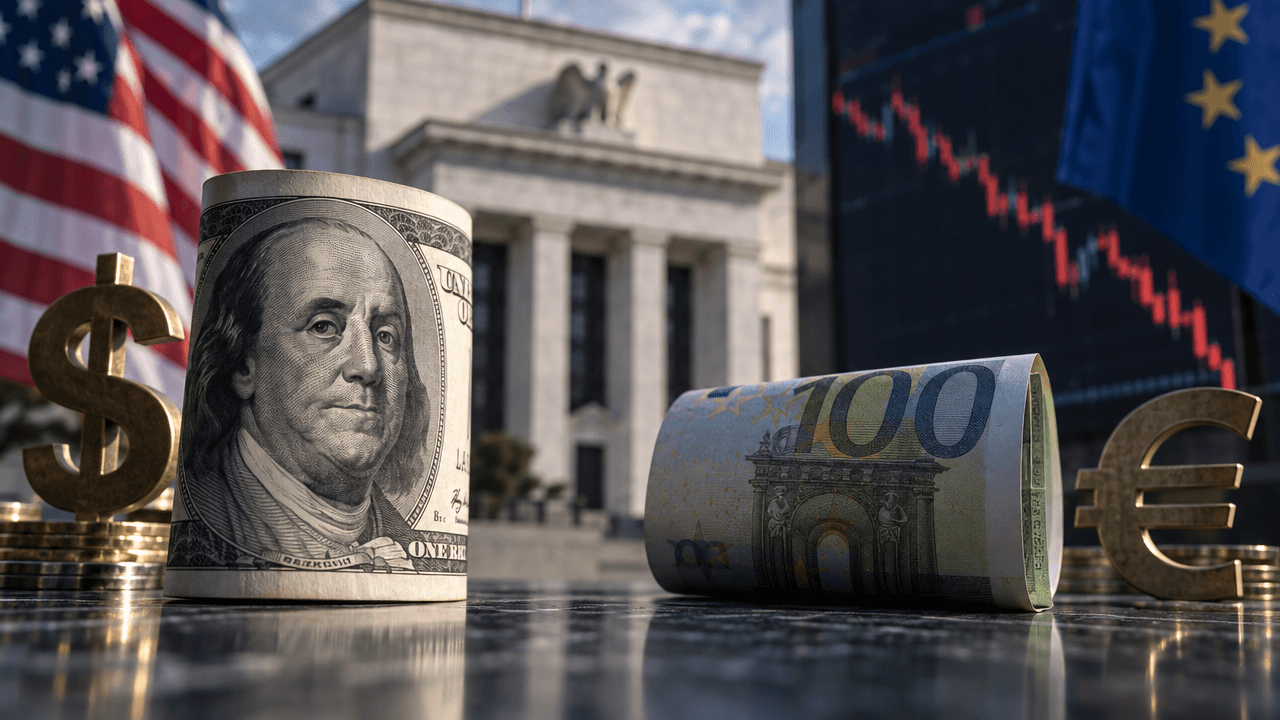
The dollar’s latest rally is a reminder that in FX, central banks still call the shots. The dollar index has pushed back toward the 101 area after a Fed-driven move higher, as traders react to mounting expectations that the Federal Reserve could deliver another rate increase in 2026.[6][15] Futures markets now assign a high probability to an October hike, with estimates clustered around the 70–80% region, underscoring how firmly hawkish policy expectations are embedded in pricing.[10][14] For traders, the message is clear: as long as the Fed remains on a tightening path, the dollar will struggle to meaningfully weaken.
Fed Hawkishness Keeps The Dollar Bid
The core driver of the dollar’s resilience is the Fed’s stance on inflation and growth. Strong US PMI data and a run of robust economic releases have convinced policymakers that the economy can absorb higher rates while they push inflation back toward target.[6][15] Several Fed officials have delivered hawkish remarks in recent days, signaling that “one more hike” is still very much on the table for 2026 in line with internal projections.[3][12] These comments have filtered directly into futures markets, where the probability of another quarter‑point move by year‑end has risen sharply.[2][14]
When policymakers keep the door open to further tightening, investors quickly re‑price yields on US Treasuries and money‑market instruments. Two‑year Treasury yields, which are highly sensitive to Fed expectations, have pushed to their highest levels in more than two years following recent Fed communications.[14] Higher short‑term yields improve the income offered by dollar assets relative to many peers, attracting capital inflows from global investors.[4] This yield advantage is the fundamental reason hawkish Fed expectations tend to support the dollar.
Rate Expectations And The Interest Rate Differential
FX markets are ultimately about relative returns. It is not just where US rates are today, but where they are expected to go versus other major central banks. Current market pricing suggests the Fed will carry out at least one more hike this year, taking the target range closer to 4.00–4.25%, with scope for additional tightening in 2027.[12] In contrast, many other advanced economies either remain on hold or are expected to move more cautiously, narrowing the field of currencies that can compete with the dollar’s yield profile.[4][12]
This interest rate differential feeds directly into FX valuation models and trading strategies. In carry trades, investors borrow in lower‑yielding currencies and invest in higher‑yielding ones, with the US dollar frequently acting as the “long” leg when the Fed is hawkish.[4] Even for non‑carry approaches, forward points and hedging costs reflect where markets think short‑term rates are headed. As the curve shifts higher for the US, hedging dollar exposure becomes more expensive for foreign investors, reinforcing demand for the currency and entrenching its strength in global portfolios.[4][12]
PRESSURE ON EUR/USD AND GLOBAL FX
One of the clearest manifestations of dollar strength is in EUR/USD. The pair has drifted toward a two‑month low, trading around the 1.14 area and extending a multi‑day losing streak as the dollar remains firmly supported.[1][8][15] Market commentary consistently links this euro weakness to the latest rise in Fed hike expectations, particularly after stronger‑than‑expected US PMI data and hawkish Fed communication.[8][15] With the eurozone facing softer growth dynamics and more cautious policy guidance, EUR/USD becomes a natural outlet for expressing a bullish dollar view.
The story does not end with the euro. Across the FX complex, currencies with lower yields or weaker growth prospects tend to underperform when the Fed is in tightening mode. Past episodes have seen the dollar climb to multi‑month or even multi‑year highs as rate‑hike bets build and investors seek perceived safety and superior income in US assets.[11] For traders, this environment often translates into broader dollar‑positive themes: pressure on emerging‑market FX, underperformance in low‑yielders like the yen, and more volatile cross‑currency moves as global capital adjusts to the changing rate landscape.[4][11]
What Traders Should Watch
In a market dominated by rate expectations, the data calendar and Fed communication become critical trading inputs. High‑frequency indicators such as PMIs, labor‑market releases, and inflation prints are all capable of shifting the perceived odds of an additional Fed hike.[6][15] When these data surprise to the upside, the probability of an October or year‑end hike tends to rise, typically delivering a supportive impulse to the dollar.[8][10][14] Conversely, downside surprises in inflation or growth can quickly unwind hawkish expectations and trigger aggressive position adjustments.
Fed speeches and press conferences are equally important. Recent remarks from key officials have lifted futures‑implied odds for another hike from the mid‑50% region to well above 70% in a matter of days.[8][10] Traders need to track not just the headline statements, but also the nuances around how the Fed characterizes inflation persistence, labor‑market tightness, and financial conditions. Even subtle changes in tone—moving from “data‑dependent” to “inclined to hike”—can catalyze meaningful moves in rate markets and, by extension, in the dollar.[7][14]
Applying This Theme In Simulated Finance
For SimFi traders on platforms like E8 Markets, the current macro backdrop offers a rich environment to practice multi‑layered strategies without real‑world capital at risk. One approach is to build simulated portfolios that explicitly link FX positions to evolving Fed expectations—long dollar versus currencies with dovish central banks when futures assign a high probability to additional hikes, and more neutral or short‑dollar when those probabilities fade.[4][12] This forces traders to integrate macro analysis, event‑driven trading, and risk management into a single framework.
Another practical application is stress‑testing strategies under different interest‑rate paths. Using simulated data, traders can explore scenarios where the Fed hikes in October versus scenarios where it pauses and signals a longer‑term plateau. Portfolio outcomes under each path reveal how sensitive positions are to rate surprises, improving understanding of drawdowns, margin usage, and correlation shifts. Over time, this kind of structured practice helps traders develop the discipline to respect central‑bank risk, size positions appropriately around key events, and avoid over‑leveraging into uncertain policy outcomes.
Ultimately, a hawkish Fed does more than lift the dollar; it reshapes the entire macro landscape that traders operate in. By treating policy expectations as a tradable theme and using simulated environments to refine their approach, traders can turn short‑term news into long‑term skill. In a world where one more Fed hike remains on the table and futures markets keep the dollar supported, the edge belongs to those who understand the link between rates and FX—and know how to act on it.