
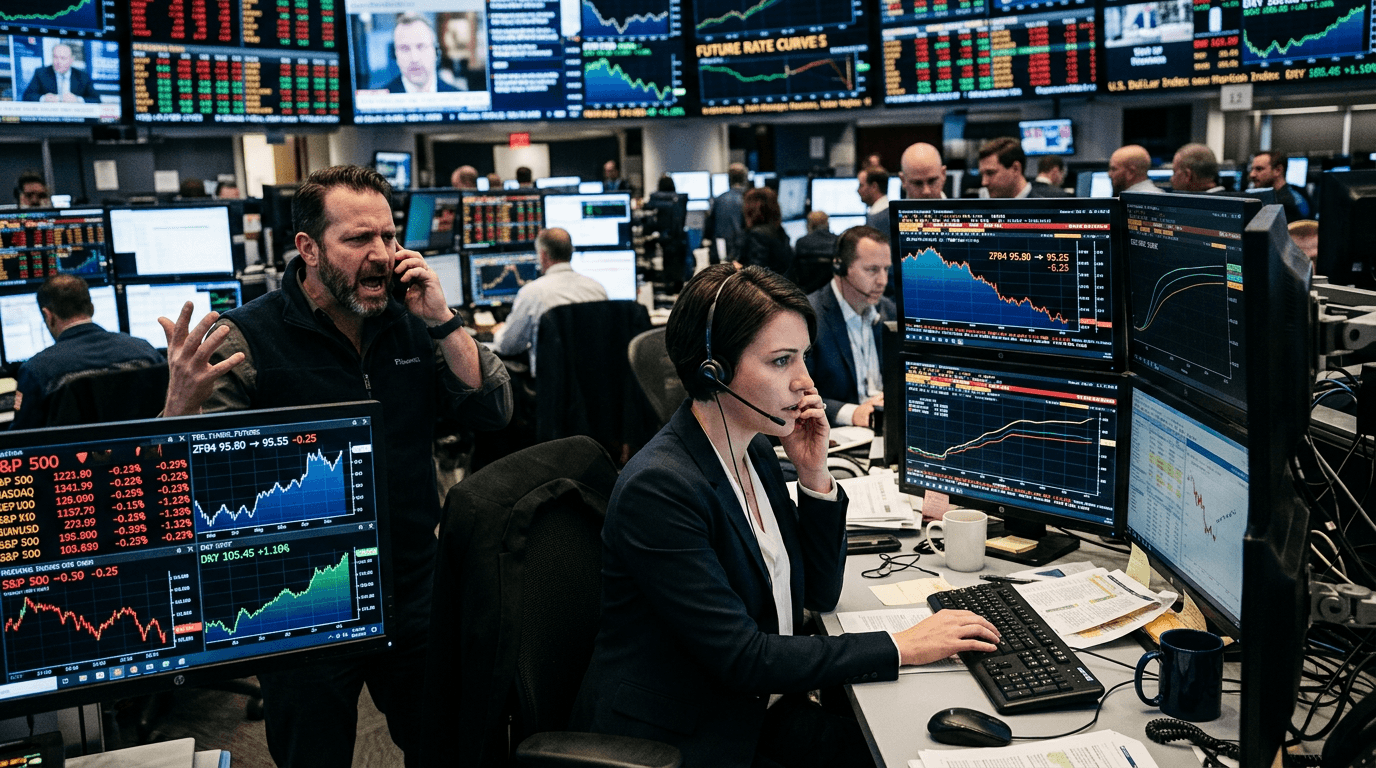
A more hawkish-sounding Federal Reserve has once again reminded markets who is in charge of the global cost of money. As policymakers pushed back against hopes for early and aggressive rate cuts, futures and swap markets swiftly repriced the policy path, sending yields higher, pressuring risk assets, and giving fresh support to the U.S. dollar.[1][2][9] For traders, it was one of those days when it felt like “markets lost a friend” as the central bank stepped away from the role of backstop and comforter-in-chief.
What A Hawkish Fed Signal Really Means
A “hawkish” Fed is one that prioritizes fighting inflation over supporting growth and employment, typically by keeping interest rates higher for longer – or even raising them further if needed.[3][5] In contrast, a “dovish” stance focuses more on maximizing employment and supporting growth, often by lowering rates or signaling easier policy.[3]
When communication from the FOMC sounds hawkish – whether through the statement, press conference, or projections – it tells markets that policymakers are not yet comfortable that inflation is defeated. That usually means fewer rate cuts, later cuts, or the risk of renewed tightening if inflation or wage data re-accelerate.[3][5] The result is a collective reset: any asset that had been priced on the assumption of “cheap money soon” must adjust.
How Futures And Swap Markets Reprice Rate Cuts
Fed funds futures and interest rate swaps are the markets’ real-time scoreboard for monetary policy expectations. Fed funds futures reflect where traders think the effective policy rate will be at upcoming FOMC meetings, while OIS and swap curves translate those expectations across different maturities. When the Fed sounds more hawkish than anticipated, those curves typically move higher as traders price in fewer cuts or push them further out in time.[1][2]
In the latest episode, contracts that had implied an aggressive cutting cycle were forced to re-align with a “higher for longer” narrative.[2] Instead of several cuts starting soon, the curve shifted toward a slower, later easing path, with some probability of no cuts at all over the near term. That may sound like a technical adjustment, but it has broad consequences: higher implied short-term rates pull up yields across the curve, reprice corporate borrowing costs, and alter the relative appeal of currencies and risk assets worldwide.[1]
Why Risk Assets Struggle When Cuts Are Priced Out
Risk assets – particularly equities, growth stocks, and higher-yielding credit – typically thrive when central banks are easing or about to ease. When markets abruptly lose those expected cuts, the backdrop changes almost overnight. Higher yields mean higher discount rates: the present value of future earnings falls, hitting long-duration assets like tech and growth stocks the hardest.[2]
Recent price action has followed that playbook. U.S. stocks have come under pressure as Treasury yields rose and the dollar strengthened, with valuation pressure especially acute in sectors that benefited most from low-rate expectations.[1][2][9] The narrative shift from “cuts are coming” to “higher for longer” forces investors to reassess everything from earnings multiples to leverage assumptions.[2] Assets that rallied on the promise of cheap money – speculative tech, small caps, some emerging-market plays – suddenly find themselves on the wrong side of the trade.[2][9]
Credit and real estate also feel the strain. Wider spreads and higher base rates raise funding costs and can dampen deal activity, while more expensive mortgages and commercial financing weigh on property valuations. The common thread is straightforward: when the risk-free rate moves higher and stays there, every risky cash flow has to work harder to justify its price.
Dollar Support And Global Ripple Effects
A hawkish Fed not only reshapes U.S. markets; it reverberates across global FX. Higher expected U.S. rates relative to peers increase the appeal of dollar-denominated assets, drawing in capital and typically pushing the dollar higher against other major and emerging currencies.[1][9] That is exactly what has unfolded, with the dollar outperforming key counterparts as yields have edged up and speculative appetite has cooled.[1][9]
For non-U.S. markets, a stronger dollar can be a double hit. It tightens financial conditions for countries and companies that borrow in dollars, and it often weighs on commodity prices in local terms, impacting everything from trade balances to corporate margins. Emerging markets that benefited from prior dollar softness and global search-for-yield flows may see some of those flows reverse as U.S. rates look more attractive on a risk-adjusted basis.
At the same time, short-term U.S. bonds and cash-like instruments become more compelling. Higher front-end yields and a firmer dollar can draw capital away from equities and high beta trades, reinforcing the rotation out of risk assets and into “safer” dollar assets.[1][9]
Practical Takeaways For Traders And Simfi Participants
For active traders and SimFi participants, a hawkish Fed repricing is both a risk and an opportunity. The risk lies in complacency: if your trading or portfolio assumptions quietly relied on rapid Fed easing, a sharp shift in curves can expose concentration, leverage, or duration you did not fully appreciate. The opportunity lies in volatility and trend: when the policy path is re-drawn, markets often overshoot, creating tactical setups in rates, FX, indices, and sector rotations.
Several practical points to focus on
1. Anchor on the policy path, not just the headline move. It is rarely about a single rate decision; it is about how the Fed’s reaction function has changed. Study the language around inflation, labor markets, and financial conditions – these hints drive futures and swaps repricing over weeks, not just hours.[3][5]
2. Watch the curve, not only the policy rate. Shifts in expectations matter most where positioning is crowded. For example, if markets had aggressively priced early cuts in the front end, the unwind there can be sharp and disorderly. Understanding where the “pain points” are along the curve helps you anticipate volatility.
3. Map the cross-asset chain. Higher-for-longer rates tend to: raise yields, support the dollar, pressure equities (especially growth), and challenge leveraged and long-duration assets.[1][2][9] Use that chain to build scenarios in indices, sectors, FX pairs, and commodities.
4. Adjust risk management proactively. In a hawkish repricing environment, volatility clusters around macro events. Tighten execution discipline, reconsider position sizing into FOMC and data releases, and use options or spread structures where appropriate to express views with defined risk.
Simulated trading is an ideal environment to rehearse this playbook. Rather than reacting emotionally when “markets lose a friend,” you can test how different strategies perform when curves reprice – from dollar-long momentum trades to equity index hedges and relative-value plays along the yield curve. By the time the next hawkish surprise hits, your responses are planned, not improvised.