
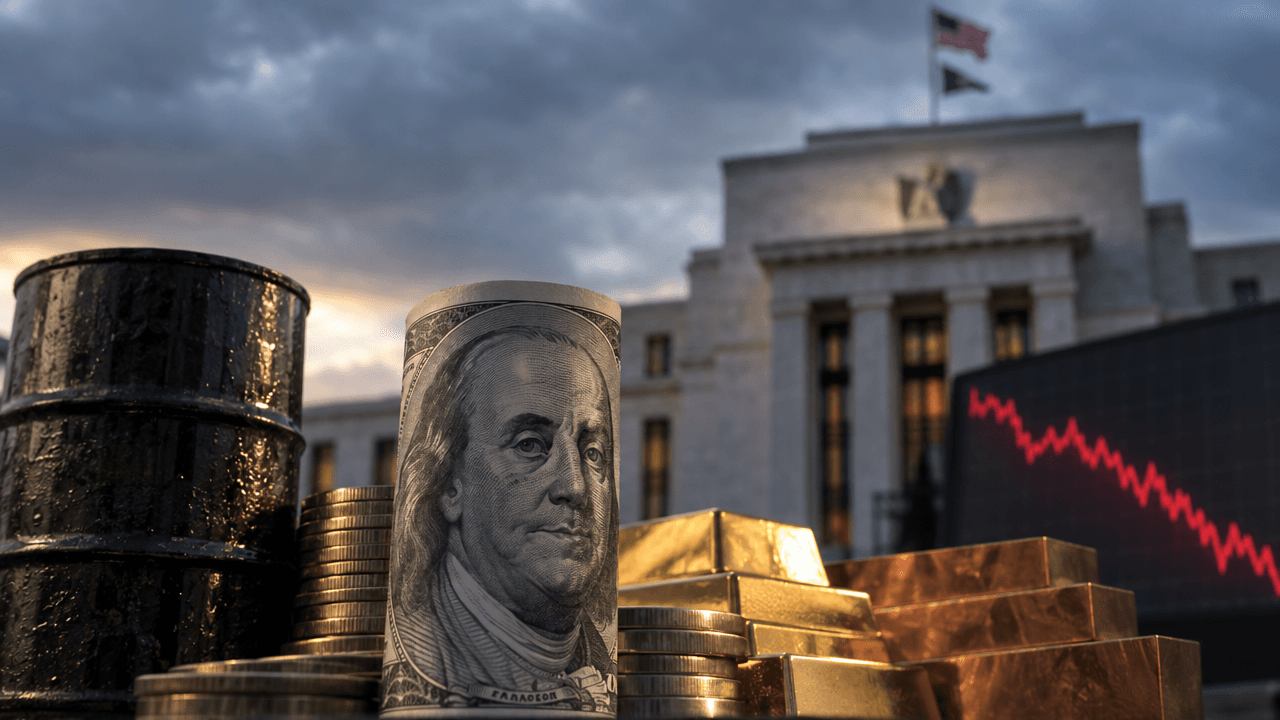
A stronger-than-expected US inflation report has forced financial markets to reassess the path of Federal Reserve policy, giving the dollar a powerful lift. The US Dollar Index rose approximately 0.6% toward 102.9, reaching its highest level since April 2025, as traders increased bets that the Fed could raise interest rates again in December. [1][2]
The reaction reflects more than one inflation reading. It shows how quickly expectations can shift when economic data, central-bank communication, and positioning all point in the same direction. For traders, the latest move offers an important lesson: currencies often respond not only to what central banks do, but also to what markets believe they will do next.
Inflation Reignites Fed Tightening Expectations
US consumer prices rose 0.4% in October, exceeding forecasts for a 0.3% increase. Core inflation, which excludes food and energy, advanced 0.3% for a third consecutive month, compared with expectations for a 0.2% gain. [2][8]
Although a single monthly report does not determine monetary policy, the data reinforced concerns that inflation is proving more persistent than policymakers would prefer. A central bank can tolerate temporary price pressures, but repeated upside surprises make it more difficult to justify holding rates steady.
The inflation report also arrived alongside increasingly hawkish comments from Federal Reserve officials. Governor Christopher Waller indicated that a core inflation reading of 0.3% or higher could lead him to consider a 50-basis-point increase at the December meeting. Other officials, including Dallas Fed President Lorie Logan, also highlighted risks connected with elevated inflation. [1][4]
As a result, markets raised the probability of a 25-basis-point December hike to approximately 87%, up from around 70% one month earlier. [1][2] Some pricing also reflected a smaller but meaningful possibility of a larger 50-basis-point move.
Why Higher Rates Support The Dollar
The dollar benefits when US interest rates are expected to remain higher relative to rates in other major economies. Higher yields can attract international capital toward US Treasury securities and dollar-denominated assets. At the same time, investors may reduce exposure to currencies associated with lower interest rates or weaker economic momentum.
This relationship is especially important in the short term. Foreign-exchange markets are forward-looking, meaning traders often respond before a policy decision is officially announced. If investors believe the Fed will maintain a restrictive stance for longer, they may buy dollars immediately, even if the central bank has not yet changed its target rate.
The latest move was therefore a repricing of expectations rather than simply a reaction to the inflation number itself. Short-term US Treasury yields moved higher as traders adjusted their forecasts, while the dollar strengthened against a basket of major currencies. [5]
For currency traders, this creates a potential advantage for the dollar against economies where central banks are expected to ease policy or remain more cautious. However, the dollar’s gains can become vulnerable if future inflation reports cool, employment data weakens sharply, or Fed officials signal that the December decision is less certain than markets currently assume.
Pressure On Risk Assets And Commodities
A stronger dollar and higher interest-rate expectations can create a difficult environment for risk-sensitive markets. Higher yields increase the opportunity cost of holding assets that do not pay interest, while tighter financial conditions can reduce appetite for equities, emerging-market assets, and speculative positions.
Commodities can also face pressure because many are priced in dollars. When the dollar rises, commodities become more expensive for buyers using other currencies. Gold is particularly sensitive to this combination because it competes with interest-bearing assets. Following the inflation data and the increase in rate-hike expectations, gold came under pressure as the dollar and yields moved higher. [4]
The impact is not always uniform. A strong US economy can support industrial commodities through stronger demand, while geopolitical risk can boost precious metals despite higher yields. That is why traders should avoid treating the dollar as the only market driver. Inflation expectations, real yields, economic growth, and risk sentiment all matter.
Practical Lessons For Simfi Traders
The current environment highlights the value of building a clear macroeconomic process rather than reacting emotionally to headlines. Before trading a dollar move, identify whether the news changes interest-rate expectations, economic-growth expectations, or both.
First, monitor the relationship between inflation data and Fed pricing. A hotter CPI report is most bullish for the dollar when traders respond by increasing projected interest rates. If rate expectations do not rise, the currency reaction may be limited.
Second, watch confirmation from Treasury yields. A dollar rally supported by higher short-term yields generally has a stronger macroeconomic foundation than a move driven only by temporary positioning.
Third, consider cross-market effects. Dollar strength may weigh on gold and other commodities, while higher yields may pressure equity indexes. These relationships can help traders evaluate whether a move is broad-based or isolated.
Finally, manage risk around major releases. Inflation data can produce rapid price swings, wider spreads, and false breakouts. In a simulated trading environment, traders can use the event to test position sizing, stop placement, correlation analysis, and post-news execution without exposing real capital.
The Bigger Picture
The dollar’s latest advance demonstrates how markets can rapidly reprice when inflation remains firm and central-bank officials adopt a more hawkish tone. The immediate focus is now on whether upcoming data validates the prospect of another rate increase or begins to challenge it.
For now, the combination of hotter inflation, higher US yields, and stronger Fed-hike expectations favors the dollar. But sustained gains will depend on continued evidence that inflation is not returning to target quickly. If the data softens, markets may unwind some of the hawkish repricing just as quickly as they established it.
The key takeaway is simple: successful macro trading requires following the chain from data, to policy expectations, to yields, and finally to the currency. Understanding that chain gives traders a more disciplined framework for interpreting the dollar’s next move.