
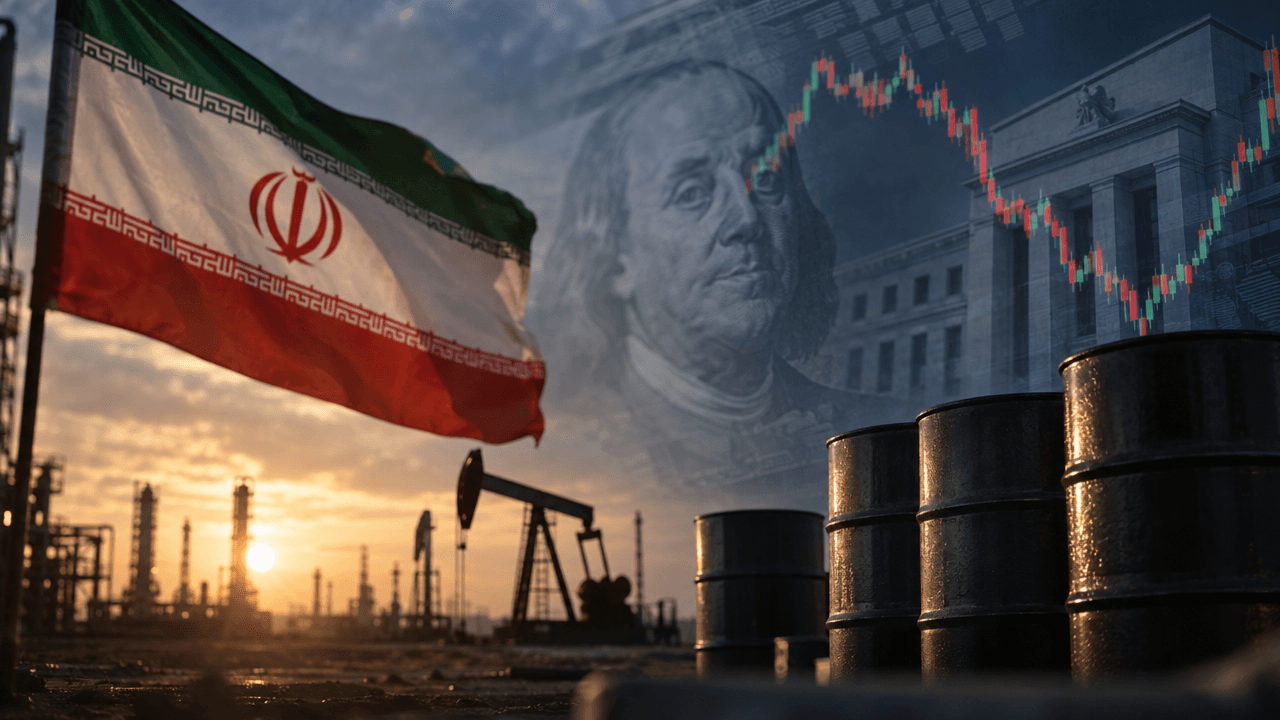
A single geopolitical headline can now move oil, inflation expectations, interest rates, equities and currencies within minutes. Tensions involving Iran have kept energy markets exceptionally sensitive to developments around regional supply routes and infrastructure. Even when crude prices retreat from their highs, the risk premium embedded in energy markets can remain elevated, leaving investors to navigate a difficult combination of slower growth and persistent inflation.
This is why the latest market moves cannot be understood by watching one asset class in isolation. Oil is influencing the inflation outlook, the inflation outlook is reshaping central-bank expectations, and those expectations are affecting bonds, equities and foreign exchange. For traders, the central question is not simply whether oil rises or falls, but how long the disruption lasts and how broadly higher energy costs spread through the economy.
Oil Prices Are The First Transmission Channel
Geopolitical risk typically enters financial markets through the supply side. If conflict threatens production, export terminals, shipping lanes or refining capacity, traders immediately reassess the amount of energy available to the global economy. Prices may rise even before a physical shortage develops because buyers pay more to secure supply and sellers demand compensation for additional risk.
The situation is particularly important when concerns involve critical energy routes. A disruption to crude exports can affect fuel prices directly, while a disruption to refined products such as gasoline and diesel may create even sharper pressure for households and businesses. Recent reporting has highlighted that refined-product supplies remain tight despite some recovery in crude exports, increasing the risk that energy inflation persists beyond the initial market shock. [4]
Energy assets therefore remain the clearest potential beneficiaries of escalation. Crude oil, refined products, energy producers and some commodity-linked currencies may attract demand when traders price in tighter supply. However, these markets can also reverse quickly if negotiations improve, transportation resumes or inventories rise. High volatility is a defining feature of geopolitical trading, not an exception.
Inflation Expectations Complicate Central-bank Policy
Higher oil prices are not automatically a reason for central banks to raise interest rates. Monetary policymakers generally distinguish between a temporary energy shock and a persistent increase in underlying inflation. The challenge is that energy costs can influence transportation, manufacturing, food distribution, wages and consumer expectations.
If businesses pass higher fuel and shipping expenses to customers, headline inflation can spread into core categories. If workers respond by seeking higher wages, or consumers begin expecting prices to remain elevated, the initial shock becomes harder to contain. In the United States, one-year inflation expectations rose to 4.7% in October from 4.6% in September, according to reporting based on the University of Michigan survey. [1]
This creates a policy dilemma. Raising rates may help restrain demand and prevent inflation expectations from becoming entrenched, but tighter financial conditions can weaken investment, hiring and household spending. Holding rates steady may support growth, but could allow the energy shock to become more persistent. The Reserve Bank of Australia has already indicated that fuel and other commodity prices linked to the Middle East conflict are likely to contribute more to inflation than previously expected. [5]
Bonds And Equities Face Opposing Forces
Bond markets often react first through rising inflation expectations. Investors demand higher yields when they believe central banks will keep rates elevated for longer or when future cash flows are eroded by inflation. As yields rise, existing bond prices generally fall. Longer-duration government bonds are especially sensitive because their valuations depend more heavily on distant interest-rate expectations.
Yet geopolitical shocks can also create a flight to safety. Investors may buy highly liquid government bonds when they fear a sharp economic slowdown, partially offsetting the upward pressure from inflation. This explains why bond markets can behave unpredictably during an energy shock: inflation pushes yields higher, while growth concerns encourage safe-haven buying.
Equities face a similar conflict. Energy companies may benefit from stronger prices, but higher fuel and financing costs can damage industries such as transportation, chemicals, manufacturing, retail and travel. Consumers may also reduce discretionary spending as energy bills rise. The result is often a widening gap between sectors rather than a uniform market reaction.
The IMF has noted that Middle East conflict-related energy prices have raised inflation expectations and produced higher, more volatile bond yields, while emerging-market currencies experienced a sharp sell-off. [8] This cross-asset pattern shows why a headline that appears positive for one industry can be negative for the broader economy.
Currencies And Global Growth Risks
Foreign exchange markets add another layer of complexity. Commodity exporters can receive support when oil prices rise, particularly if their trade balances improve. Import-dependent economies may face the opposite pressure because they must spend more on energy from abroad. Risk-sensitive currencies can weaken as investors reduce exposure to countries with large external financing needs or fragile fiscal positions.
Higher energy prices can also redistribute growth across regions. Exporters may benefit from increased revenues, while importers face weaker household purchasing power and wider trade deficits. Europe, parts of Asia and other energy-importing regions can be particularly vulnerable if the shock lasts through the winter or coincides with weak industrial activity.
For traders, the most important distinction is between a short-lived price spike and a sustained supply disruption. A temporary shock may produce volatility without changing long-term economic trends. A prolonged shock can alter earnings forecasts, inflation projections, rate expectations and currency valuations simultaneously.
Practical Takeaways For Simfi Traders
Start with scenarios rather than predictions. Build a base case for gradual de-escalation, an upside oil scenario involving further supply disruption and a downside growth scenario in which demand weakens sharply. Consider how each scenario would affect crude, energy equities, government bonds, stock indexes and major currencies.
Track the relationships between markets. Oil rising alongside bond yields suggests inflation fears are dominating. Oil rising while yields fall may indicate that growth concerns and safe-haven demand are becoming more powerful. Equity weakness combined with a stronger U.S. dollar often signals a broader reduction in risk appetite.
Manage position size around scheduled policy meetings and geopolitical headlines. Volatility can expand rapidly, and a stop-loss that appears reasonable in calm conditions may be vulnerable to slippage during a news-driven move. Avoid treating energy exposure as a complete hedge for a diversified portfolio; energy gains may not offset losses in technology, consumer or emerging-market positions.
For SimFi traders, the objective is not to predict every headline. It is to recognize the transmission channels, define risk before entering a trade and remain flexible as the market decides whether inflation or growth is the dominant concern.
Geopolitical and oil-price risks will continue to drive cross-asset moves as long as uncertainty surrounds regional supply and the policy response. The strongest approach is to connect the dots: energy affects inflation, inflation affects central banks, central banks affect bond yields, and yields influence equities and currencies. Traders who monitor that chain can respond with greater discipline instead of reacting to each headline in isolation.