
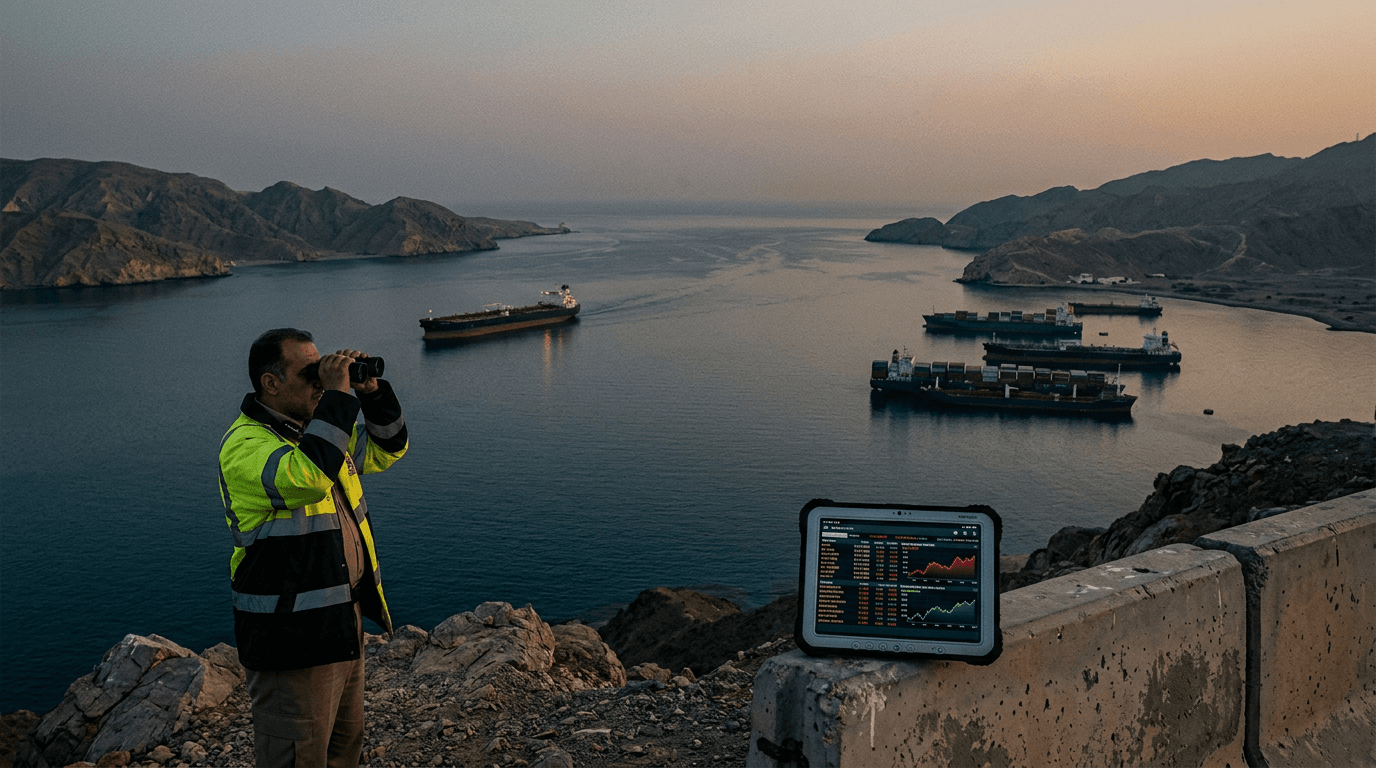
The Strait of Hormuz, one of the world's most critical maritime chokepoints, has transformed into a war zone over the past two weeks, with shipping traffic plummeting nearly 70 percent as tensions between the United States, Israel, and Iran escalate into direct military confrontation. This dramatic collapse in commerce through the narrow waterway—which typically handles between 120 to 140 vessels daily but saw only a single ship pass through on March 8th—is reverberating through global energy markets, driving crude oil prices above $100 per barrel and triggering widespread economic consequences that reach far beyond the Middle East.[1][2]
The speed and severity of this disruption underscore just how fragile global supply chains have become in our interconnected world. Just two weeks ago, on February 28th, nearly 98 ships were transiting the Strait daily. Today, shipping companies face an agonizing choice: risk their vessels and crew in a combat zone or find alternative, costly routes that add weeks to delivery schedules. The human cost has already become apparent, with multiple commercial vessels struck by attacks, including the Thai trading vessel that was hit overnight, forcing crew evacuations.[1]
Understanding The Strait's Critical Importance
The Strait of Hormuz represents a geographical linchpin for the global economy. This narrow waterway connects the Persian Gulf to the Gulf of Oman and the Arabian Sea, serving as the passage through which approximately 20 percent of the world's oil supply flows daily.[1] For energy-dependent nations worldwide, particularly those in Asia and Europe, there is simply no viable alternative route for such enormous quantities of crude. When this artery constricts, the entire world feels the pressure almost immediately.
The strategic reality is sobering: any disruption here isn't a regional problem—it's a global crisis. Oil refineries in Japan, South Korea, India, and Europe depend on steady flows through these waters. Power plants, transportation networks, and manufacturing facilities all downstream depend on the assumption that oil will continue flowing. Break that assumption, and the economic ripple effects multiply exponentially.
Shipping Chaos And Escalating Insurance Costs
What makes this crisis particularly severe is not just the attacks themselves, but the cascading economic consequences. Beyond the direct hits on vessels like the Stenna Imperative tanker struck in Bahrain, shipping companies now face skyrocketing insurance premiums as underwriters price in the heightened risk.[2] The U.S. Maritime Administration itself has advised vessels to avoid the area entirely, transforming what was once a busy thoroughfare into a no-go zone for risk-conscious operators.[2]
This creates a vicious cycle. Higher insurance costs make routing through the Strait less economically attractive, even if attacks could theoretically be avoided. Shipping companies face impossible calculations: pay premium rates to insure passage through the Strait, or add weeks and substantial fuel costs by rerouting around Africa or Asia. Many are choosing neither—they're simply pausing operations in the region entirely.
The impact is staggering. Economists estimate that disruptions to shipping, tourism, and supply chains across the Middle East are costing approximately $600 million daily.[1] When you factor in the secondary effects—higher fuel prices for businesses worldwide, delayed manufacturing outputs, and supply chain bottlenecks—the true economic damage likely far exceeds even these sobering estimates.
Oil Prices Surge Amid Supply Fears
The energy markets have responded with predictable alarm. Crude oil has surged above $100 per barrel as traders price in the prospect of sustained supply disruptions.[1] This represents a dramatic shift from recent months and reflects genuine fear about how long this conflict will persist and how severely it will impact global oil availability.
For energy consumers worldwide, this translates directly into higher costs at the pump, increased heating bills, and elevated operational expenses for any business reliant on fuel. Airlines face margin compression. Shipping companies see their fuel surcharges climb. Agricultural operations that depend on fuel-intensive equipment face reduced profitability. The effects permeate through every sector of the economy.
What's particularly concerning is the vulnerability this reveals in critical infrastructure. Multiple pipelines in the region—including the Fujera pipeline, essential for moving cargo out of the Gulf—have already come under attack, further constraining supply options.[2] If attacks continue against major export terminals, the situation could deteriorate significantly.
Navigating The Uncertainty Ahead
For traders and investors, this moment presents both significant risks and potential opportunities. The geopolitical situation remains highly volatile and unpredictable. Energy prices could continue climbing if the conflict escalates further, or they could normalize if military tensions de-escalate. Supply chain-dependent sectors face margin pressure, while energy producers and alternative energy companies may benefit from elevated commodity prices.
The path forward depends entirely on whether military confrontation in the region can be contained or whether it expands further. Meanwhile, global markets will remain under pressure as long as one-fifth of the world's oil supply remains threatened by conflict.