
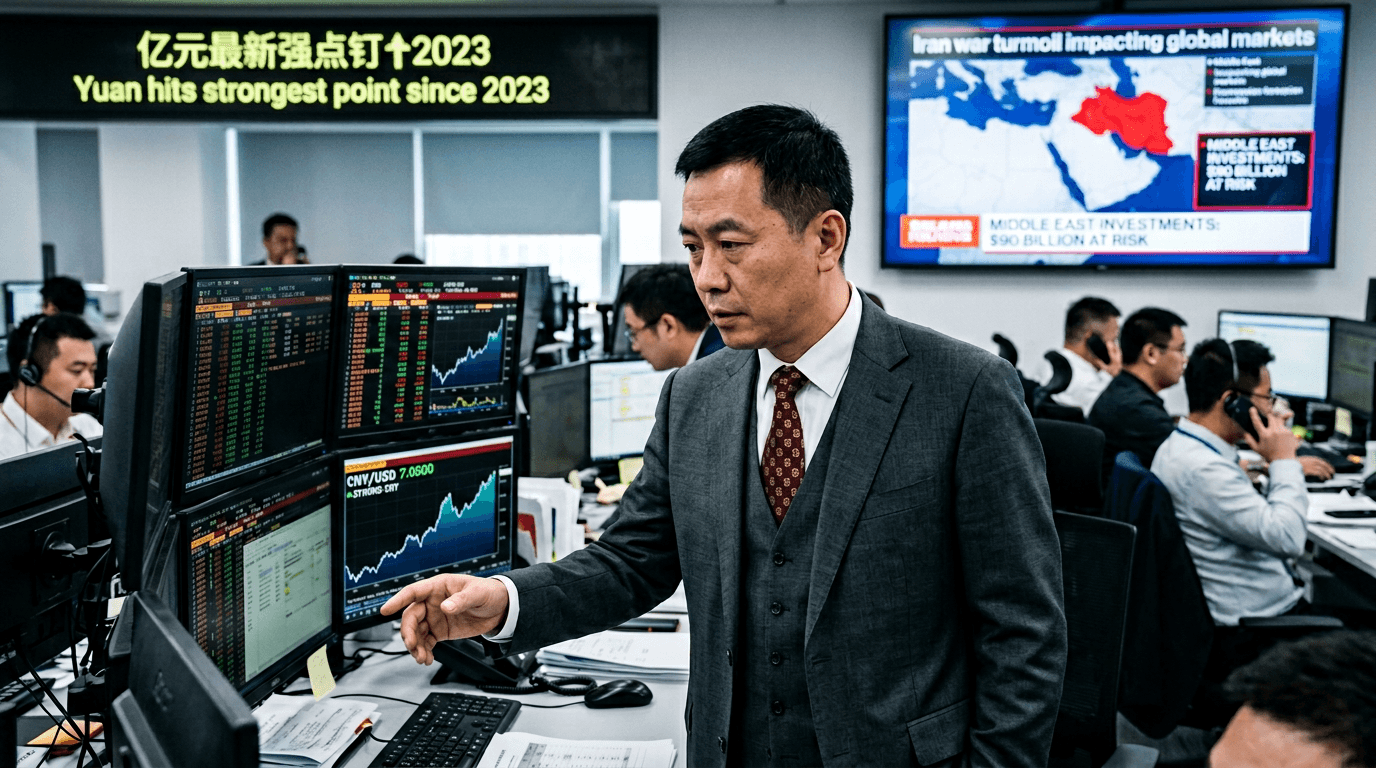
The People's Bank of China is taking decisive action to protect the yuan from geopolitical shocks triggered by the escalating Iran war. On March 11, 2026, the PBOC set the yuan fixing at 6.8917 per dollar, marking its strongest level since 2023, signaling that China's central bank is willing to employ flexible currency management to weather the current market turmoil. This strategic shift reflects a calculated approach to maintaining economic stability while protecting China's massive Middle East investments from the fallout of regional conflict.
Pboc's Volatile Fixing Strategy
The PBOC's recent actions reveal a central bank adapting its playbook in real time. The 30-day volatility of the yuan's daily reference rate climbed to its highest level since December 2024 this week, demonstrating that China's central bank is accepting—and even welcoming—currency fluctuations as a tool for managing broader economic risks.[1] With the yuan trading around the 6.87 level, the PBOC is signaling an increased tolerance for yuan flexibility, a stark departure from historical preferences for currency stability.
What makes this approach particularly interesting is the reversal of recent policy signals. Just days before, the PBOC had eased derivatives rules that suggested tolerance for yuan weakness. However, the bank abruptly reversed course, setting the daily reference rate stronger despite the surging dollar. This sudden pivot, defying market expectations for further decline, demonstrates the central bank's anxiety about the combined impact of a strengthening dollar and spiking oil prices amid Middle East turmoil.[2]
China's Middle East Exposure At Risk
Understanding the urgency of the PBOC's response requires examining China's massive economic footprint in the Middle East. Since 2019, Chinese companies have invested nearly $90 billion across the region, building a vast network of critical economic relationships. Chinese exports to the Middle East grew almost twice as fast as exports to the rest of the world last year, demonstrating how central this region has become to Beijing's economic strategy.[3]
These investments span multiple sectors and countries. China has secured oil deals with Iran, developed ports in the United Arab Emirates and Israel, expanded electric vehicles and steel exports, and launched massive renewable energy projects. For years, Beijing quietly built this economic web, viewing the Middle East as one of its fastest-growing economic frontiers. However, the Iran war threatens to disrupt this entire interconnected system.
Immediate Threats To The Economic Web
The escalating conflict creates multiple pressure points on China's economic interests. Oil prices are surging, inflation risks are rising, and critical shipping routes are under threat. Most critically, the Strait of Hormuz—the world's most essential energy chokepoint—faces intense pressure as regional tensions escalate. These threats have direct implications for China's energy security and the profitability of its Middle East investments.
The PBOC's volatile fixing strategy serves as a buffer against these shocks. By maintaining flexible yuan management, the central bank can help insulate Chinese companies from currency losses while managing the inflationary pressures created by rising oil prices. This approach allows China to absorb some of the economic pain without completely sacrificing the yuan's value or market confidence in the currency.
Strategic Currency Flexibility
The PBOC's approach reflects a nuanced understanding of modern central banking under geopolitical stress. Rather than attempting to defend a fixed exchange rate—which could drain reserves and create market credibility issues—China's central bank is instead using controlled volatility to manage multiple objectives simultaneously. The stronger fixing on March 11 counteracted dollar strength, protecting Chinese firms with dollar-denominated liabilities while supporting importers facing higher commodity costs.
This strategy also sends a reassuring signal to markets. By demonstrating that the PBOC can actively manage currency volatility without losing control, the central bank aims to prevent panic selling of the yuan and maintain confidence in Chinese financial assets. The increased flexibility signals confidence in the bank's ability to insulate the currency from broader market turmoil, a crucial message when geopolitical risks threaten emerging market stability.
Key Takeaways For Traders And Investors
For forex traders, this development signals that the yuan is likely to remain volatile in the near term, with the PBOC actively managing daily reference rates to counter external shocks. The willingness to accept higher volatility suggests the central bank prioritizes financial stability and inflation management over strict exchange rate targeting.
For investors with exposure to Chinese companies or assets, the PBOC's actions provide some reassurance that policymakers are actively managing downside risks from the Iran conflict. The currency flexibility should help Chinese exporters maintain competitiveness while supporting domestic inflation control.
For those tracking Middle East geopolitics and energy markets, the PBOC's response underscores how deeply integrated China has become in regional economics. The central bank's actions reveal that Beijing views its Middle East investments as strategically critical, worth deploying significant monetary policy resources to protect.
The Iran war has accelerated the PBOC's shift toward dynamic currency management, demonstrating that modern central banking increasingly requires flexibility and tactical responsiveness in an unstable world.