
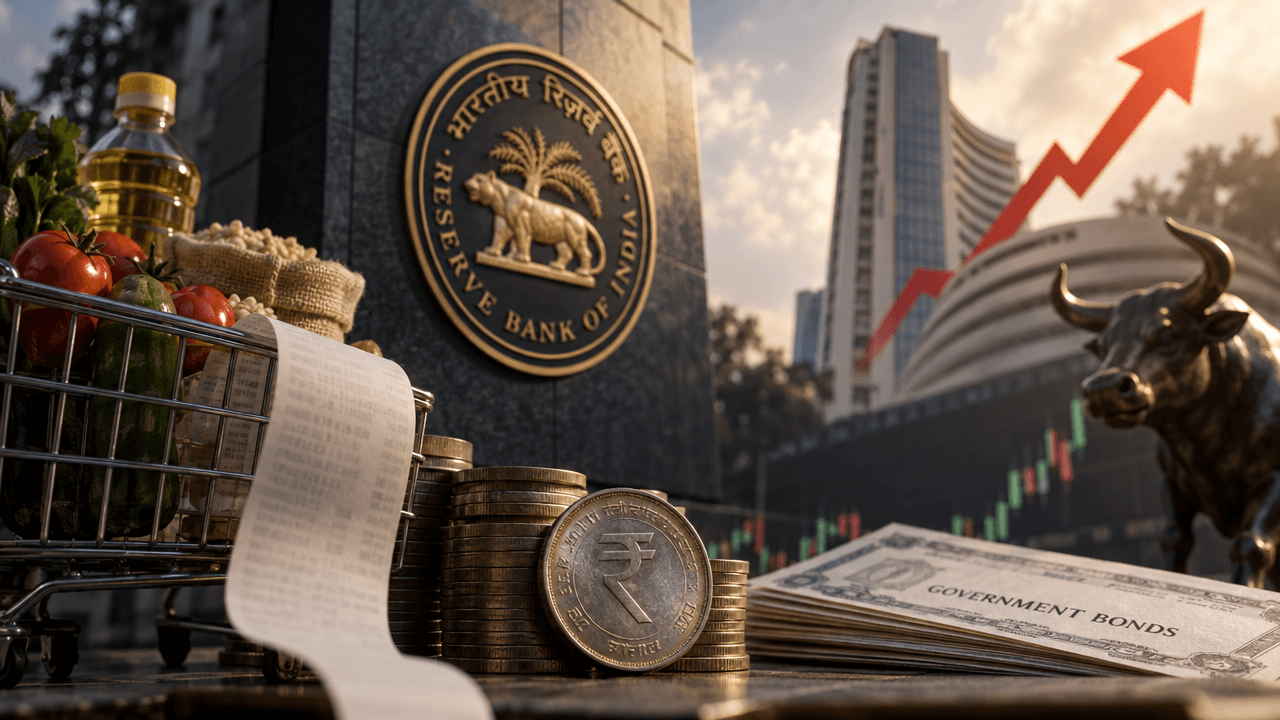
India’s retail inflation has moved into uncomfortable territory. Consumer price inflation accelerated to 6.09% in October from 5.54% in September, crossing the Reserve Bank of India’s 6% upper tolerance ceiling for the first time in two years. The reading is only marginally above the limit, but it carries important implications for interest rates, the rupee, bonds, equities, and household purchasing power. [1][2]
The October data also marks a sharp reversal from the relatively benign inflation environment seen earlier in the year. With prices rising for a ninth consecutive month and food inflation becoming the main source of pressure, investors are now reassessing the likelihood of further monetary tightening at the RBI’s December policy meeting.
WHY THE 6% CEILING MATTERS
India’s monetary framework targets consumer inflation at 4%, with a permitted tolerance band ranging from 2% to 6%. The RBI is not required to react mechanically to a single data point above the ceiling, but a breach still signals that price pressures have become more persistent than policymakers would prefer. [3][8]
The October increase was also significant because it placed inflation at its highest level in roughly two years. A single monthly reading does not constitute a formal failure of the inflation-targeting framework. That determination depends on inflation remaining outside the tolerance range for a sustained period. Nevertheless, the breach raises the pressure on the central bank to demonstrate that it is prepared to prevent inflation expectations from becoming entrenched. [7]
For markets, the difference between 5.99% and 6.09% is less important than the direction of travel. Inflation has risen from 5.54% in September, and investors will now focus closely on November data to determine whether October was a temporary spike or the beginning of a broader acceleration.
Food Prices Drive The Acceleration
Food costs are at the center of the latest increase. Food inflation climbed to 8.94% in October, making it the largest contributor to the headline reading. Reports have pointed to higher prices for vegetables and other essential items, with supply disruptions and seasonal factors adding to pressure on household budgets. [10][11]
Food-driven inflation can be difficult for a central bank to control through interest rates alone. Higher borrowing costs do not immediately increase the supply of onions, vegetables, or other staples. However, persistent food inflation can influence wage demands, consumer expectations, and spending decisions. If businesses respond to higher input costs by raising prices across a wider range of goods and services, a temporary food shock can become a broader inflation problem.
The data also reveals differences across regions. Rural inflation reached 6.63%, compared with 5.41% in urban areas. [3] This gap matters because rural households tend to allocate a larger share of their income to food. Sustained rural inflation could therefore weaken consumption of discretionary products even if urban demand remains relatively resilient.
What It Means For Rbi Policy
The inflation surprise strengthens the case for a more cautious RBI. Economists have raised the possibility of another policy-rate increase at the December meeting, with some expectations ranging from 25 to 50 basis points depending on incoming inflation data and the central bank’s assessment of underlying price pressures. [13]
A rate hike would aim to cool demand, reinforce the RBI’s inflation-fighting credibility, and prevent expectations of continued price increases from spreading. However, the central bank must balance inflation control against economic growth. Higher rates increase financing costs for households and companies, potentially slowing housing activity, investment, and consumer spending.
The RBI may therefore avoid treating the October figure as an automatic signal for aggressive tightening. Policymakers are likely to examine core inflation, food-supply conditions, oil prices, currency movements, and future inflation expectations before deciding whether action is necessary. The most important question is whether price pressures are broadening beyond food.
Market Impact: Rupee, Bonds, And Equities
The inflation report is potentially supportive for the Indian rupee because expectations of higher interest rates can improve the relative appeal of rupee-denominated assets. A stronger currency can also reduce the local cost of imported commodities, including energy, although exchange-rate movements depend on global factors such as the US dollar, Treasury yields, and foreign capital flows.
Indian government bonds are more directly vulnerable. Expectations of a rate increase generally push bond yields higher and prices lower, particularly at the short end of the yield curve. Rate-sensitive sectors such as banks, real estate, automobiles, and other companies dependent on affordable credit could also face pressure if borrowing costs rise.
Equity markets may respond unevenly. Financial companies with strong lending margins may prove more resilient, while highly leveraged businesses and consumer-facing companies could struggle. Defensive sectors may attract interest if investors become concerned that elevated inflation will reduce household purchasing power.
Practical Takeaways For Traders
Traders should avoid reacting to the headline number in isolation. The next inflation release, food-price trends, and official RBI commentary will be critical in determining whether markets price one rate hike or a longer tightening cycle.
Key signals to monitor include November CPI inflation, core inflation, rural demand, government measures to improve food availability, crude-oil prices, and the behavior of the rupee. A temporary food shock could fade, but continued increases across services and non-food goods would represent a more serious policy challenge.
For SimFi traders, the event offers a useful lesson in cross-market analysis. An inflation surprise can create simultaneous opportunities and risks: the rupee may gain, bond prices may fall, and rate-sensitive equities may weaken. The strongest approach is to define the expected policy impact first, then consider how each asset class historically responds.
Conclusion
India’s 6.09% October inflation reading is a warning signal rather than an automatic policy emergency. It has breached the RBI’s tolerance ceiling, exposed renewed food-price pressure, and increased the probability of tighter policy in December. The next few months will determine whether this is a short-lived supply shock or the start of a more persistent inflation cycle.
For traders and investors, the central lesson is clear: inflation data matters not only because of the number itself, but because of what it changes in the policy outlook. Markets will now be watching every food-price update, RBI statement, and inflation expectation for evidence of what comes next.