
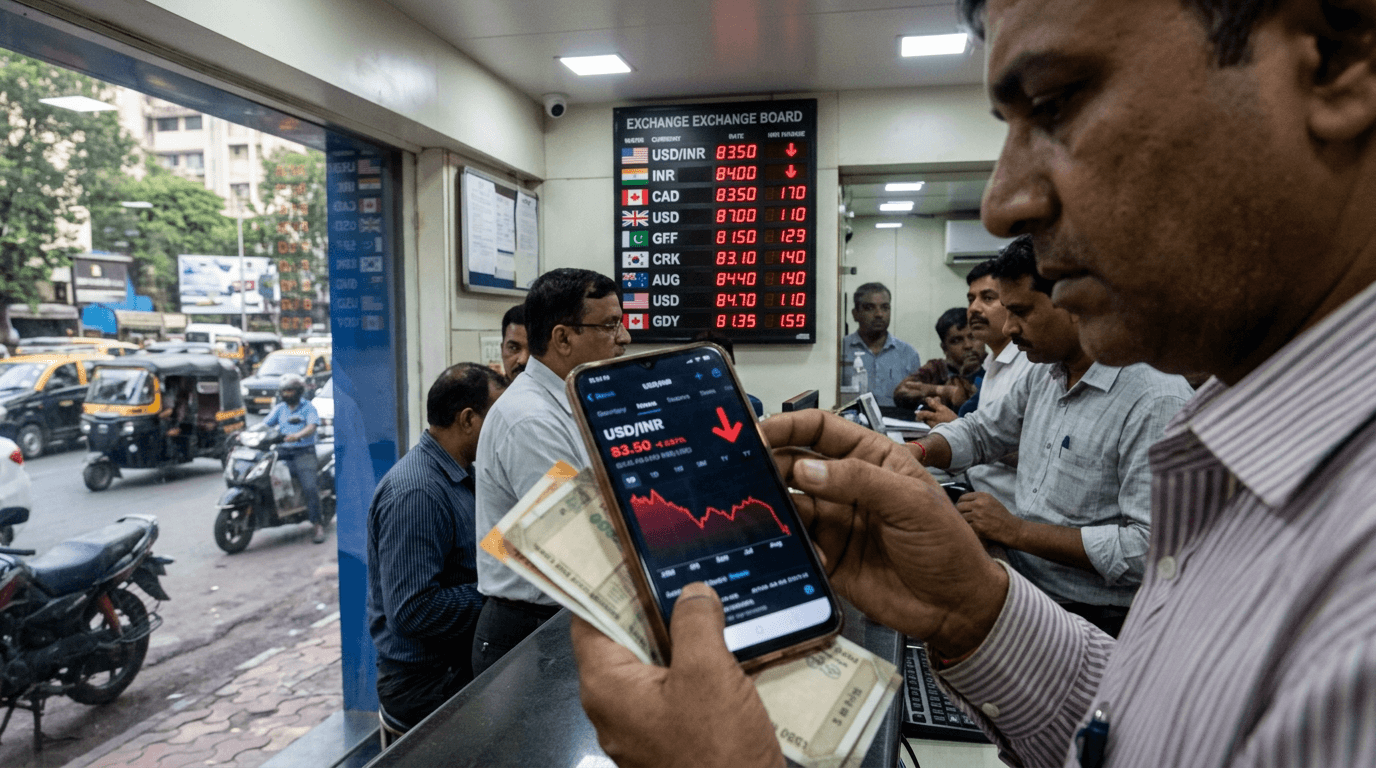
India's rupee has come under sustained pressure in recent weeks, approaching multi-year lows as energy supply concerns and global oil volatility weigh heavily on the currency's performance. The Indian Rupee has depreciated to approximately 92.55 Indian Rupees per U.S. Dollar as of mid-March 2026, marking a significant weakening from levels around 90.73 in January.[1][7] This deterioration reflects a broader pattern of emerging market currency stress triggered by supply-side energy shocks and mounting inflationary pressures across Asia's third-largest economy.
Understanding The Rupee's Recent Weakness
The Indian Rupee's depreciation tells a story of structural economic pressures that extend beyond routine currency fluctuations. From January through mid-March 2026, the rupee has weakened by approximately 1.8 to 2 percent, with the worst exchange rate recorded at 92.6049 INR per USD on March 13, 2026.[4] While this may seem modest on the surface, for India's import-dependent economy and its vast population exposed to dollar-denominated debt, even small movements in currency values carry significant real-world consequences.
The timing of this weakness is not coincidental. Global energy markets have remained volatile, with oil prices creating headwinds for energy-importing nations like India. Unlike oil-exporting nations that benefit from higher crude prices, India's massive energy import bill becomes increasingly costly when the rupee weakens simultaneously. This dual squeeze creates a particularly challenging environment for policymakers attempting to manage inflation and support economic growth.
Energy Supply Worries As The Primary Driver
India faces a fundamental energy challenge that extends beyond short-term supply disruptions. The nation relies heavily on imported crude oil to fuel its rapidly growing economy, with petroleum products accounting for a substantial portion of India's import bill. When global oil prices spike or supplies face constraints, the demand for U.S. dollars increases sharply as Indian importers rush to secure energy resources. This surge in dollar demand naturally weakens the rupee against the greenback.
The current energy environment has created particular anxiety among investors and policymakers. Supply concerns stemming from geopolitical tensions, production disruptions, or logistical challenges can rapidly translate into higher oil prices. For every dollar increase in crude oil prices, India's import costs rise by billions annually, creating immediate pressure on the current account and necessitating larger inflows of foreign currency to maintain economic balance. This structural vulnerability has made the rupee particularly sensitive to energy-related shocks compared to commodity-exporting currencies.
Central Bank Intervention And Market Dynamics
The Reserve Bank of India has likely deployed foreign exchange reserves to provide support to the weakening rupee, though the sustainability of such interventions remains questionable when fundamental economic pressures persist. Central banks typically intervene in currency markets during episodes of sharp depreciation to prevent disorderly selling and maintain financial stability. However, intervention works most effectively when the underlying pressures are temporary. When depreciation stems from persistent economic fundamentals like higher energy costs, intervention merely slows the decline rather than reversing it.
The RBI faces a difficult balancing act. Aggressive intervention to support the rupee depletes valuable foreign exchange reserves that might be needed for other purposes, including managing import bills during emergencies. Conversely, allowing the rupee to weaken excessively imports inflation, as higher import costs translate into higher prices for fuel, metals, and manufactured goods. This inflationary pass-through can force the central bank to raise interest rates, potentially slowing economic growth.
Broader Implications For Emerging Markets
The rupee's weakness reflects a broader pattern affecting emerging market currencies worldwide. As global energy volatility persists, currencies from oil-importing nations face consistent selling pressure. Investors have increasingly rotated toward the safe-haven U.S. Dollar, creating additional headwinds for emerging market currencies. This pattern strains not only exchange rates but also bond markets, as higher dollar valuations make emerging market debt more expensive to service.
India's situation serves as a bellwether for other energy-importing emerging economies. The rupee's performance influences capital flows across Asia and shapes investors' risk appetite for emerging market assets more broadly. When the rupee weakens sharply, it often signals to market participants that other vulnerable currencies may face similar pressures, triggering broader sell-offs in emerging market assets.
Key Takeaways For Investors And Traders
The Indian Rupee's depreciation reflects genuine economic vulnerabilities related to energy dependency rather than temporary currency swings. Monitor global oil prices closely, as sustained elevated crude costs will continue pressuring the rupee. The RBI's intervention capacity remains an important factor, though it cannot indefinitely offset fundamental economic pressures. Finally, the rupee's weakness should be evaluated within the context of broader emerging market dynamics, where energy shocks and dollar strength create synchronized pressures across multiple currencies and asset classes.