
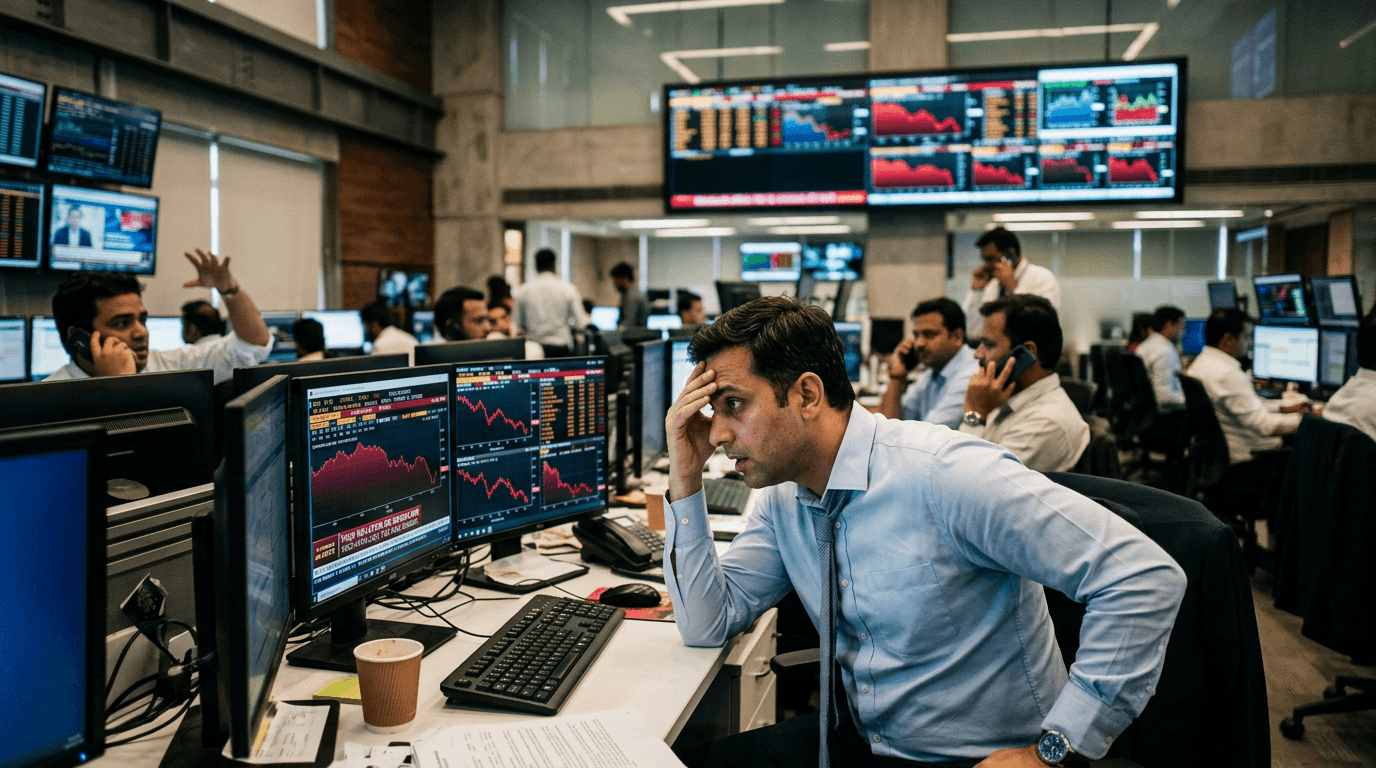
India’s latest inflation print has injected fresh uncertainty into the policy outlook and jolted interest‑rate expectations. Retail inflation rose to 4.38% in June, up from 3.93% in May, breaching the Reserve Bank of India’s (RBI) 4% midpoint target for the first time in about 17 months and hitting an 18‑month high.[1][2][3][5][7][11] For traders, this is more than a single data point: it is a potential inflection point for India’s rates cycle and a catalyst for repricing across INR forex pairs, local bond markets, and equity and rates futures.[7]
What The June Cpi Data Is Telling Us
June’s Consumer Price Index (CPI) print at 4.38% year‑on‑year marks a clear acceleration from May and slightly overshoots consensus expectations around 4.3%.[2][4] The move is not dramatic in magnitude, but it breaks an 18‑month stretch in which inflation sat at or below the RBI’s 4% target, within its 2–6% tolerance band.[3][5][7][11] Crossing that midpoint matters because the 4% level is the anchor of the RBI’s flexible inflation‑targeting framework.
The drivers of the June rise are broad but heavily concentrated in food and fuel. Food inflation climbed to about 5.32% in June from 4.78% in May, reflecting higher prices for cereals, pulses, vegetables, and some protein items.[1][5][6][10][13] Fuel and transport‑related costs have also firmed, helping lift restaurant and services prices.[8][10] Together, these categories pull the headline index higher and increase the risk that price pressures begin to spread more generally through the economy.[3][9][12]
There are also notable differences across regions. Rural inflation stands around 4.74%, while urban inflation is nearer 3.92%, consistent with heavier food weighting in rural consumption baskets.[5][13] This rural‑urban split is worth monitoring for traders because it can influence how political and policy narratives around inflation evolve in the coming months.
RBI’S FRAMEWORK AND WHY BREACHING 4% MATTERS
To understand the market reaction, it helps to revisit how the RBI thinks about inflation. The central bank operates under a flexible inflation‑targeting regime, with a medium‑term goal of 4% CPI, plus or minus 2 percentage points.[7][11] Being within the 2–6% band keeps inflation “acceptable,” but sustained deviations from 4% – especially on the upside – force the RBI to weigh tighter policy against growth risks.
For much of the past year and a half, the RBI has enjoyed a relatively comfortable environment: inflation moving gradually lower, core inflation tame, and policy rates steady at a repo rate of 5.25%.[3][7][13] At its most recent meeting, the Monetary Policy Committee (MPC) unanimously kept the repo rate unchanged and maintained a neutral stance, signalling a wait‑and‑watch approach.[3][7] That decision came before the June CPI data, when headline inflation was still sub‑4%.
The latest print complicates that posture. A number of economists now see higher odds that the RBI will shift toward a rate‑hiking cycle if inflation continues to firm.[3][4][6][8] Some suggest that an initial hike as early as the next meeting is a “growing possibility,” particularly if subsequent data confirm that price pressures are becoming more entrenched.[3][4] Others argue that the RBI may prefer to wait for more clarity on monsoon outcomes, food supply, and global crude prices before acting.[6][8][12]
In practical terms, this means traders should treat June’s CPI as a signal, not a verdict. It raises the probability of rate hikes over the next few quarters, even if the near‑term base case still leans toward a cautious RBI that reacts only if inflation remains above target or broadens beyond food and fuel.
Market Reaction: Inr, Bonds, Equities And Futures
The immediate impact of a stronger‑than‑expected CPI print is felt across India’s financial markets as participants reprice the future path of interest rates.
In INR forex pairs, higher inflation and rising rate‑hike odds have mixed implications. On one hand, a potential shift to tighter policy tends to support the currency by increasing carry and signalling a stronger anti‑inflation stance. On the other, sustained inflation can weigh on growth expectations and increase risk premia, especially if global risk sentiment is fragile. As a result, traders often look for relative value opportunities – for example, INR versus other emerging‑market currencies where rate cycles are more mature or clearly defined.
Local bond markets typically react even more directly. A print above the RBI target encourages traders to price in higher terminal rates, pushing government bond yields up, especially at the 2‑ to 5‑year part of the curve where policy expectations are most concentrated.[3][8][13] Curve steepening or flattening depends on whether markets see a short, sharp hiking cycle or a longer period of elevated policy rates. Watch for increased volatility around RBI commentary and future inflation releases, as each data point can trigger adjustments to rate‑path expectations.
India’s equity markets tend to assess inflation through two lenses: its impact on corporate margins and its influence on discount rates. Higher food and fuel costs can squeeze consumer‑facing sectors and companies with limited pricing power, while exporters and firms with global exposure may be more insulated. At the same time, expectations of higher interest rates can pressure valuation multiples, particularly for rate‑sensitive sectors such as financials, real estate, and leveraged growth stocks.
Rates futures and other derivatives on India’s yields are where the policy narrative is most explicitly traded. As the market shifts from a “steady‑rates” assumption toward a possible hiking cycle, implied forward rates rise and volatility in short‑tenor instruments can increase. For active traders – whether in live markets or simulated environments – this is where inflation data often creates the most actionable positioning opportunities.
How Traders Can Position In A Simulated Finance Environment
For traders using a Simulated Finance (SimFi) platform, an event like India’s June CPI release is an ideal case study in macro‑driven market repricing. The advantage of SimFi is the ability to test views and strategies around complex central‑bank dynamics without real‑world capital at risk.
Here are practical ways to engage with this theme
- Build a macro narrative: Start by mapping out scenarios – for example, “one rate hike in the next six months” versus “no hikes, but a hawkish RBI tone.” Then ask how each scenario would affect INR, bond yields, and key equity sectors.
- Express relative views: Instead of directional bets on India alone, consider relative trades in a simulated environment: India versus another emerging market with different inflation dynamics, or rate‑sensitive Indian sectors versus more defensive ones.
- Use event‑driven backtesting: Simulate how similar past inflation surprises affected markets. Look back at previous episodes when India’s CPI moved above 4% after a period of stability, and study how yields, FX, and equities reacted over one day, one week, and one month.
- Stress‑test positions: Model outcomes where inflation overshoots again – say, heading toward 5% or more – and where it quickly returns to target. Understanding how your simulated portfolio behaves under each path is key to developing robust trading instincts.
Key Takeaways For Traders
Several lessons emerge from India’s June CPI surprise that are broadly applicable to macro and rates trading:
First, thresholds matter. It is not just the level of inflation that counts, but whether key policy thresholds – like the RBI’s 4% target – are crossed and how long they stay breached.[5][7][11] Markets pay attention to these signals because they shape future central‑bank behaviour.
Second, composition is crucial. A headline overshoot driven mainly by food and fuel carries a different policy implication than one led by core services or wages.[3][9][12] Traders who dig into the underlying CPI components can better anticipate whether central banks will look through the move or respond aggressively.
Third, policy reaction functions are dynamic. The RBI has to balance inflation risks against growth, external shocks, and financial stability. That means the same data point can lead to different policy responses depending on the broader backdrop, making it essential to track not just numbers but speeches, minutes, and projections.[3][4][7]
Finally, simulated trading around such events helps build an intuitive feel for how macro surprises ripple through asset prices. Whether you are focused on INR forex pairs, India bond yields, equity indices, or rates futures, using environments that mirror real‑world market dynamics can sharpen decision‑making ahead of the next data release or policy meeting.