
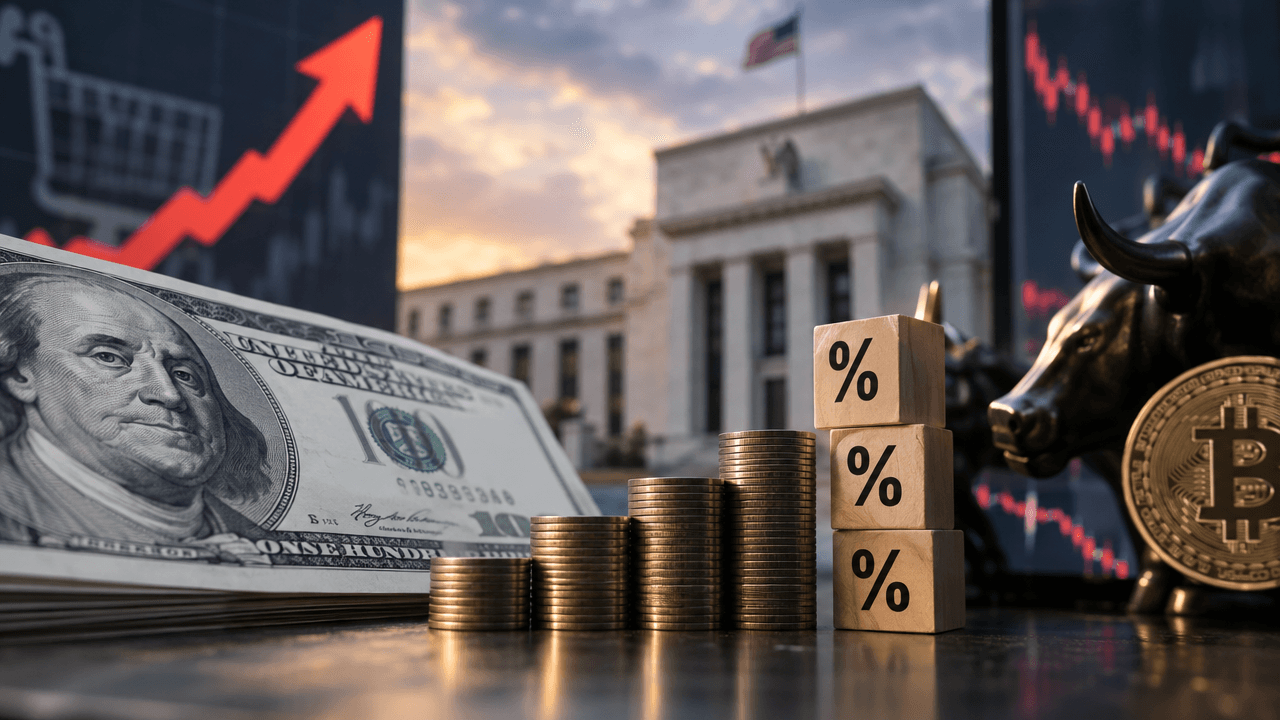
A hotter-than-expected U.S. inflation report has quickly changed the market’s interest-rate outlook. September consumer prices rose 3.7% from a year earlier, exceeding the 3.6% forecast, while core inflation increased 0.3% month over month and 2.6% annually. Because core inflation excludes food and energy, the data suggested that price pressures are not limited to volatile commodities. [1]
The immediate response was familiar: the dollar strengthened, Treasury yields moved higher, and investors reduced exposure to equities, high-beta currencies and crypto assets. The report reinforced concerns that the Federal Reserve may need to keep monetary policy restrictive for longer—or potentially raise rates again before the end of the year.
Why The Inflation Surprise Matters
Inflation data matters because it influences the real value of money and the path of central-bank policy. When prices rise faster than expected, the Federal Reserve faces pressure to maintain higher interest rates. Higher rates can slow borrowing, investment and consumer demand, but they may also be necessary to prevent inflation expectations from becoming entrenched.
The September figures were important because the strength extended beyond energy. Headline inflation accelerated to 3.7%, while core inflation also exceeded forecasts. That combination suggests the market cannot simply dismiss the report as a temporary consequence of higher oil or gasoline prices. Economists described the data as evidence that domestic price pressures may be becoming more persistent. [1]
For traders, the key takeaway is that one inflation report can reshape expectations for several upcoming policy meetings. Before the release, money markets placed the probability of another rate increase later in October near 20%. Afterward, that probability rose to approximately 47%, while expectations for an additional December increase strengthened as well. [1]
The Dollar Benefits From Higher Rate Expectations
The U.S. dollar typically gains when markets expect higher American interest rates. Investors seeking yield may prefer dollar-denominated assets, while traders close positions that depend on falling rates or a weaker currency.
Following the inflation release, the dollar rose against a basket of major currencies. Separate market reporting showed the dollar reaching its highest level of the year as investors anticipated a tighter policy environment. [9]
This reaction can affect global markets well beyond the United States. A stronger dollar increases the local-currency cost of dollar-denominated debt for emerging-market borrowers. It can also pressure commodities, since oil, metals and other globally traded resources are commonly priced in dollars.
High-beta currencies are especially vulnerable. The Australian dollar, New Zealand dollar and many emerging-market currencies tend to perform well when investors are confident and willing to accept risk. When the dollar rises alongside a hawkish Fed outlook, those currencies can lose support quickly.
Bonds Face A Two-sided Challenge
Bond prices and yields move in opposite directions. When investors expect higher interest rates, existing bonds with lower coupons become less attractive, causing their prices to fall and their yields to rise.
The two-year Treasury yield, which is highly sensitive to expectations for Federal Reserve policy, jumped seven basis points to 4.872% after the report, rising from roughly 4.77% earlier in the session. Longer-term yields also moved sharply higher initially, with the 10-year yield rising as much as 11 to 12 basis points in some market reporting. [1][9]
However, the bond reaction did not remain one-directional. As investors became more concerned about the outlook for equities and other risk assets, Treasuries later attracted safe-haven demand. The 10-year yield subsequently reversed its increase and traded below 5.11%, reaching a three-week low. [3]
This reversal illustrates an important market lesson: inflation can push yields higher, while a broader risk-off move can pull them lower. The dominant force may change from one trading session to the next. Traders should therefore distinguish between an initial policy repricing and a later flight to quality.
Why Risk Assets Come Under Pressure
Higher interest rates reduce the present value of future corporate earnings. That creates particular pressure for growth stocks, technology companies and other businesses whose expected cash flows lie far in the future. When Treasury yields rise, investors may demand a greater return for holding volatile assets.
Equities can also weaken because higher borrowing costs reduce the ability of companies and households to spend. Businesses face more expensive financing, while consumers may delay purchases of homes, vehicles and other large-ticket items.
Cryptocurrency markets are similarly sensitive to liquidity and interest-rate expectations. When investors move toward cash and short-term government securities, speculative assets often lose support. Bitcoin and other digital assets may therefore decline even when the inflation report has no direct connection to blockchain activity.
The risk-off effect can become self-reinforcing. Falling equities reduce confidence, weaker sentiment encourages more defensive positioning, and demand for the dollar increases as investors seek liquidity. At the same time, crowded trades in high-beta assets may unwind rapidly.
Practical Takeaways For Traders
First, watch the difference between headline and core inflation. Energy prices can create large short-term moves, but core inflation often provides a clearer signal about persistent domestic pressures.
Second, monitor the front end of the Treasury curve. Two-year yields and interest-rate futures frequently respond faster than long-term bonds because they are closely tied to expected Fed policy.
Third, avoid assuming that a stronger dollar will move every market in a straight line. The dollar can rise alongside Treasury yields during a policy repricing, then remain firm while long-term yields fall during a flight to safety.
Finally, manage exposure around major data releases. Inflation reports can produce sharp moves across currencies, bonds, stocks and crypto within minutes. Smaller position sizes, predefined risk limits and awareness of liquidity conditions can be more valuable than trying to predict every market reaction.
Conclusion
The latest inflation shock has reminded markets that the path toward easier monetary policy is not guaranteed. Persistent price pressures are encouraging traders to price a more restrictive Federal Reserve, supporting the dollar and initially weighing on Treasuries and risk assets.
The broader message is not simply that inflation was high. It is that inflation was stronger than expected in areas policymakers watch closely. Until future reports show a sustained cooling trend, investors may continue to demand compensation for interest-rate risk, while equities, high-beta currencies and crypto remain vulnerable to further hawkish surprises.