
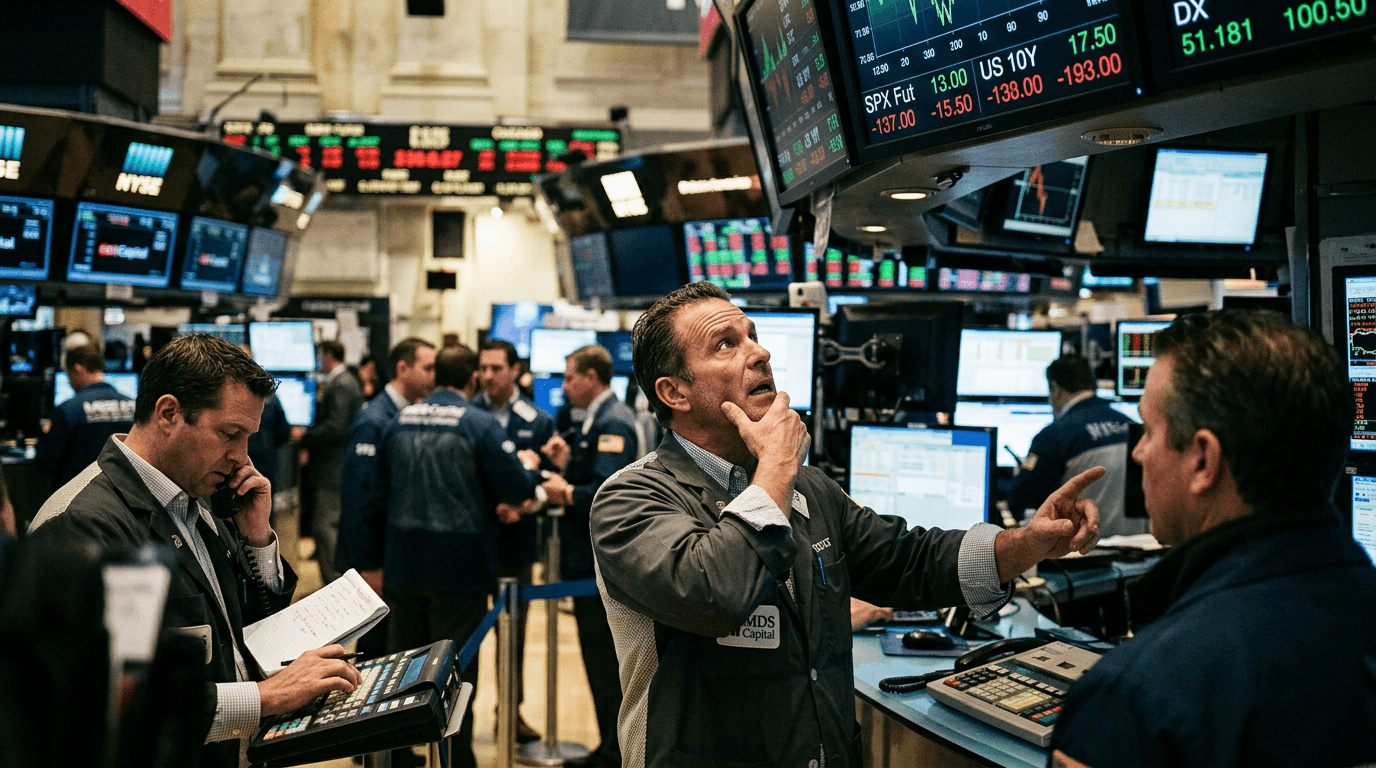
Inflation is back at the center of the market narrative, and the latest U.S. data have kept traders firmly focused on what the Federal Reserve will do next on interest rates. Headline and core price measures are still running above the Fed’s 2% goal, even as some categories show signs of cooling, reinforcing the idea that rate cuts will be slower and more conditional than many hoped at the start of the year[2][8]. For anyone trading FX, Treasuries, or equity index futures, that evolving rate path is shaping yield curves, dollar strength, and risk appetite day by day.
Inflation Data Keeps The Fed On Edge
Recent inflation releases have sent a mixed but unmistakably cautious signal to policymakers. The Consumer Price Index (CPI) for May showed headline prices rising at a 4.2% annual rate, marking the third consecutive month of acceleration and underscoring that disinflation momentum has stalled for now[2][7]. Core CPI, which strips out food and energy, has been more contained at 2.9% year-on-year, but it remains above levels consistent with the Fed’s comfort zone[2].
On the Fed’s preferred measure, the personal consumption expenditures (PCE) price index, inflation has also stayed above target. Earlier data for the first quarter showed PCE inflation running around 3.4%, compared with the central bank’s 2% objective over the longer run[1][8]. That gap, though narrower than in 2022–23, is enough to keep officials wary of easing prematurely.
At the same time, growth indicators have softened from their earlier pace, with some readings coming in below estimates of the economy’s potential[1]. This creates a familiar dilemma for the Fed: inflation that is still too high for comfort, but activity that no longer looks overheated. Instead of moving quickly to cut, the central bank has opted to hold rates steady and wait for more convincing evidence that price pressures are truly under control[5].
THE FED’S RATE PATH: HIGHER FOR LONGER, WITH OPTIONALITY
Policy rates tell the story. The federal funds target range has been kept at 3.50%–3.75% for a fourth consecutive meeting, signaling a clear “pause” after a series of cuts that began in late 2024[4][5]. Earlier, the Fed reduced rates by about 1.75 percentage points to unwind part of the aggressive hiking cycle that followed the pandemic surge in inflation[3][4]. But the recent inflation data have stalled that easing trajectory.
Fed officials have repeatedly stressed their 2% inflation objective and their willingness to keep policy restrictive until they are confident of returning to that goal over time[8][9]. Some have even floated the possibility that rates might need to rise again if price pressures prove more persistent than expected, a scenario now reflected in certain market-implied probabilities[2][6].
Tools like the CME FedWatch, which derive rate expectations from Fed funds futures, currently show limited odds of near-term cuts and a non-trivial chance of a move higher later in the year[6][2]. For traders, these probabilities matter as much as the current rate level: they influence the shape of the yield curve, the term premium on Treasuries, and relative value trades across maturities.
Why Inflation And Rates Matter For Fx And Treasury Futures
The connection between inflation, the Fed, and markets starts with yields. When traders conclude the Fed will keep rates elevated for longer—or even consider another hike—Treasury yields tend to rise, particularly at the short and intermediate end of the curve. Higher nominal and real yields generally support the U.S. dollar versus other currencies, as global investors earn more carry by holding dollar assets[3][6].
For FX traders, persistent above-target inflation that delays cuts is typically dollar-positive, especially against currencies whose central banks are closer to easing or face weaker growth. Rate differentials, not just absolute levels, become the key driver of major pairs such as EUR/USD, USD/JPY, and GBP/USD.
In the futures space, contracts tied to Fed funds, short-term Treasuries, and broader rate benchmarks are direct expressions of market views on the Fed path[6][9]. When new inflation data surprise on the upside, you often see:
- Fed funds and short-term rate futures repricing to fewer cuts or later cuts.
- Two-year and five-year Treasury futures selling off, pushing implied yields higher.
- Increased volatility around release times as algos and discretionary traders adjust positions.
Simulated trading environments, such as those on SimFi platforms, provide a useful sandbox to test strategies around these scenarios—whether that’s trading the data release itself or positioning for the evolving narrative on “higher for longer” policy.
Index Futures, Risk Sentiment, And Equity Valuations
Equity index futures react differently but are no less sensitive to inflation and rates. Higher expected policy rates generally mean a higher discount rate on future earnings, compressing valuations, especially for long-duration growth sectors. When inflation prints hot and the market leans toward a more hawkish Fed path, it’s common to see pressure on S&P 500 and Nasdaq futures as traders reassess earnings multiples.
On the other hand, as long as inflation is not spiraling and the economy is still expanding, equity markets can sometimes absorb higher-for-longer rates without a sustained downturn. Core inflation drifting closer to 2%–3% while growth remains moderate is a scenario in which equity index futures may chop rather than trend, with sector rotation and stock selection driving performance[2][7][9].
For futures traders, this environment favors:
- Tactical trading around macro releases, using tight risk management.
- Relative value trades between rate-sensitive sectors and more defensive names via sector index futures.
- Monitoring implied volatility, as options pricing often adjusts quickly to shifts in rate expectations.
Practical Takeaways For Traders
The current backdrop—inflation still above target, growth cooling but not collapsing, and a Fed on hold—creates a nuanced trading landscape rather than a simple “risk on” or “risk off” regime[1][2][5]. To navigate it effectively:
- Treat major inflation releases (CPI, PCE) as key event risks. Build a calendar and plan position sizes, stops, and scenarios ahead of time[7][8].
- Watch market-implied probabilities, not just Fed speeches. Tools based on Fed funds futures give real-time insight into how traders collectively view the rate path[6][9].
- Link your strategy across assets. If you trade FX, pay attention to Treasury yields; if you trade equity index futures, monitor both inflation data and rate futures for clues on discount rates and risk sentiment[3][6][9].
- Use simulation to refine your playbook. Practicing in a SimFi environment lets you test how your strategies respond to upside or downside surprises in inflation without capital at risk, which can be invaluable when macro data drive fast, correlated moves across markets.
As long as inflation remains meaningfully above the Fed’s 2% goal, the central bank is likely to keep policy restrictive and markets will stay highly sensitive to each new datapoint[2][8]. For traders, that means macro awareness is not optional: understanding the inflation story and its impact on the Fed rate path is now a core skill for anyone active in FX, rates, or index futures.