
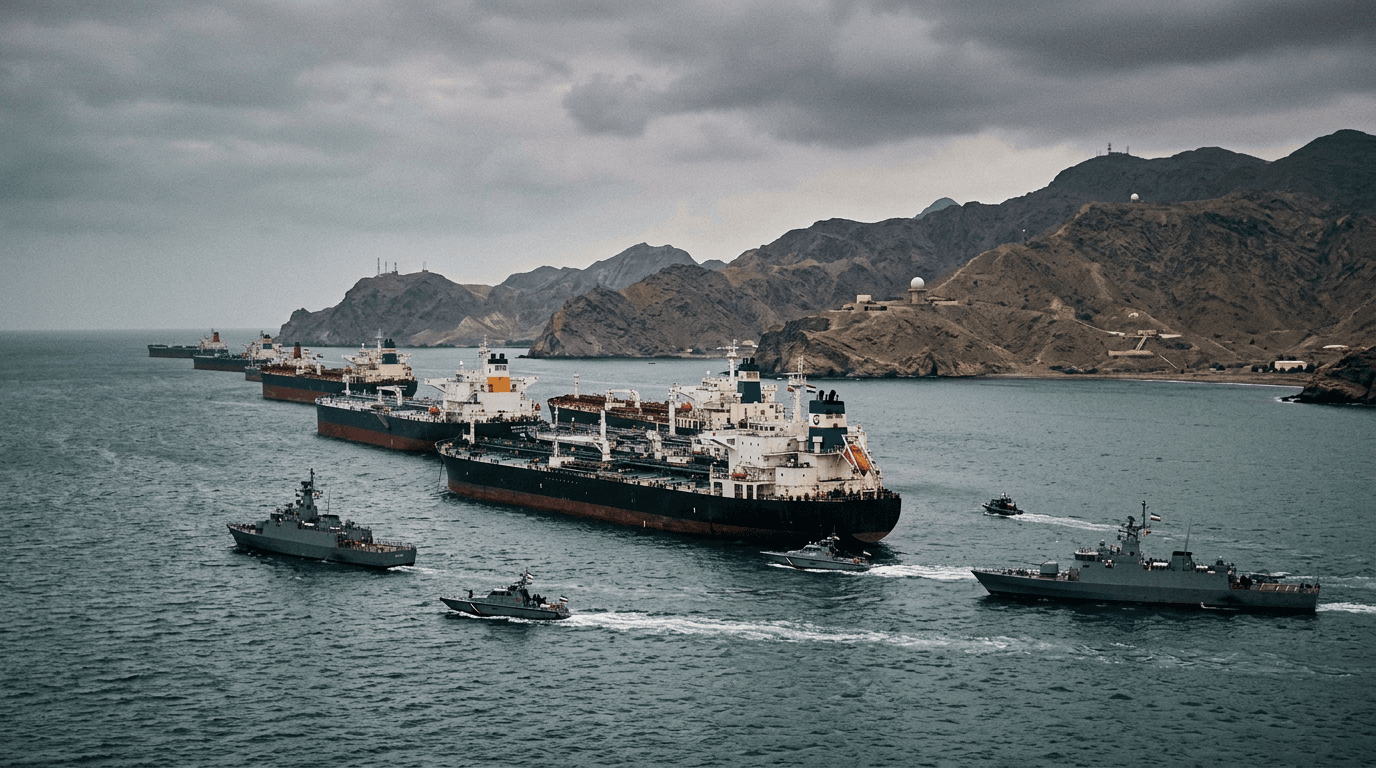
The assassination of Iran's Supreme Leader Ayatollah Khamenei in a coordinated US-Israeli airstrike has triggered one of the most significant geopolitical crises in modern markets. Iran's new supreme leader, Mojtaba Khamenei, has responded with a defiant strategy: closing the Strait of Hormuz, the world's most critical energy chokepoint. This blockade has immediately disrupted global oil supply, sent crude prices to six-month highs, and created a cascade of financial market volatility that traders cannot ignore. Understanding the mechanics, implications, and duration of this blockade is essential for navigating the uncertainty ahead.
The Strategic Blockade: Iran's Calculated Response
Iran's closure of the Strait of Hormuz represents far more than a simple act of retaliation. It is a deliberate economic warfare strategy designed to inflict maximum pain on the United States, Israel, and their regional allies while deterring further military action. The new Supreme Leader's statement, issued through state media rather than in person, signals a hardline stance and indicates that Iran plans to maintain this blockade for as long as strategically necessary.
The blockade operates through a sophisticated military campaign. Iranian forces, positioned along the coastline, are attacking commercial vessels using relatively inexpensive drones and missiles fired from up to 100 miles inland. This asymmetric approach allows Iran to achieve significant disruption at minimal cost. In the first nine days of March alone, Iranian forces attacked five to six ships, effectively paralyzing transit through the strait. Despite these efforts, some traffic continues to flow through a narrow two-mile corridor. Notably, Iranian oil tankers have managed to increase their exports by approximately 30 percent during the same period, demonstrating that Iran can selectively control which vessels pass and which are targeted.
Global Energy Markets Under Extreme Pressure
The economic implications of a closed Strait of Hormuz are staggering. This waterway handles roughly 20 percent of global oil exports, meaning that the current blockade removes approximately 20 million barrels of oil per day from international markets. According to energy analysts, this represents the largest oil supply disruption in history, exceeding even the impacts of previous geopolitical shocks. The cascade effects extend far beyond crude oil. The strait also serves as the transit route for 30 percent of the world's liquefied fertilizer and a significant portion of global liquefied natural gas exports, all of which are now frozen.
These supply disruptions have immediately altered financial markets. West Texas Intermediate crude has surged above $100 per barrel for the first time since August 2022, driven by panic buying and legitimate concerns about sustained supply constraints. This price spike creates a classic safe-haven environment where investors flee to traditional hedges such as the US dollar and gold, both of which have strengthened considerably. For equity markets, the picture is more complex. Energy stocks benefit from higher prices, but broader indices face headwinds from increased input costs, reduced global trade volume, and economic slowdown risks across Asia and Europe.
The Geopolitical Calculation: Why Iran Persists
Understanding Iran's strategic rationale is crucial for assessing how long this blockade will last. Iran's leadership appears to be playing what analysts describe as the long game. The regime is not signaling interest in a ceasefire, and the new Supreme Leader's statement explicitly mentioned opening new fronts in the conflict. This suggests that Iran intends to maintain the Strait closure as leverage to negotiate an outcome that prevents Israel and the United States from conducting future offensive operations against Iranian targets.
Iran has also begun targeting critical infrastructure across the Gulf region. US military bases, Saudi refineries, UAE financial centers, and regional ports are all coming under attack. Dubai International Airport and other major aviation hubs have gone offline. This coordinated campaign is designed to maximize economic pain on US-allied nations and create domestic pressure on the Trump administration to seek an off-ramp from escalation.
Trading Implications And Risk Management
For SimFi traders, this environment presents both opportunities and substantial risks. Energy sector positions, particularly oil producers and refiners, offer upside from elevated commodity prices, though supply chain disruptions create offsetting headwinds. Defensive positions in USD and gold remain attractive as long-term hedges. Shipping and logistics companies face severe margin compression from increased route costs and insurance premiums.
The critical variable is duration. If the blockade continues beyond the 14-day timeframe before which force majeure declarations are typically triggered, expect a marked contraction in global industrial output and widespread supply chain failures. Currency volatility should increase, emerging markets will face capital outflows, and energy-dependent economies will enter crisis mode.
Looking Ahead: The Path Forward
The question haunting markets is whether the United States, with or without international coalition support, will attempt to forcibly reopen the strait. Military intervention risks further Iranian retaliation and potential escalation to direct conflict. Without intervention, however, global economic conditions will deteriorate rapidly. This creates a dangerous window where political pressure on the Trump administration to resolve the conflict will intensify, but the pathway to resolution remains unclear.
Traders must prepare for a sustained period of elevated volatility, elevated energy prices, and geopolitical risk premiums embedded in financial markets.