
The assassination of Iran's Supreme Leader Ayatollah Khamenei on February 28, 2026, represents one of the most significant geopolitical events in recent years, reshaping global market dynamics in real time. As tensions between Iran, Israel, and the United States escalate, financial markets are experiencing a classic risk-off environment where investors flee to safety. The US dollar, historically the world's premier safe-haven asset, is experiencing renewed demand as traders and institutional investors reassess their exposure to geopolitical risk. Understanding how this event flows through currency markets and impacts major exchange rates is essential for anyone monitoring global macro trends and positioning their portfolios accordingly.
The Geopolitical Shock And Its Timing
Khamenei's death marks a critical inflection point in Middle Eastern geopolitical risk. The Supreme Leader had served as Iran's highest authority for over 36 years, making his assassination a destabilizing event with far-reaching consequences. The strike occurred as part of a coordinated operation between Israel and the United States, using strategic intelligence to locate Khamenei at his Tehran residence. Israeli jets dropped 30 bombs on the compound during daylight hours, an unusually bold approach that underscored the operation's significance. The Iranian government initially disputed reports of his death before officially confirming it on March 1, 2026. This assassination follows the Twelve-Day War in June 2025 and represents an escalation of already elevated tensions between Iran and Western powers.
From a market perspective, geopolitical shocks like this create immediate uncertainty. Investors cannot easily predict how Iran will respond, whether military escalation will occur, or what secondary effects might ripple through global markets. This uncertainty triggers risk-off sentiment, where investors systematically reduce exposure to riskier assets and increase exposure to safe-haven assets. The US dollar benefits disproportionately during these episodes because it serves as the global reserve currency and represents the most liquid, dependable store of value during turbulent periods.
Safe-haven Demand And Currency Flows
When geopolitical risk spikes, capital flows shift dramatically. Institutional investors, hedge funds, and central banks all increase their USD allocations as insurance against broader market instability. This increased demand for dollars pushes the US dollar index higher, making the dollar stronger relative to other major currencies. The mechanism is straightforward: more buyers of dollars relative to sellers creates upward price pressure. Unlike equities or bonds, which are affected by corporate earnings or interest rates, currency flows during geopolitical crises are driven purely by the search for safety.
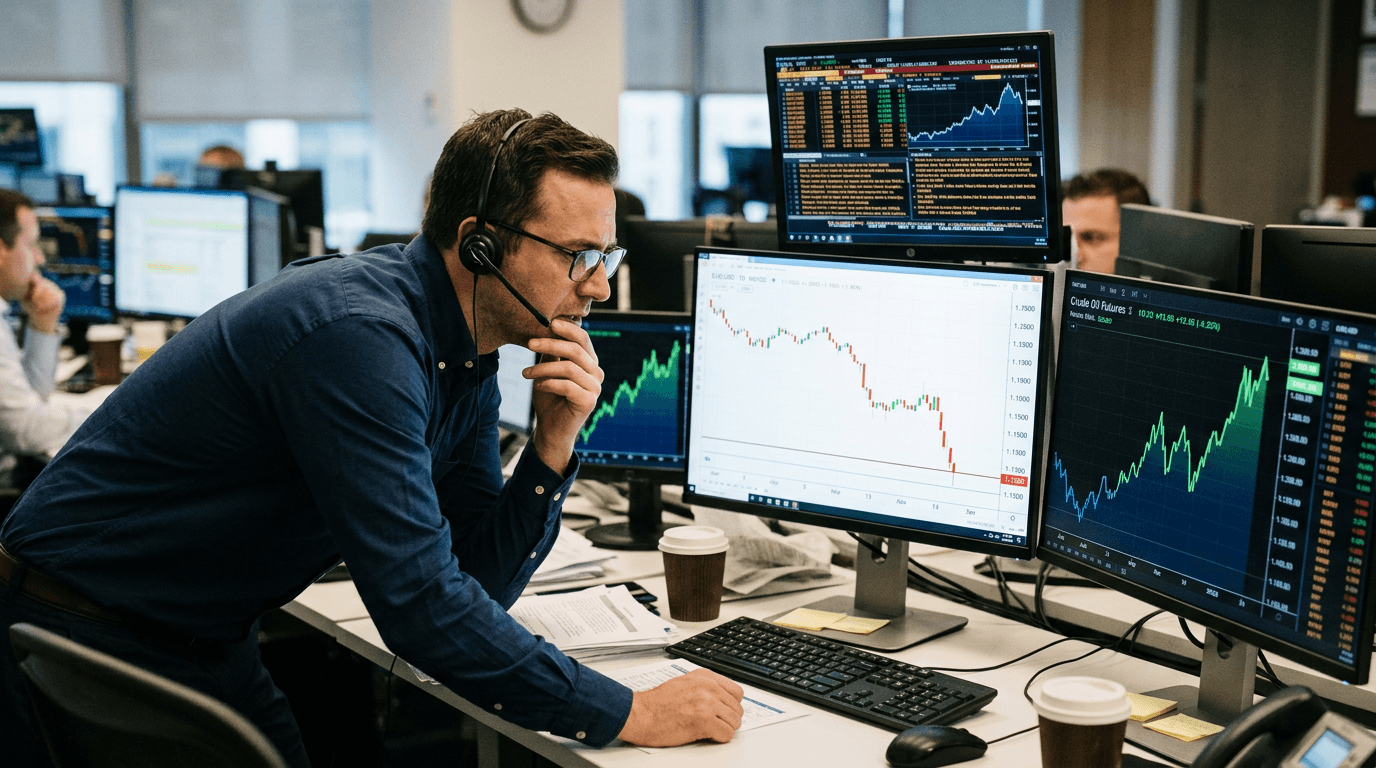
The EUR/USD exchange rate provides a clear window into this dynamic. Before the assassination, EUR/USD was trading at elevated levels. However, as risk-off sentiment intensified following Khamenei's confirmed death, the exchange rate began declining toward critical support levels around 1.15. This represents a significant weakening of the euro relative to the dollar, as European investors also sought dollar protection. The European economy remains vulnerable to Middle Eastern instability given Europe's energy dependence and substantial trade exposure to the region.
Oil Prices And Currency Linkages
One of the most important secondary effects of Khamenei's assassination is the impact on global oil markets. Iran is a major oil producer, and political instability in the region typically drives oil prices higher as investors worry about supply disruptions. Market analysts are modeling a 0.5 to 1 percent increase in USD strength for every 10 percent rise in oil prices. This relationship exists because higher oil prices benefit oil-exporting nations and can create inflationary pressures globally, but they also drive commodity-exporting currencies lower as investors flee emerging market exposure.
As oil prices rise in response to geopolitical uncertainty, the strengthening dollar becomes self-reinforcing. Higher oil prices denominated in dollars increase dollar demand from importers globally, while simultaneously pushing commodity-linked currencies like the Australian dollar, Canadian dollar, and emerging market currencies lower. For USD/JPY and USD/CHF pairs, the dynamic operates differently—the Japanese yen and Swiss franc, like the dollar, benefit from safe-haven demand, but the dollar typically outperforms during acute crises given its superior liquidity and role in global finance.
Key Takeaways For Traders
For active traders and portfolio managers, several critical implications emerge from this event. First, expect continued volatility in major currency pairs as markets digest the full implications of Khamenei's death and potential Iranian responses. Second, monitor oil prices closely as a leading indicator of broader risk sentiment. When oil breaks above previous resistance levels, it typically signals intensifying safe-haven demand that supports the dollar. Third, watch EUR/USD as it approaches the 1.15 support level—a break below this level would signal deeper risk-off positioning and potentially trigger stop-loss orders that could accelerate dollar strength further.
The correlation between geopolitical events and currency markets underscores the importance of macro awareness in trading. While fundamental economic data remains important, extraordinary events like this assassination have the power to overwhelm normal market relationships. Traders who can quickly identify safe-haven flows and position accordingly often capture significant alpha during these volatile periods. The assassination of Iran's Supreme Leader has elevated safe-haven USD demand, reshaped near-term expectations for major currencies, and created both risks and opportunities across global markets.