
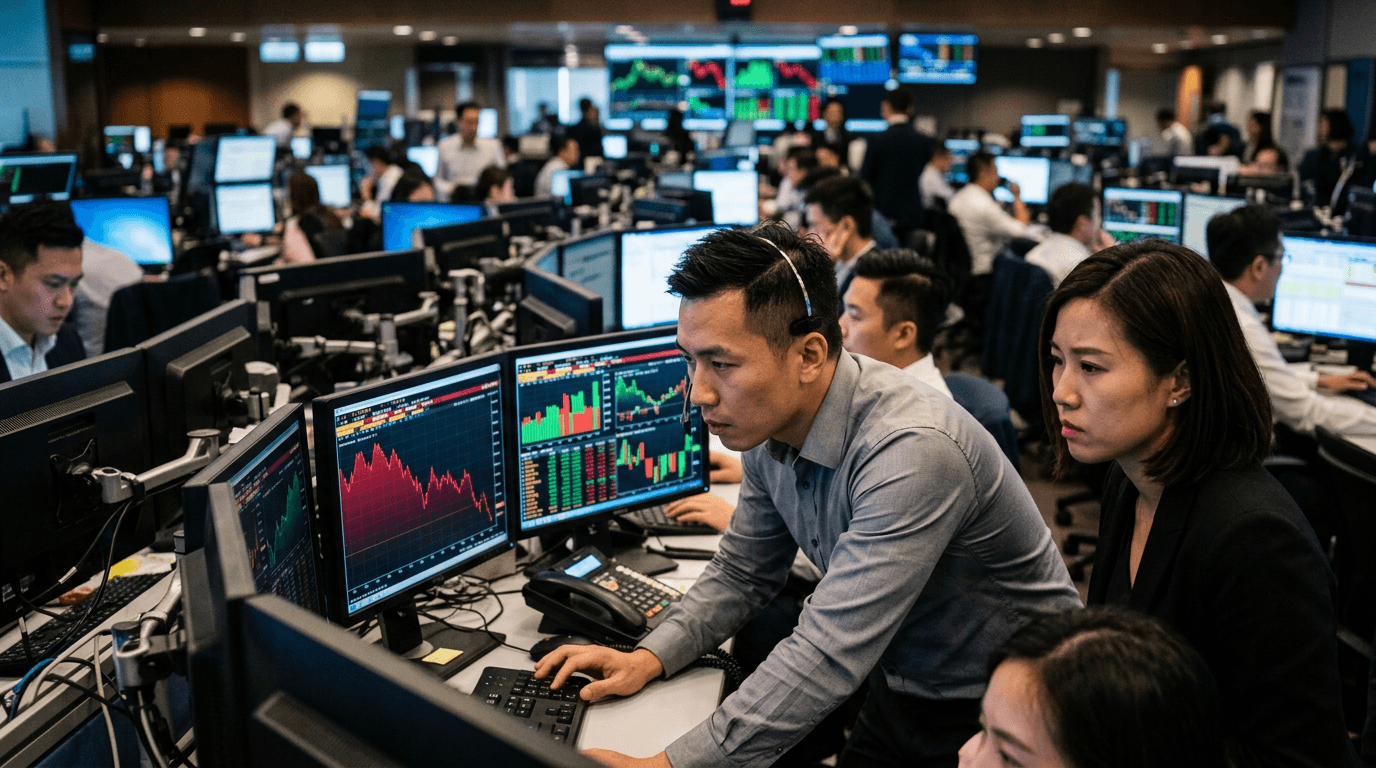
Heightened geopolitical risk and shifting interest-rate expectations are colliding in global markets, leaving FX and Asian futures traders to navigate one of the most complex backdrops in recent memory. Oil prices are surging on renewed conflict involving Iran, while softer U.S. inflation data has tempered expectations for aggressive Federal Reserve rate hikes, creating an unusual push-and-pull in USD-linked FX pairs, oil futures, and regional equity indices.
Global Backdrop: Iran Conflict And The Oil Shock
The latest wave of volatility starts in the Strait of Hormuz, a key chokepoint for global energy supply. Fresh exchanges of fire between the U.S. and Iran, renewed threats to shipping lanes, and attacks on energy infrastructure have re‑ignited fears of supply disruptions and extended conflict.[7][10] Markets have watched U.S. initiatives like “Project Freedom,” aimed at reopening the strait, collide with Iranian resistance and retaliatory strikes on regional oil facilities.[10]
Oil prices have responded with sharp spikes, echoing earlier surges seen when the prospect of a U.S. blockade of Iranian ports sent Brent and WTI sharply higher.[2] Elevated energy prices are not just a story for crude traders; they ripple through inflation expectations, corporate margins, consumer spending, and ultimately central bank policy decisions. For Asia, a region heavily reliant on imported energy, this combination raises concerns about growth, inflation, and balance‑of‑payments pressures.[8]
Against this backdrop, global risk appetite has weakened. Regulators and market participants report widening bid‑ask spreads, thinner liquidity, and more erratic price action across asset classes as trading conditions become more challenging and expensive.[3] Volatility is not only higher, it is also more “headline‑driven,” with sudden moves following each development in the conflict.[6]
Fx Reaction: Dollar, Yen, And Asian Currencies
Historically, geopolitical shocks that lift oil and compress risk appetite tend to support safe‑haven currencies like the U.S. dollar and the Japanese yen. That pattern has appeared again, but this time it is complicated by evolving Fed expectations. Softening U.S. inflation data has reduced the market’s conviction that the Fed will deliver a long string of aggressive rate hikes, pulling some support away from the dollar even as geopolitical stress would normally push it higher.
In Asia, this has produced a nuanced picture. Several regional currencies have edged higher intraday as the dollar softened, yet they remain on track for weekly losses as the Iran conflict and energy shock weigh on sentiment.[1] Research houses highlight a stronger dollar and weaker Asian FX in their broader forecast profiles, driven in part by lingering geopolitical risk premia and the front‑loading of dollar strength into the first half of the year.[4]
The divergence within Asian FX is also worth noting. Oil importers—such as India or many ASEAN economies—tend to see more pressure when crude spikes, reflecting concerns over trade balances and inflation.[8] Export‑oriented economies with large manufacturing sectors can suffer via weaker global demand and rising input costs. Meanwhile, the yen often benefits from a flight to quality, but that support can be offset if markets believe the Fed’s hiking cycle is closer to a peak due to softer inflation.
Asian Equity And Futures Volatility
Equity markets and index futures across the Asia‑Pacific region have been quick to price in the dual shock. Episodes of rising Middle East tension have already triggered broad declines in benchmarks such as Japan’s Nikkei 225, Australia’s S&P/ASX 200, Hong Kong’s Hang Seng, India’s Nifty 50 and Sensex, and China’s CSI 300, reflecting investor unease about prolonged conflict and elevated energy costs.[2][7]
In parallel, equity index futures tied to major global benchmarks have swung sharply. Dow, S&P, and Nasdaq futures have posted sizable declines in risk‑off sessions, transmitting volatility from U.S. risk sentiment directly into Asian trading hours and local futures markets.[2] When combined with the more fragile liquidity conditions described by global dealers—wider spreads, occasional air pockets, and choppier order books[3]—futures markets can see outsized intraday moves relative to the underlying news flow.
For traders operating in simulated finance environments, such as SimFi platforms, this is an ideal laboratory for understanding how cross‑asset correlations behave under stress. Oil futures, equity index futures, and FX pairs are all reacting to the same shock, but not always in the same direction or magnitude. Learning to read these relationships is a key skill for navigating real markets.
Fed Expectations: Softer Inflation, Tighter Conditions
The other pillar of the current environment is U.S. inflation and its impact on the Fed. Recent data pointing to softer inflation has cooled expectations that the Fed will need to keep hiking aggressively for longer. That shift has contributed to a modest pullback in U.S. yields and a softer tone in the dollar on some days, offering partial relief to risk assets and to Asian currencies.[1]
Yet this is far from an “all clear” signal. War‑driven energy spikes and potential supply chain disruptions can re‑ignite inflation pressures even as headline numbers improve.[5][8] Analysts warn that gasoline prices, food costs, and broader supply‑side shocks could keep inflation elevated, forcing central banks—including the Fed—to strike a delicate balance between supporting growth and keeping inflation anchored.[8]
For the Fed, softer inflation data must be weighed against tighter global financial conditions: higher risk premiums, volatile credit spreads, and equity market drawdowns linked to geopolitical stress. Research commentary has emphasized the importance of labor‑market data (such as non‑farm payrolls) in preventing an overly hawkish shift at a time when markets are already under strain.[5] The result is a more data‑dependent and uncertain rate path, which feeds directly into FX and futures pricing.
Practical Takeaways For Fx And Futures Traders
For traders, whether in live markets or SimFi environments, this episode offers several practical lessons:
First, event risk matters. Geopolitical developments—ceasefires, blockades, strikes on infrastructure, or diplomatic breakthroughs—can trigger rapid repricing across FX, oil, and equity futures.[2][6][10] Building scenarios around these events, and stress‑testing positions, is essential.
Second, understand the dual drivers of the dollar. In the current regime, the USD is pulled between safe‑haven flows (supportive) and softer Fed expectations (dampening). Tracking both geopolitical headlines and key U.S. data releases helps explain why dollar moves can sometimes appear counterintuitive.
Third, respect liquidity and volatility. Wider bid‑ask spreads and thinner order books mean that slippage and execution risk increase during stressed periods.[3] In practical terms, that argues for smaller position sizes, tighter risk limits, and careful use of leverage—especially in products like index and oil futures that can gap on news.
Fourth, watch cross‑asset relationships. When oil surges on war risk, energy‑importing currencies often weaken, while equity indices with large energy exposure may outperform peers.[2][8] Understanding these linkages helps traders anticipate knock‑on effects rather than reacting to each market in isolation.
Finally, treat relief rallies with caution. History in this conflict has shown that ceasefires and temporary truces can drive rapid unwinds of hedges and speculative positions, but without a durable resolution, volatility often remains elevated.[6] Short, sharp rallies may be opportunities for portfolio adjustment rather than signals that the regime has truly changed.
Conclusion
The current bout of volatility in FX and Asian futures is a textbook case of how geopolitics and macroeconomics intersect. An escalating Iran conflict is lifting oil and risk premiums, while softer U.S. inflation is reshaping—but not eliminating—expectations for Fed tightening. For Asia, this means pressure on currencies, choppy equity and futures markets, and a more complex policy outlook.
For traders and investors, the challenge is to navigate this intersection with a structured framework: monitor event risk, follow the data, respect liquidity, and think in terms of scenarios rather than single forecasts. In simulated and live markets alike, mastering these disciplines is what turns periods of uncertainty into valuable learning—and potentially, opportunity.