
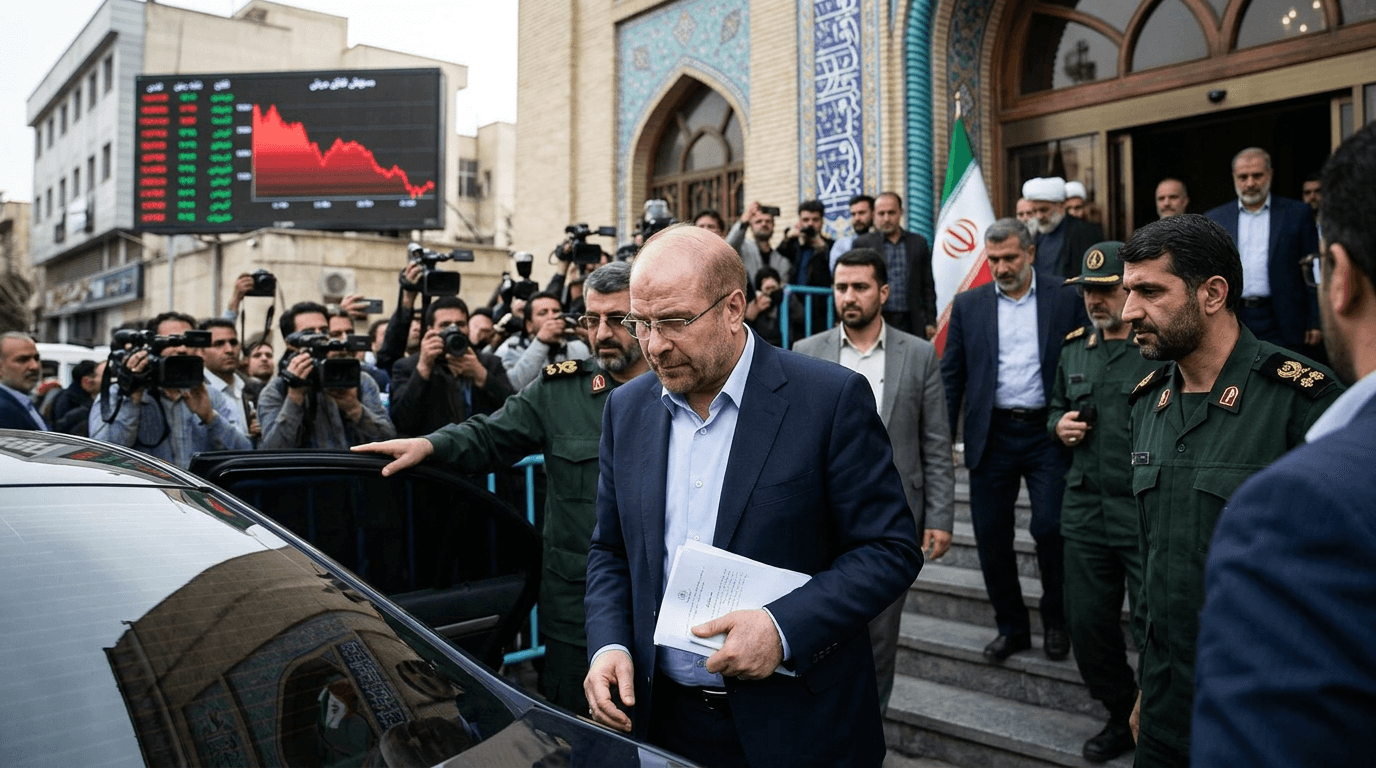
Iran's Parliament Speaker Mohammad Bagher Ghalibaf, who served as the country's chief negotiator with the United States, has stepped down from his role leading the negotiation team, marking a significant setback for the ongoing peace talks between the two nations.[1][2] This resignation, reported on April 23, 2026, highlights deepening internal divisions within Iran's government at a critical juncture in bilateral diplomacy, with major implications for geopolitical stability and global financial markets.[1][2]
The Breakdown: Internal Strife And Irgc Influence
Ghalibaf's departure from the negotiation team occurred amid mounting pressure from Iran's Islamic Revolutionary Guard Corps (IRGC), which has increasingly resisted more flexible diplomatic positions.[2][6] Compared to hardline elements within the government, Ghalibaf had shown relatively moderate attitudes toward negotiations.[2] His removal from the talks team marks a significant win for the IRGC faction and indicates a hardening of Iran's negotiating stance.
The immediate cause for his resignation revolved around disagreements over a Qatar-backed proposal aimed at easing tensions in the Strait of Hormuz, one of the world's most strategically important waterways.[2] The proposal involved a reciprocal arrangement: allowing 20 Iranian ships to pass through the strait in exchange for permitting 20 vessels from Gulf region ports.[2] Designed to alleviate the intense power struggle between the U.S. and Iran over control of this vital shipping route, Iranian Foreign Minister Abbas Araghchi and other hardline officials reportedly rejected the proposal.[2]
Ghalibaf had been directly engaged with U.S. Vice President JD Vance during the first round of peace negotiations held in Islamabad, Pakistan, on April 11.[2] His removal from the negotiating team effectively silences a key voice advocating for compromise and pragmatism. This development reflects sharp disagreements within Iran over the fundamental terms of its relationship with the United States.[2]
Market Reaction: Shift To Risk-off Strategy
The news of Ghalibaf's resignation triggered an immediate shift in market sentiment toward risk-off positioning across global financial markets.[3] Investors, interpreting the move as a setback for peace negotiations and a strengthening of hardline positions in Tehran, gravitated toward safe-haven assets. The U.S. Dollar appreciated as traders sought the stability of American currency, while precious metals, particularly gold, saw increased demand as traditional crisis hedges.[3]
Conversely, riskier asset classes faced downward pressure. Equities declined as investors reduced exposure to volatile markets amid heightened geopolitical uncertainty. Cryptocurrencies, highly sensitive to shifts in risk sentiment, experienced notable selling pressure as traders de-risked their portfolios.[3][4] The resignation also coincided with reports that market pricing for a peace deal by April 30 significantly dropped to just a 7.5% probability, reflecting a dramatic reassessment of diplomatic prospects.[4]
Rising Military Tensions
The diplomatic setback occurs against a backdrop of intensifying military posturing. The United States has quietly bolstered its military presence in the region, reportedly deploying a third aircraft carrier to the Persian Gulf area.[1] This hardware deployment underscores how rapidly the situation has shifted from diplomatic negotiation toward military deterrence.
President Donald Trump has expressed his impatience with the negotiation process, insisting he is "not under pressure" while simultaneously warning that "time is running out for Tehran."[1] On April 23, Trump extended the ceasefire agreement but coupled this action with a demand that Iran present a unified negotiation proposal to the U.S. government.[2] This combination of extended talks and military buildup suggests Washington is maintaining diplomatic channels while preparing for potential escalation.
Implications For Future Negotiations
Ghalibaf's removal from the negotiation team is expected to present significant challenges moving forward, as the IRGC's growing influence over Iran's decision-making apparatus fundamentally alters the negotiation dynamic.[2] With a pragmatist removed and hardliners in ascendance, reaching compromise becomes substantially more difficult. The breakdown represents a critical juncture where diplomatic momentum has shifted decisively negative.
The divergence between Ghalibaf's faction and the IRGC-aligned hardliners suggests Iran's government is deeply fractured on how to approach negotiations with Washington. This internal division, paradoxically, may render the government less responsive to external pressure or incentives, as hardliners view any concessions as capitulation.
Investor Takeaways: Navigating Uncertainty
For traders and investors, this situation demands heightened vigilance and reduced risk exposure in the near term. The combination of diplomatic breakdown, military escalation, and market repricing toward lower deal probability suggests volatility will likely persist. Safe-haven positioning remains prudent until clearer signals emerge regarding whether negotiations can resume on more productive terms. Monitor developments for any indication that Iran might appoint a new, potentially more hardline negotiation lead, which could further dampen peace prospects.
The coming weeks will prove critical in determining whether this setback can be overcome through diplomatic channels or whether escalation becomes inevitable.