
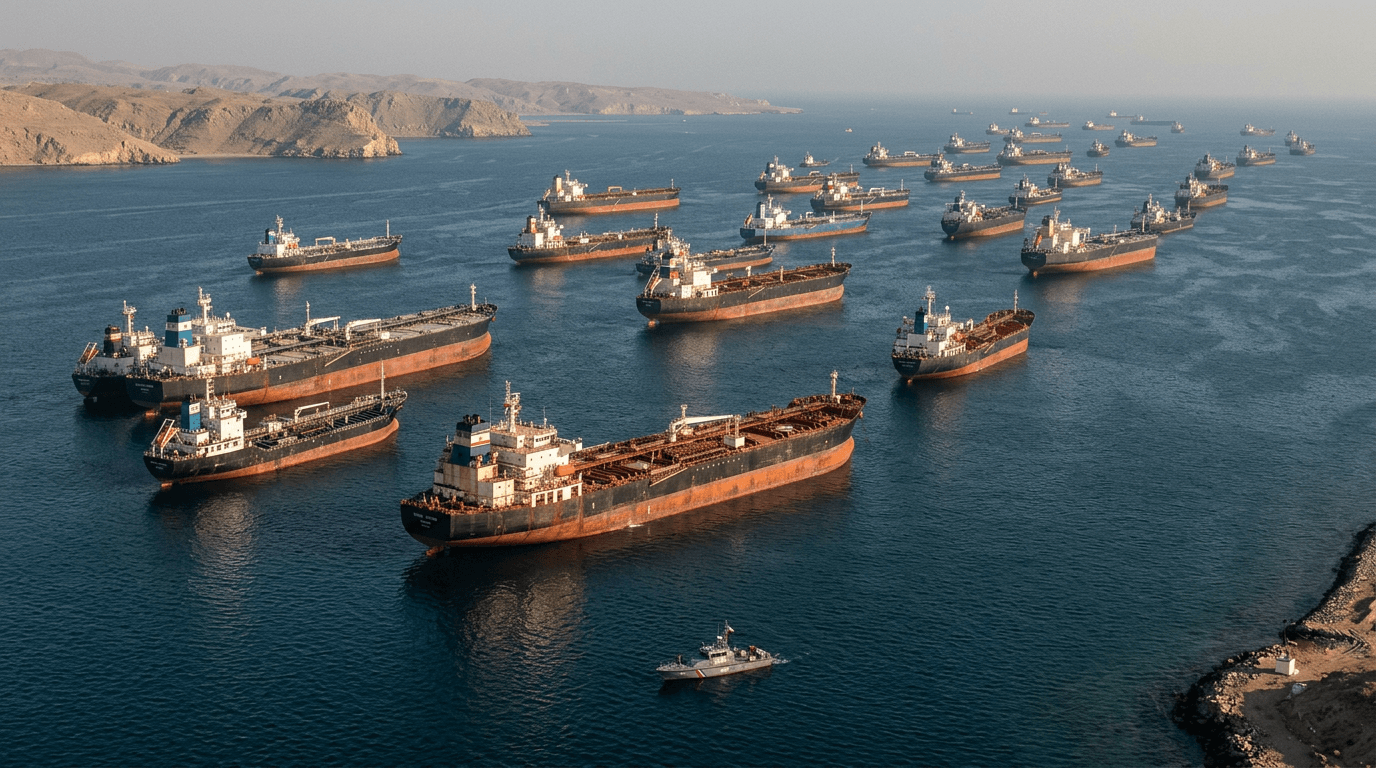
The Strait of Hormuz, one of the world's most critical energy chokepoints, has effectively ceased functioning as a transit route for global oil and liquefied natural gas shipments. On March 2, 2026, Iranian authorities declared the strategic waterway closed to all vessel traffic, halting what had been an uninterrupted flow of energy resources for decades. This unprecedented blockade has sent shockwaves through global markets, disrupting supply chains and forcing energy traders, policymakers, and businesses worldwide to reassess their strategies in an increasingly volatile geopolitical landscape.[1]
The Crisis Unfolds
The closure did not occur in isolation. On February 28, 2026, the United States and Israel launched Operation Epic Fury, a coordinated military campaign targeting Iran's nuclear facilities, military installations, and leadership infrastructure.[1] In response, Iran's Islamic Revolutionary Guard Corps issued a sweeping declaration: any vessel attempting to transit the Strait of Hormuz would be attacked. Within hours of the announcement, the effects became visible. Automatic identification signals from oil tankers suddenly disappeared from tracking systems. Hundreds of vessels—approximately 200 tankers and LNG carriers—found themselves stranded in the Persian Gulf, unable to proceed through the narrow waterway between Iran and Oman.[1]
The stakes of this blockade cannot be overstated. The Strait of Hormuz carries roughly 20 percent of the world's oil supply and a major share of global liquefied natural gas shipments every single day.[1] For a narrow passage measuring just 21 nautical miles at its widest point, it represents an outsized portion of global energy infrastructure. When transit halts, the effects ripple across every economy dependent on stable energy supplies—which is to say, virtually all of them.
Immediate Market Reaction
Oil markets reacted swiftly to the disruption. As of March 5, 2026, crude oil was trading between $82 and $84 per barrel, representing a 13 percent increase above pre-conflict levels.[1] While this initial spike reflects genuine supply concerns, it also suggests that markets are pricing in a degree of temporary disruption rather than catastrophic collapse. Traders appear to be banking on some form of resolution, whether through military intervention, diplomatic negotiation, or Iran's realization that a sustained closure is economically unsustainable.
However, the true cost extends far beyond crude oil prices. Qatar has already halted LNG production in response to the crisis.[1] Energy-intensive sectors globally face mounting pressure. Airlines, shipping companies, manufacturing facilities, and agricultural producers all face the prospect of higher energy costs trickling through their supply chains. For households, the implications are equally concerning: rice University's Baker Institute for Energy Studies has quantified that sustained Hormuz disruption could drive grocery bills for typical American families up 15 to 25 percent within two to three months as energy costs push food prices higher.[1]
Scenario Analysis: The Range Of Outcomes
Energy analysts are modeling three distinct scenarios. The first involves a quick resolution within weeks, resulting in manageable price spikes. The second contemplates months-long disruption with partial recovery, driving more significant economic adjustment. The third—the scenario that keeps serious analysts awake at night—involves a sustained closure lasting months, potentially combined with strikes against Gulf energy infrastructure beyond what has already occurred. Wood McKenzie, the respected energy research firm, warns that such an outcome could tip the global economy toward recession, potentially driving oil into triple digits while driving energy markets into chaos comparable to the Arab oil embargo and Iranian Revolution of the 1970s.[1]
Iran's Economic Reality Check
Despite Iran's bold proclamation, the blockade faces a fundamental constraint: Iran cannot sustain it indefinitely. Iran itself depends on the Strait of Hormuz to export its own oil, making a permanent closure economically catastrophic for Tehran. Iran's economy, already devastated by sanctions, warfare, and internal instability, cannot absorb the self-inflicted damage of a prolonged shutdown.[1] Moreover, China—which purchases over 80 percent of Iranian crude and serves as Iran's primary economic lifeline—faces acute energy stress from continued closure. Chinese policymakers, already managing complex energy security challenges, have little appetite for prolonged disruption.[1]
The Path Forward
As of early March 2026, Iranian operatives have reportedly reached out to explore negotiated solutions while the Trump administration has offered naval escorts to facilitate transit.[1] The economic pressure weighing on all parties—Iran, the United States, global energy consumers, and China—creates powerful incentives for resolution. Markets are pricing in this rational outcome, which explains why crude has not spiked further despite the unprecedented closure.
For traders, energy companies, and policymakers, the critical variables center on negotiation timelines and whether additional military escalation occurs. The Strait of Hormuz has weathered crises before, but never an effective closure of this magnitude. How quickly global actors reach accommodation will determine whether this becomes a historical anomaly or a transformative moment for energy markets.