
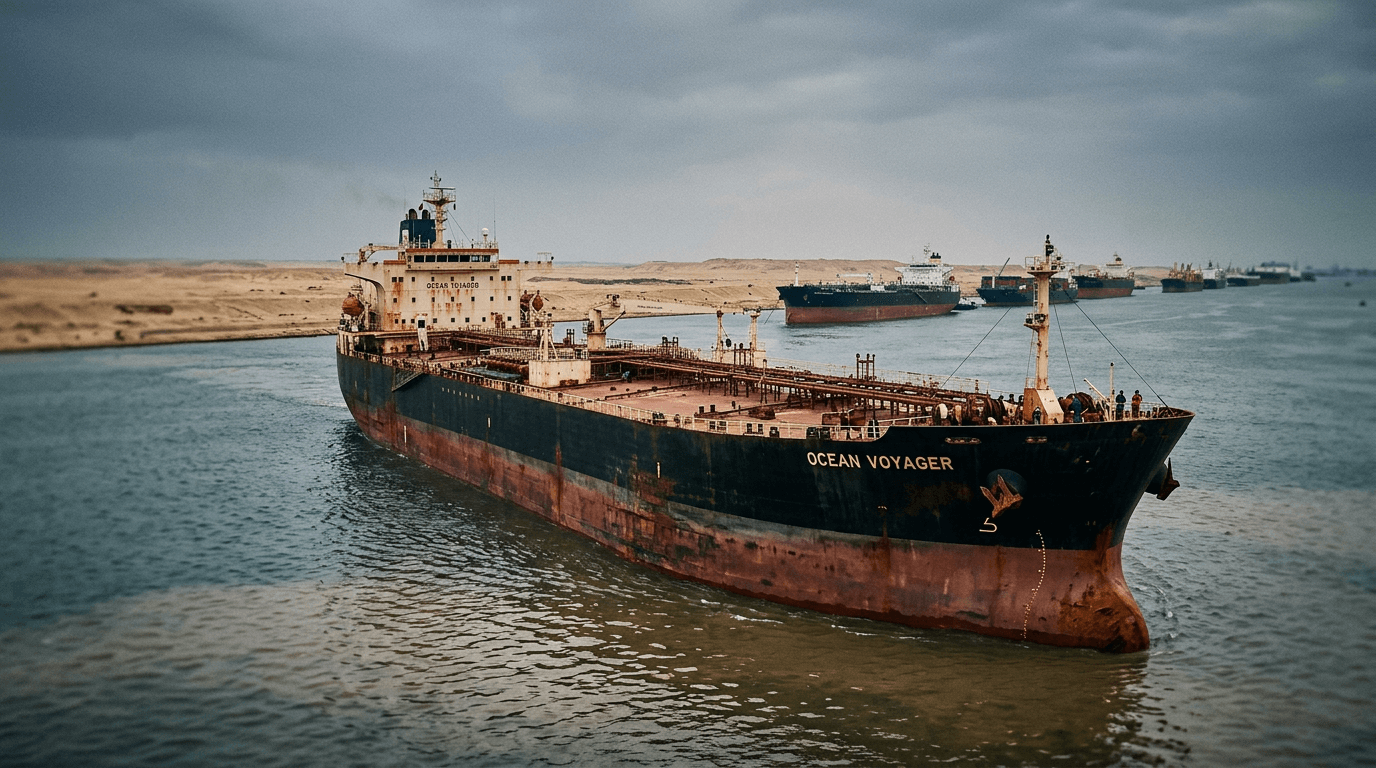
The Strait of Hormuz, one of the world's most critical chokepoints for global energy trade, has become virtually impassable following escalating military conflict between the United States, Israel, and Iran. On February 28, 2026, coordinated US-Israel airstrikes on Iranian military facilities resulted in the death of Iran's Supreme Leader Ali Khamenei, triggering a severe geopolitical crisis that has brought maritime shipping through the strait to near standstill.[1] Within hours of the strikes, Iran's Islamic Revolutionary Guard Corps issued warnings prohibiting vessel passage, fundamentally disrupting global energy markets and creating one of the most significant supply shocks in recent history.
The immediate market response has been dramatic and consequential for traders monitoring commodity and energy sectors. Oil tanker traffic through the Strait of Hormuz has plummeted by approximately 70 percent, with ship-tracking data confirming this collapse in the first days following Iran's closure announcement.[1] This reduction represents an unprecedented disruption to the approximately 20 percent of global crude oil supplies that normally flow through this vital maritime gateway each day.[3] The blockade is not merely a theoretical threat—since March 1, at least eight commercial vessels have been directly attacked by Iranian forces using missiles and drone strikes, including the oil tanker Skylight, which was struck north of Khasab, Oman, killing crew members and forcing evacuation.[1] These tangible attacks have cemented market fear and driven the immediate diversion of tanker traffic away from the route entirely.
Understanding The Geopolitical Crisis
The current conflict stems from coordinated military action that killed not only Iran's Supreme Leader but numerous senior political and military officials.[1] In response, Iran has retaliated with missile and drone attacks on US military bases in the Gulf region, Israeli territory, and facilities in neighboring states including the UAE, Qatar, and Bahrain.[1] The conflict has expanded regionally, with Iran-backed Hezbollah launching rockets into Israel, prompting Israeli counterstrikes into Lebanese territory. This escalation has created a security environment so dangerous that even the US Navy is declining to escort commercial vessels through the strait, describing it as an Iranian "kill zone" where the threat of attack remains unacceptably high despite substantial degradation of Iran's naval capabilities.[3]
Iran has announced selective exceptions to its closure, initially allowing only Chinese vessels to pass through the strait, citing China's supportive stance and China's position as the largest buyer of Iranian oil.[1] Subsequently, on March 5, Iran expanded these exceptions slightly, announcing it would permit passage for ships not flagged to the US, Israel, or Western allied nations.[1] Turkish vessels have been granted passage, and Indian-flagged gas carriers have been allowed through, though these exceptions remain limited and subject to sudden change.[1] This selective approach suggests Iran is using the blockade as both a military strategy and a geopolitical negotiating tool rather than a blanket closure.
The Shipping And Supply Disruption
The practical consequences of the Strait closure extend far beyond oil prices. More than 300 commercial vessels are currently stranded in the Persian Gulf, unable to transit through the blockaded waters.[3] The US Navy estimates that safely escorting these trapped vessels through the strait—assuming the military situation stabilizes—could take months or even years, given the careful speed required to protect such a large convoy.[3] Additionally, over 40 commercial vessels have disabled their Automatic Identification System (AIS) signals, a practice known as "going dark," typically used to conceal illicit activity.[4] This means reliable shipping data has become increasingly unavailable precisely when market transparency is most critical.
The economic cost to the shipping industry is staggering. According to industry analysts, a single Navy escort mission to protect vessels through the strait would exceed the monetary value of the cargo being protected, making escort operations economically unviable in many cases.[3] Shipping costs have surged across global markets, and insurance premiums for transit have skyrocketed as underwriters price in the genuine risk of total loss.
Market Implications For Oie Traders
For SimFi traders monitoring commodity markets, this disruption has already driven WTI crude oil to six-month highs, reflecting the acute supply shortage and market panic.[1] With 20 percent of global crude supplies effectively offline, markets are calculating what OPEC production increases could theoretically compensate for the loss, though OPEC's spare capacity is limited and already constrained by previous production decisions.
The blockade creates a dual-layer trading opportunity and risk. On one hand, energy commodity prices have moved decisively higher, rewarding long positions established before the crisis intensified. On the other hand, the uncertainty surrounding the blockade's duration, potential military escalation, and geopolitical resolution creates significant volatility that could move in either direction without warning. Traders should monitor three key variables: whether the US Navy successfully establishes secure shipping corridors, whether negotiations reduce tensions, and whether OPEC commits to substantial production increases to offset lost supplies.
The Strait of Hormuz blockade represents a fundamental shift in global energy markets with direct implications for portfolio positions in oil, shipping, and broader energy infrastructure. The combination of reduced physical supply, stranded inventory, and elevated geopolitical risk has created conditions not seen in years, warranting careful monitoring and dynamic position management.