
Rewriting the Article:
On February 28, 2026, the world witnessed a seismic geopolitical event that reshaped global financial landscapes. Iran's Supreme Leader, Ayatollah Ali Khamenei, was killed in precision airstrikes orchestrated jointly by the US and Israel, targeting his compound in Tehran. This operation marked a significant escalation in Middle Eastern tensions, reverberating across trading markets worldwide. Khamenei's assassination ended his three-decade reign, during which he had molded Iran into a formidable anti-US entity with considerable military influence throughout the region. In the aftermath, global markets experienced a surge in geopolitical risk premiums, immediately triggering a flight-to-safety response that redefined currency and commodity valuations as March 2026 commenced.
Operation and Immediate Aftermath
The airstrike, a meticulously planned intelligence operation months in the making, saw the CIA monitor Khamenei's movements until an intelligence breakthrough pinpointed a high-level meeting on February 28th in Tehran. Israeli fighter jets, armed with precision munitions, struck the compound at 9:30 a.m. Tehran time, eliminating Khamenei and numerous senior Iranian officials. The operation extended beyond Khamenei, reportedly targeting over 40 senior commanders and more than 30 top military and civilian leaders, with at least seven confirmed fatalities. Former President Mahmoud Ahmadi-Nejad was also reportedly killed in a separate strike.
In swift retaliation, Iran launched missile and drone attacks across the region, causing immediate disruptions to commercial air traffic. Airspace over Iran, Iraq, Kuwait, Israel, Bahrain, Qatar, and the UAE was closed or heavily restricted, effectively grounding regional aviation and amplifying market volatility.
Safe-Haven Demand and Currency Markets
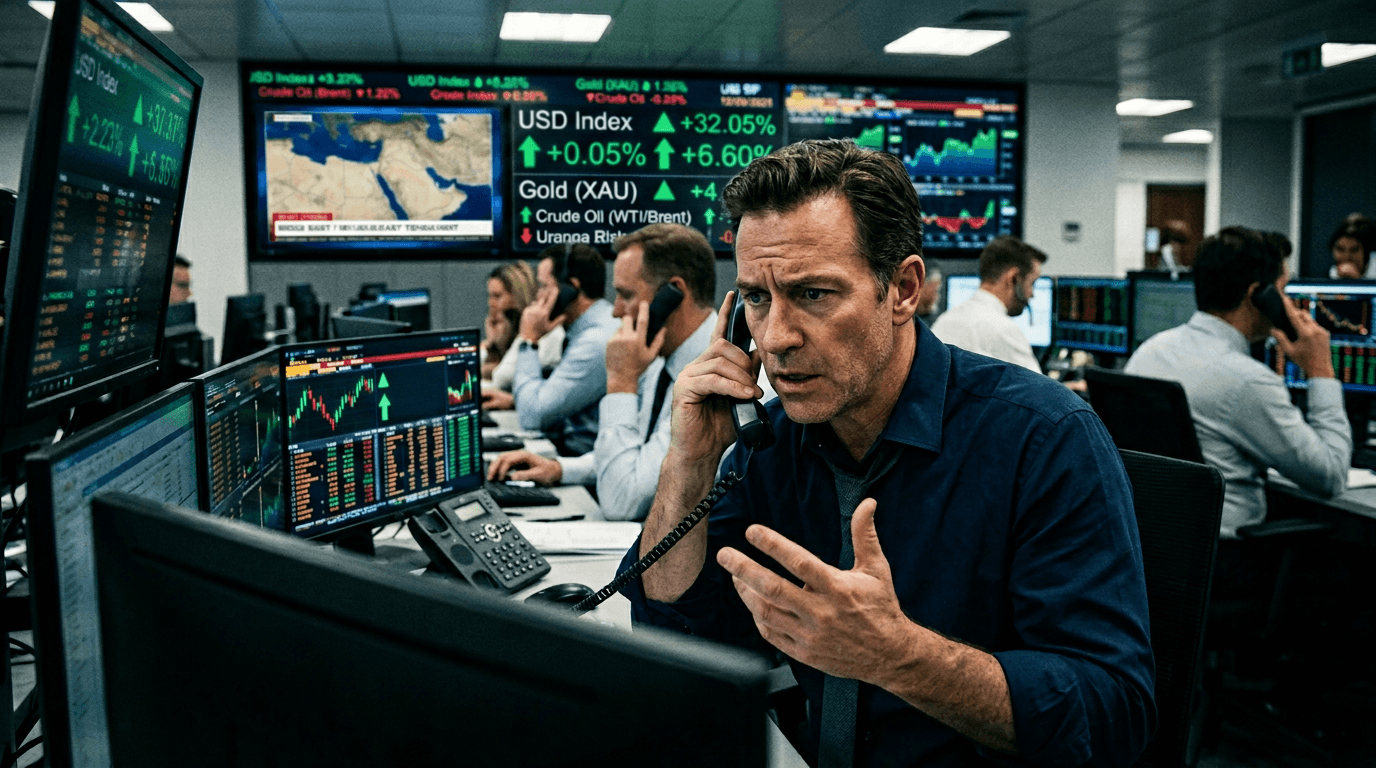
The assassination triggered a powerful flight-to-safety response in currency markets. As uncertainty loomed, investors flocked to the US dollar, the world's reserve currency, causing it to surge. This movement exerted significant downward pressure on EUR/USD and GBP/USD as risk appetite vanished. This pattern is typical in geopolitical crises: systemic risks prompt traders to shed riskier assets and currencies in favor of the safe-haven dollar. The dollar's strength persisted into early March 2026 as traders grappled with the implications of a sudden power vacuum in the Middle East. The elimination of Khamenei and much of Iran's military leadership introduced profound uncertainty regarding succession, command structure, and potential Iranian responses, factors that maintained the flight-to-safety premium in USD pairs.
Oil Markets and Energy Volatility
The most direct market impact materialized in energy markets, where crude oil prices soared amid heightened geopolitical risk aversion. The assassination of Iran's supreme leader and the subsequent closure of critical Middle Eastern airspace fueled concerns about potential supply disruptions, despite no immediate production stoppages. Oil traders faced uncertainty over how Iran's power transition might affect regional stability, shipping lanes, and production capacity. Historically, Middle East political crises provoke significant reactions in petroleum markets due to the region's pivotal role in global energy supply. Airspace closures alone disrupted transportation patterns and raised insurance premiums on shipments. With Khamenei's death marking a dramatic shift in Iranian leadership, oil markets integrated a substantial risk premium, reflecting the uncertain geopolitical outlook.
Broader Market Implications and Volatility
Beyond currencies and commodities, the assassination induced a broader volatility spike affecting equity markets, bond yields, and cross-asset correlations. The abrupt removal of Iran's most powerful figure and numerous military commanders created a power vacuum with uncertain consequences. Markets abhor uncertainty, especially when it involves a nuclear-armed nation undergoing sudden leadership transition. Risk assets faced selling pressure as traders reassessed their exposure to geopolitical risk, while defensive sectors and bonds experienced inflows from equity rotations. The disruption to regional aviation and shipping heightened business continuity concerns for companies with operations in the Middle East.
Looking Forward: Traders and Investors
For traders tracking SimFi markets or analyzing real market dynamics, this event exemplified how geopolitical developments can swiftly reshape valuations across multiple asset classes. The Khamenei assassination underscored the interconnected nature of modern markets, where political events ripple through currencies, commodities, equities, and fixed income simultaneously. The sustained USD strength, elevated oil prices, and increased volatility through early March 2026 reflected rational market responses to genuine uncertainty about Iran's future direction under new leadership and broader implications for regional stability. Understanding how markets price geopolitical risk premiums remains crucial for navigating volatile periods triggered by major political events.
News Impact Score: 9