
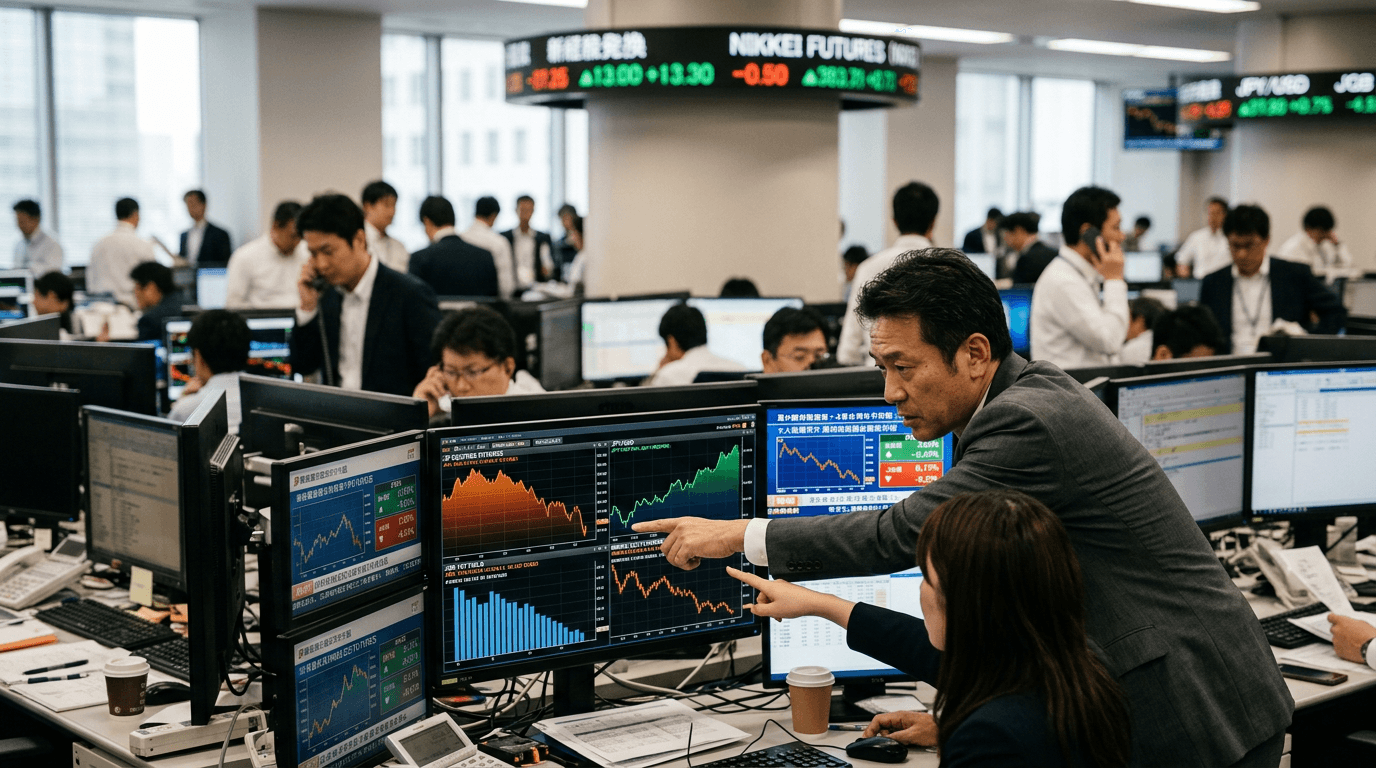
Nearly half of Japanese companies say the Bank of Japan’s recent interest rate hikes are now hurting their business, a clear sign that the country’s long-awaited policy normalization is starting to bite.[1] According to a Reuters survey, higher borrowing costs are squeezing margins, discouraging capital investment, and shaping corporate expectations for the yen, Japanese government bonds and Nikkei futures.[1][3] For traders and investors, this is a critical moment to reassess how Japan’s new rate regime ripples through the economy and markets.
Boj Rate Hikes: From Ultra-low To Normalization
For decades, Japan operated with near-zero or negative interest rates, aiming to combat deflation and stimulate growth. That era has decisively shifted. The Bank of Japan has raised its key policy rate to around 0.75%, the highest level in roughly three decades, marking a significant break from its ultra-loose stance.[2][10] At the same time, the BOJ is gradually reducing its purchases of government bonds, further signaling a move toward policy normalization.[2]
This shift is not happening in a vacuum. Stronger corporate confidence and improving business sentiment helped pave the way for rate increases.[5][7] Tankan survey readings for major manufacturers have been trending higher, indicating firms were initially resilient to price and policy pressures.[5][7] However, what looked manageable at the macro level is now proving challenging at the micro level, as individual firms confront the reality of higher funding costs across loans, bonds, and credit lines.[1]
For market participants, the key takeaway is that Japan is now in a genuine tightening cycle, not a one-off hike. Expectations for further moves, combined with reduced bond-buying, mean the rate environment will remain structurally different from the ultra-low regime that defined Japanese markets for years.[2][10]
How Higher Rates Hurt Corporate Japan
The Reuters survey finds that nearly half of Japanese firms report negative business impacts from the BOJ’s rate hikes, primarily through higher borrowing costs.[1] For companies that rely on bank loans to finance working capital, equipment, or property, even a modest increase in interest rates can meaningfully raise annual interest expenses.[9] This erodes profitability and forces management teams to revisit expansion, hiring, and investment plans.[1]
For capital-intensive sectors—manufacturing, utilities, infrastructure—the hit is particularly acute. These firms typically carry larger debt loads, so rate increases pass through quickly to their bottom line. As a result, many are scaling back or postponing capital expenditure, dampening domestic investment momentum.[1][9] Smaller and mid-sized companies, which often have less access to equity financing and more dependence on banks, are especially vulnerable.
Another important dimension is how sentiment shifts when financing conditions tighten. When management teams anticipate higher rates and volatile markets, they tend to adopt more conservative assumptions in their planning. That can translate into slower innovation, cautious inventory management, and more defensive balance sheet strategies—all of which can weigh on growth prospects.
For traders, the practical takeaway is that rising rates in Japan are not just a macro headline—they are changing corporate behavior. Earnings guidance, capex plans, and leverage strategies will increasingly be shaped by the new cost of capital.
Winners, Losers And Sector Rotation
Not every part of the Japanese economy is suffering from higher rates. Banks and other lenders stand to benefit as they can pass rate increases on to customers, widening net interest margins after years of compressed profitability.[6][8] Japan’s largest banks have already begun to show how a higher-rate environment can boost earnings and shareholder returns.[8]
This creates a clear sector rotation story. On one side are rate-sensitive borrowers—manufacturers, property developers, leveraged corporates—grappling with higher financing costs and softer investment plans.[1][9] On the other side are financial institutions and insurers, whose core business improves as yield curves steepen and loan margins expand.[6][8]
Equity traders and SimFi participants can use this divergence to test and refine strategies:
- Bank-heavy portfolios may outperform during periods of further BOJ tightening.
- Highly leveraged or capex-heavy names may face earnings downgrades and underperformance.
- Sector spreads—such as financials versus industrials—can become attractive relative-value trades.
In a simulated environment, this is an opportunity to model how earnings revisions, valuation multiples, and sector flows respond to shifts in monetary policy, without the capital risk of live markets.
Market Implications: Yen, Jgbs And Nikkei Futures
The Reuters survey indicates that BOJ hikes are not only hitting corporate P&L, they are also shaping expectations for key Japanese asset classes.[1][3] Many firms expect the yen to trade in the 140–145 range against the U.S. dollar over the current business year, while a significant subset foresee a weaker 145–150 range.[3] These expectations reflect a blend of domestic rate moves, global yield differentials, and trade policy uncertainties.[3]
Higher policy rates and reduced bond purchases tend to put upward pressure on Japanese government bond (JGB) yields.[2] That can lead to price volatility in longer-dated JGBs, especially if investors anticipate further tightening or a faster pace of balance sheet reduction.[2] For Nikkei futures, the story is more nuanced: financials may benefit from the new rate regime, but rate-sensitive sectors could weigh on the index, creating a tug-of-war within Japanese equities.[6][8]
For active traders, this environment opens a range of macro and cross-asset strategies:
- Long/short yen positions based on evolving BOJ guidance and global rate spreads.
- Duration trades in JGBs, balancing the risk of further yield rises against potential safe-haven flows.
- Index and sector rotation strategies using Nikkei futures to express views on banks versus broader corporate Japan.
In a SimFi setting, these themes can be turned into scenario-based exercises, allowing traders to explore how different rate paths, currency moves, and sector performances play out in a risk-free sandbox.
What Traders And Simfi Participants Should Watch
With nearly half of Japanese firms signaling pain from higher rates and two-thirds indicating a preference for the BOJ to pause further hikes, corporate tolerance for tighter policy is clearly being tested.[1][3] Only about a quarter of surveyed firms want rate increases to continue, underscoring the tension between monetary normalization and business conditions.[3]
Key watchpoints for the coming months include
- BOJ policy statements and projections for the pace of future hikes and bond-buying reductions.[2]
- Corporate earnings, especially guidance on interest expenses, capex, and currency assumptions.[1][9]
- Survey-based sentiment indicators, both from the BOJ (like the tankan) and private polls that track how firms are adjusting.[5][7]
For E8 Markets users and other SimFi participants, this is an ideal backdrop to practice:
- Stress-testing portfolios against different BOJ rate paths.
- Simulating earnings shocks in rate-sensitive sectors.
- Exploring hedging strategies using FX, rates, and equity indices.
Looking Ahead
Japan’s move away from ultra-low interest rates was always going to be a delicate balancing act. The latest survey evidence shows that a substantial share of corporate Japan is now feeling the strain, with higher borrowing costs weighing on profits and investment plans.[1] At the same time, banks and lenders are finally seeing the upside of a less distorted interest-rate landscape.[6][8]
For traders, investors, and SimFi participants, the message is clear: Japan has entered a new monetary regime, and its effects are spreading across balance sheets and markets. Understanding where the pressure points lie—and where the opportunities emerge—will be essential to navigating Japanese assets, whether in live portfolios or simulated environments.