
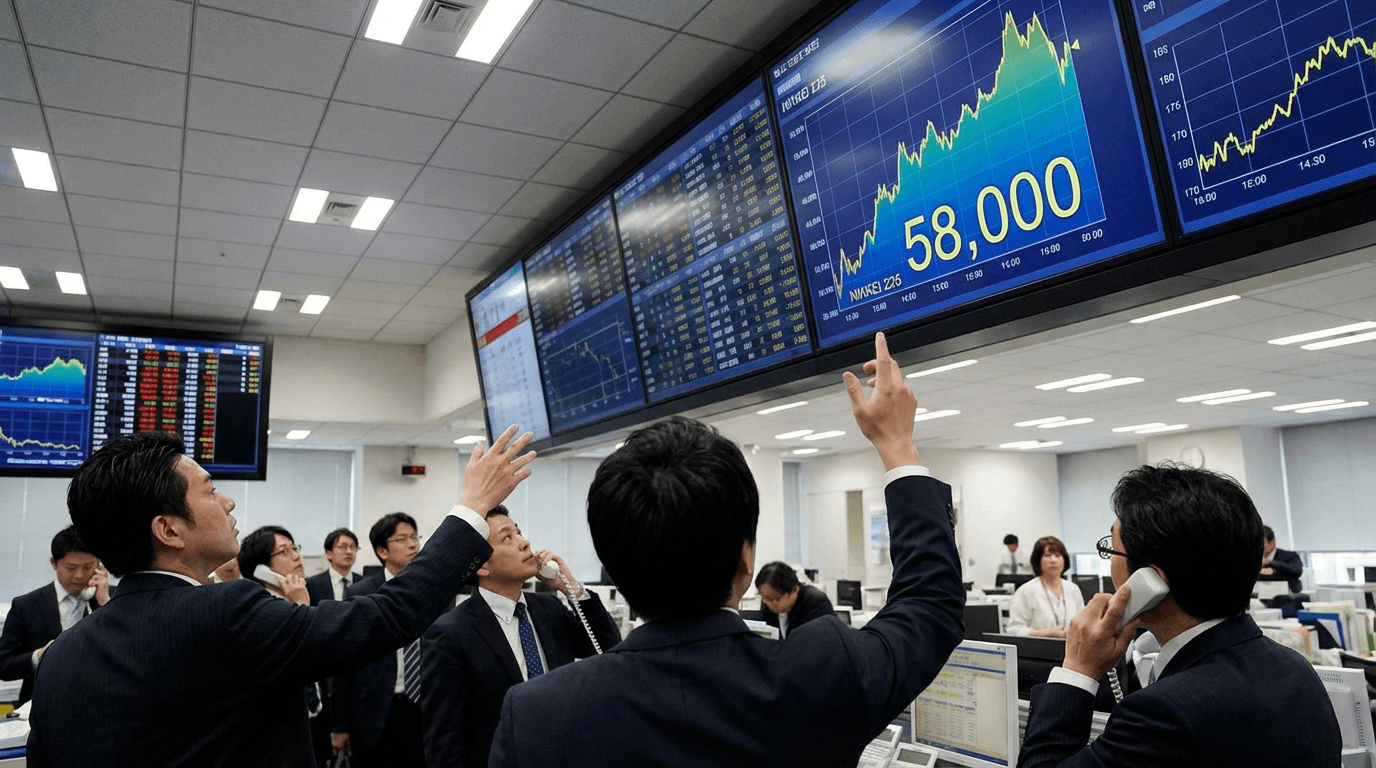
Japan's stock market witnessed an extraordinary surge in February 2026, as the Nikkei 225 index shattered records post-Prime Minister Sanae Takaichi's sweeping election win. On February 9, the index breached the 57,000 mark, peaking at 57,337.07 points before closing up 3.89%. Just three days later, it soared past the 58,000 threshold, reaching an intraday high of 58,015.08 on February 12. This rally reflects renewed investor confidence in fiscal stimulus initiatives, marking a pivotal moment for Asia's second-largest economy following a phase of stagnation and uncertainty.
The Election Catalyst: Politics Ignites Market Surge
The driving force behind this historic rally was clear: Japan's Liberal Democratic Party achieved a commanding supermajority in the February 8, 2026, elections. This victory provided Takaichi's administration with a robust mandate to implement aggressive fiscal policies aimed at boosting economic growth and invigorating domestic demand. The market's swift and decisive response to this political development highlighted investor anticipation of policy measures to tackle Japan's economic challenges.
The Nikkei's remarkable ascent, having climbed over 45% in the past year, underscores how the election outcome injected momentum into an already bullish market sentiment. Investor confidence had been steadily building throughout 2025, with the election outcome providing the necessary clarity and policy assurance for more assertive capital allocation.
Market Breadth And Sectoral Shifts
While the record-breaking numbers grabbed headlines, the underlying market dynamics tell a compelling story about investor strategies. Financials led the rally initially, a logical outcome given the benefits banks typically reap from a fiscally stimulative environment, such as higher interest rates and increased lending. This sector rotation highlights how investors positioned themselves for the anticipated policy landscape post-Takaichi's victory.
The broader Topix index also joined the upward trend, reaching 3,882.16 points on February 12. This indicates that the rally extended beyond a few major stocks, reflecting a genuine improvement in investor risk appetite and a sustainable market momentum, rather than being confined to a narrow group of mega-cap names.
Currency And Bond Market Interplay
The Nikkei's rally unfolded against a backdrop of currency and bond market movements that accentuated the equity surge. The yen appreciated nearly 3% against the US dollar, driven by optimistic projections for Japan's economy and anticipated interest rate hikes linked to fiscal stimulus. While a stronger yen might dampen overseas earnings, it could enhance domestic purchasing power and inflation dynamics. For international investors, the yen's appreciation partially offset local equity gains.
Government bond yields rose as markets braced for increased fiscal spending and potential monetary policy normalization. This combination of rising equity valuations, currency appreciation, and higher bond yields created a complex investment landscape, requiring investors to balance positive equity trends against currency and interest rate headwinds.
Economic Context And Investor Strategies
Japan's recent economic performance provides critical context. The fourth-quarter GDP report showed a 0.1% quarter-on-quarter growth, rebounding from a 0.7% contraction in Q3 but falling short of the forecasted 0.4% growth. This economic backdrop explains why markets eagerly embraced a government committed to fiscal support—investors acknowledged Japan's need for policy intervention to achieve robust growth. The GDP shortfall underscored the insufficiency of organic economic momentum without government aid.
For investors eyeing Japanese equities, several key insights emerge. Recognizing regime changes and political catalysts is crucial—the election outcome was a significant inflection point. Monitoring fiscal policy follow-through is essential to ensure the market's optimism is warranted. Additionally, currency considerations are vital for international investors, given the yen's appreciation against major currencies.
Looking Ahead
The Nikkei's record highs in mid-February 2026 mark both a milestone and a moment for investor introspection. The index's 45% increase over the past year and surpassing the 58,000 mark signal renewed confidence in Japan's economic outlook. However, investors must remain vigilant, as record highs can also herald turning points where sentiment becomes overstretched. Assessing the government's delivery on fiscal stimulus promises, the economy's response to policy measures, and whether corporate earnings justify higher valuations will be crucial in determining whether this market advance is sustainable or represents excessive optimism.