
Meta and Nvidia Forge Strategic AI Alliance, Transforming Semiconductor Landscape
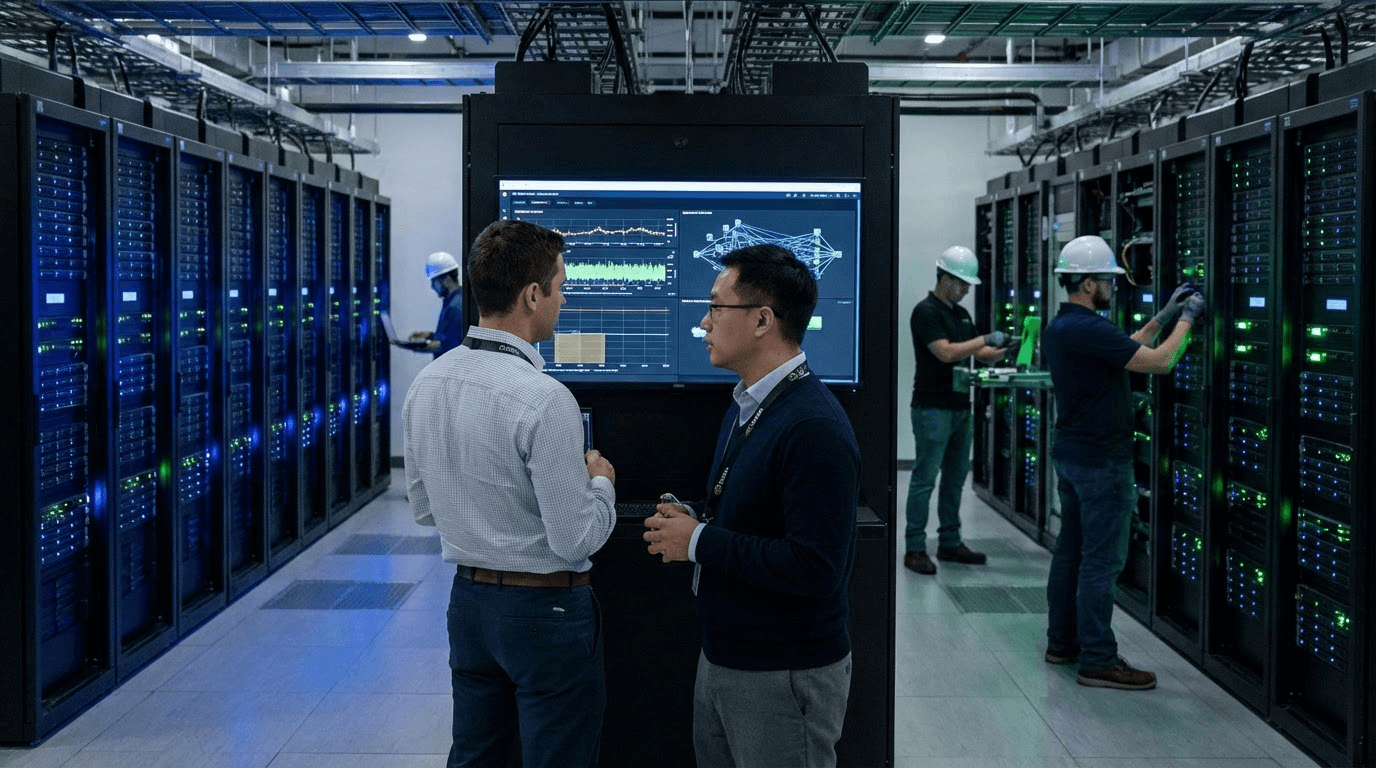
Meta and Nvidia have announced a groundbreaking multiyear partnership that substantially deepens their alliance in AI infrastructure, marking a transformative moment for both companies and the wider semiconductor industry. This partnership, revealed on Tuesday, has already driven positive momentum in U.S. equity markets as of Wednesday. Under the deal, Meta commits to deploying millions of Nvidia's current and next-generation chips across its expanded data center operations. This expansion not only highlights Meta's aggressive push to enhance its AI capabilities but also positions Nvidia to capture a larger share of the hyperscale computing market.
Beyond GPUs: A Comprehensive Integration
The partnership goes far beyond traditional GPU procurement. Meta plans to deploy Nvidia's Blackwell GPUs, upcoming Rubin AI chips, and Nvidia's Grace and Vera central processing units. This move positions Nvidia in direct competition with Intel and AMD in the CPU arena. By sourcing CPUs, GPUs, networking equipment through Nvidia's Spectrum-X Ethernet platform, and confidential computing technology for WhatsApp, Meta creates a streamlined vendor relationship described by industry analysts as a "one-throat-to-choke" model, simplifying operations and deepening dependency.
The Strategic Significance: Nvidia's CPU Expansion
What sets this partnership apart is Nvidia's successful foray beyond its traditional GPU stronghold into the CPU market. Historically dominated by Intel and AMD, CPUs are now more power-efficient and cost-effective for AI inference tasks compared to GPUs, providing a significant market opportunity for Nvidia's Arm-based processors. The Grace CPU has demonstrated the capability to handle database operations at nearly half the power consumption of competitors, with the forthcoming Vera chips promising even greater efficiency.
For Meta, this approach reduces operational complexity while delivering substantial performance-per-watt improvements, crucial when managing billions of daily users through personalization and recommendation systems. The deal marks the first large-scale Grace-only CPU deployment, a significant validation that could accelerate Nvidia's CPU adoption across the hyperscale market.
Market Implications and Competitive Landscape
This agreement comes amidst intensifying competition in AI infrastructure. While Nvidia commands the market share in AI chip deployments, competitors like Google, AMD, and Broadcom are vying for a slice of the pie. However, the demand for infrastructure is so robust that experts believe Nvidia's competitors will not face revenue declines in the near term. The entire sector benefits from the explosive growth in AI workloads.
Nonetheless, this partnership holds competitive significance. Meta's previous exploration of Google's TPUs and in-house chip development suggested potential supplier diversification. By deepening its commitment to Nvidia across multiple product categories, Meta effectively narrows the window for competitors to gain traction with hyperscale customers at its scale. The deal underscores Nvidia's competitive moat even as major tech players invest heavily in proprietary chip development.
For traders, the announcement sparked an immediate market response. Nvidia shares rose 1.85% in premarket trading Wednesday to $188.40, building on a previous session's 1.20% gain. The broader market benefited from the deal's positive signal about AI infrastructure demand, with the Nasdaq and S&P 500 opening higher. Meta gains confidence in long-term AI infrastructure planning, while Nvidia secures revenue visibility and customer lock-in through this multiyear, multigenerational framework.
Implications for SimFi Traders
For SimFi traders and investors monitoring the semiconductor and technology sectors, this partnership highlights several key dynamics. It demonstrates how hyperscale customers are consolidating around established technology platforms instead of fragmenting across multiple suppliers. Simplification triumphs when efficiency and performance are paramount at Meta's scale. Additionally, it illustrates how market leadership compounds over time—Nvidia's dominance in GPUs has cultivated relationships and expertise that facilitate expansion into adjacent categories like CPUs. The deal also validates the shift from training to inference as a significant business opportunity, with companies seeking power-efficient compute solutions.
The partnership emphasizes ecosystem integration's importance. Nvidia's success extends beyond individual chip performance to building complete platforms that simplify customer operations managing vast infrastructure. This integrated approach creates switching costs and deepens customer relationships beyond mere hardware specifications.
Key Takeaways
Meta's expanded partnership with Nvidia reinforces the semiconductor giant's dominance in AI infrastructure, demonstrating how market consolidation benefits established leaders. The deal signals continued robust demand for AI compute, with hyperscale operators willing to commit multiyear budgets to infrastructure buildout. For investors and traders, the announcement affirms that competitive advantages in AI hardware are durable, that ecosystem integration drives business value beyond individual products, and that the shift from training to inference creates genuine new market opportunities. Watch how competitors respond and whether this partnership influences other hyperscalers' procurement strategies in coming quarters.