
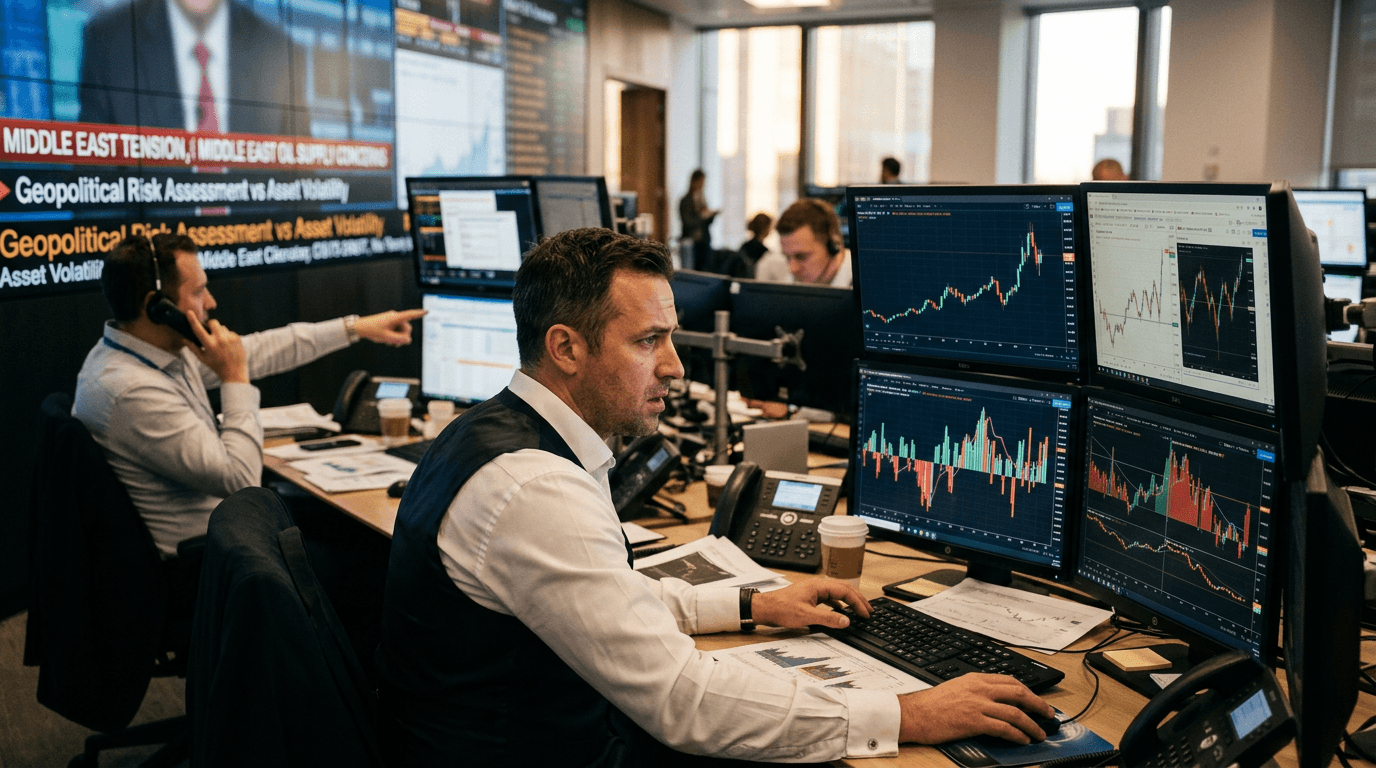
Nasdaq futures are drifting higher even as crude oil prices surge on renewed Middle East tensions, underscoring how equity futures, energy markets, and macro risk pricing are increasingly intertwined in today’s trading environment[2][9]. While headlines focus on conflict and shipping risks, the deeper story is about how markets reprice growth, inflation, and volatility when oil becomes the main conduit for geopolitical stress[6][13].
Markets At A Glance
Crude oil has been grinding higher as hostilities flare across the Middle East, with benchmarks such as Brent and WTI repeatedly testing multi-week highs on fears of supply disruption[2][9][14]. Episodes of US–Iran strikes, Houthi attacks on tankers, and threats around key chokepoints like the Strait of Hormuz and the Red Sea have pushed prices into the mid‑90s and beyond in recent weeks[6][11][13]. These rallies have often featured single‑day gains of 2–7%, a clear sign that traders are embedding a sizable geopolitical risk premium into energy contracts[1][8][14].
Against that backdrop, US equity futures have not collapsed; instead, they have seen a mixed but generally resilient response as investors weigh higher input costs and risk aversion against still‑solid earnings expectations and tech-sector momentum. When oil spikes on supply fears rather than demand strength, the market must reconcile a stronger energy complex with potential pressure on growth and margins, especially for energy‑intensive industries.
Why Oil Rallies On Middle East Tension
Oil is uniquely sensitive to Middle East headlines because a large share of global supply transits through narrow maritime corridors that can be disrupted by conflict, sanctions, or blockades[6][13][15]. Reports of missile attacks near US vessels, drone strikes on Saudi facilities, and direct hits on tankers have all triggered sharp intraday moves as traders reassess the probability of supply outages[11][15]. Each renewed round of military action or failed diplomacy has added another layer to the risk premium, with markets pricing not just current disruption but the possibility of escalation and prolonged instability[4][12][14].
In practical terms, this means crude futures are responding less to traditional demand indicators and more to event risk and logistics. Inventories data still matter, but when traders fear that shipping lanes might be compromised or production facilities targeted, the marginal barrel of oil is valued as insurance against future scarcity rather than simply as fuel for current consumption[8][13]. That shift in narrative is what keeps rallies alive even in the absence of strong macro data.
Equity Futures And Macro Risk Pricing
Equity index futures sit at the intersection of sector performance, macro expectations, and risk sentiment. When crude jumps on geopolitical tension, index-level pricing reflects several competing forces at once. Energy producers may benefit from higher realized and expected prices, supporting value and cyclical segments of the market. At the same time, higher oil feeds into inflation expectations, which can push bond yields higher and compress valuation multiples for long-duration growth assets, including many Nasdaq components.
The current environment, where Nasdaq futures are edging higher rather than selling off aggressively, suggests that investors are treating the latest crude rally as a manageable shock rather than a systemic threat. Tech and growth names may still command a premium based on earnings resilience, cash flow strength, and structural demand for digital infrastructure and AI. For now, the risk premium is showing up more clearly in oil, credit spreads, and volatility pricing than in outright equity index levels.
For macro traders, the key is to view these moves through a cross‑asset lens. Oil is signaling heightened geopolitical risk and possible inflation persistence; equity futures are signaling continued risk appetite and confidence in earnings; rates and FX will determine how sustainable that combination is.
Implications For Simulated Traders
For participants in a SimFi environment like E8 Markets, this type of cross‑asset episode is an invaluable learning opportunity. It highlights that big moves in a single market—crude, in this case—often originate outside traditional economic data and can ripple through equities, rates, and currencies in complex ways. Simulated trading allows you to explore those linkages without the emotional and financial pressure of real capital at risk.
A core takeaway is that index futures should never be traded in isolation. When oil is rallying on geopolitical tension, scenario analysis should consider questions such as: How might higher energy costs affect sector rotation within the Nasdaq? Could rising inflation expectations change central bank trajectories and, by extension, discount rates applied to growth stocks? How might increased volatility in commodities spill over into broader risk sentiment and margin requirements? Viewing each trade as part of a larger macro ecosystem builds more robust strategies.
Practical Takeaways For E8 Markets Users
1) Build a cross‑asset dashboard. Track equity futures, major crude benchmarks, volatility indices, and key FX pairs together. When crude spikes on Middle East headlines, watch how Nasdaq futures, the dollar, and bond yields respond over different time horizons.
2) Separate demand‑driven from risk‑premium rallies. Oil rallies on strong global growth have different implications than rallies driven by conflict and supply fears[2][9][14]. In your simulations, tag scenarios by driver type and study how equity futures behave in each case.
3) Practice event‑risk playbooks. Use simulated accounts to design and test rules for trading around geopolitical events—position limits, stop‑loss levels, and volatility filters. Incorporate news triggers such as strikes on infrastructure, threats to shipping lanes, or sanctions announcements[6][11][13].
4) Stress‑test sector exposure within indices. Nasdaq may be tech‑heavy, but it includes companies with varying sensitivity to energy prices and macro conditions. Run simulated shocks where crude moves 5–10% in a single session and observe which types of names would theoretically gain or lose the most.
5) Focus on correlation shifts, not just price moves. During periods of heightened tension, correlations between oil, equities, and rates can change quickly. Use historical simulations to see how cross‑asset relationships evolve when crude breaks above key levels such as $95 or $100 per barrel[6][11][13].
Conclusion
Nasdaq futures edging higher while crude rallies on Middle East tension illustrates how modern markets distribute risk premiums across assets rather than expressing them in a single index. Oil is carrying the most visible burden of geopolitical stress, but the true impact will be determined by how inflation expectations, central bank policy, and corporate earnings respond over time[2][9][14]. For traders—especially those honing their edge in a simulated environment—the lesson is clear: successful strategies require a holistic view of cross‑asset dynamics, disciplined scenario analysis, and an ability to distinguish between temporary shocks and regime‑shifting events. The current episode is not just another headline; it is a live case study in how global risk is priced.