
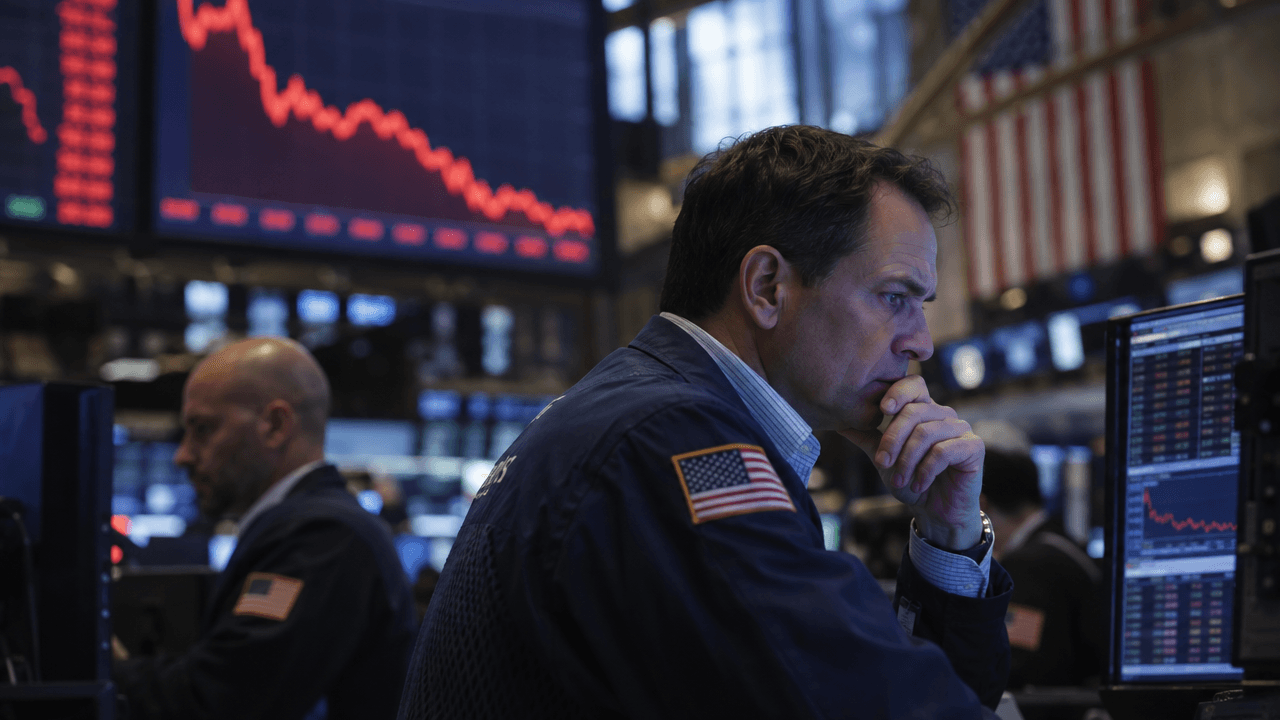
U.S. equity futures are pointing to a softer open, with contracts linked to the Dow Jones Industrial Average down around 0.4% and Nasdaq futures off close to 1.0%, highlighting a clear tilt away from higher-growth, rate‑sensitive names.[7][12] The move reflects a cooling in risk appetite as investors weigh geopolitical developments, renewed inflation worries, and a heavy calendar of U.S. economic data in the days ahead.[9][11]
What The Futures Move Signals
Index futures offer a snapshot of how investors expect the cash market to trade at the opening bell, and today’s picture is one of cautious de‑risking rather than outright panic.[7][9] The deeper decline in Nasdaq futures relative to Dow and S&P 500 contracts suggests a preference for more defensive or value‑oriented sectors over high‑beta technology and growth stocks.[7][12] This pattern is consistent with other recent sessions in which rising Treasury yields and higher oil prices have pressured risk assets, particularly those with longer‑duration cash flows.[7][9][13]
The fact that losses are concentrated in the Nasdaq also indicates that investors are reassessing the premium they are willing to pay for future earnings in an environment where the cost of capital may stay elevated for longer.[7][11] In contrast, the Dow—home to more mature, dividend‑paying companies—typically proves more resilient when the macro narrative shifts toward inflation risks and policy uncertainty.[7][12]
Why Nasdaq Futures Are Underperforming
Technology and growth stocks, which dominate the Nasdaq, are highly sensitive to changes in interest rates because much of their valuation is driven by cash flows expected many years into the future.[7][13] When Treasury yields rise, those future cash flows are discounted at a higher rate, compressing valuation multiples and putting downward pressure on prices.[7][11] Recent sessions have seen yields push higher alongside a rebound in oil prices, reinforcing market concerns that inflation may prove sticky and that central banks could keep policy tight.[9][13][11]
Nasdaq futures also tend to respond more sharply to shifts in sentiment around innovation‑driven spending, such as AI and cloud infrastructure, which are capital‑intensive and sensitive to financing conditions.[8][11] If investors fear that corporate investment could slow due to higher borrowing costs and macro uncertainty, they often rotate out of speculative growth names and into sectors with more visible cash flows and pricing power.[1][5] This can amplify downside moves in Nasdaq futures relative to broader benchmarks, even when the headline macro data remains mixed rather than decisively negative.[7][9]
Macro Drivers: Geopolitics, Inflation And Data
Geopolitical risk is a key part of the backdrop for today’s futures weakness, especially where it intersects with energy markets and global trade routes.[11][14] Research shows that geopolitical shocks tied to energy disruptions tend to be both inflationary and contractionary: they push consumer prices higher while weighing on growth and corporate activity.[14] Elevated geopolitical risk indices have historically been associated with higher market volatility, wider risk premia, and more cautious corporate investment.[1][5]
Inflation risks remain front‑of‑mind as well, despite recent signs of cooling headline price pressures.[8] Rising energy costs, lingering tariff effects, and supply chain adjustments all contribute to upside risks for inflation in the months ahead, especially if geopolitical tensions persist.[8][11] In such an environment, the Federal Reserve may feel compelled to maintain or even re‑tighten policy, keeping real rates restrictive and reinforcing the pressure on long‑duration assets like tech and growth equities.[8][11]
This week’s U.S. economic calendar adds another layer of uncertainty, with investors watching closely for data on inflation, labor markets, and business activity that could reset expectations for the policy path.[3][11] Stronger‑than‑expected data has recently pushed bond yields higher and weighed on equity valuations, a pattern that traders are keenly aware of as they position via index futures ahead of major releases.[3][9][13]
Practical Takeaways For Active Traders
For active traders and investors, the current futures setup offers several practical lessons about navigating macro‑driven moves in U.S. indices.[7][9]
First, pay close attention to relative moves across futures contracts, not just the direction of travel. A 1% drop in Nasdaq futures versus a smaller decline in Dow futures signals a market narrative centered on rates, growth, and sector rotation rather than broad risk‑off capitulation.[7][12]
Second, watch the interaction between bond yields, oil prices, and equity futures in real time. Rising yields and higher crude have recently coincided with equity futures weakness, especially in tech‑heavy indices, underscoring the importance of cross‑asset context.[7][9][13]
Third, frame economic data releases as catalysts for volatility rather than simple “good” or “bad” news. Strong data can be bearish for equities if it raises the odds of further tightening or delays rate cuts, particularly when inflation is already above central bank targets.[3][11] That dynamic favors tactical flexibility—shifting exposure between indices, sectors, and styles as the macro narrative evolves.
How Simulated Finance Can Help Navigate Volatility
Periods when equity futures decline and the Nasdaq underperforms are valuable training grounds for traders looking to improve their process without taking on real‑world risk. Simulated finance environments allow market participants to test strategies that respond to macro shocks, such as rotations between growth and value, hedging tech exposure with index futures, or adjusting position size around key data releases.[1][5]
In a risk‑free simulation, traders can experiment with rules for managing leverage and margin when futures gaps appear, refine their approach to stop‑loss placement in volatile pre‑market conditions, and build playbooks for different macro scenarios—rising yields, geopolitical escalations, or surprise inflation prints.[3][11][14] They can also analyze how their strategies would have performed across historical episodes when geopolitical risk and inflation uncertainty spiked, helping them avoid emotional decision‑making when similar patterns recur.[1][5][14]
Conclusion
Today’s decline in U.S. equity futures, and the underperformance of Nasdaq contracts in particular, reflects a market grappling with intertwined themes: geopolitics, inflation risks, and a pivotal run of economic data.[7][9][11] The combination of higher yields, elevated energy prices, and policy uncertainty is pushing investors to reprice growth and technology exposure, favoring more defensive allocations at the margin.[7][11][13] For traders, the key is not simply to react to the headline move, but to understand the macro mechanics driving it—and to use tools, including simulated trading environments, to rehearse robust strategies before committing capital. By doing so, they can turn short‑term futures volatility into long‑term skill development and more disciplined risk management.[1][5][14]