
Strait of Hormuz: The Epicenter of Financial Uncertainty
Global Crisis Unfolds as NATO Allies Tackle Iran's Strategic Blockade
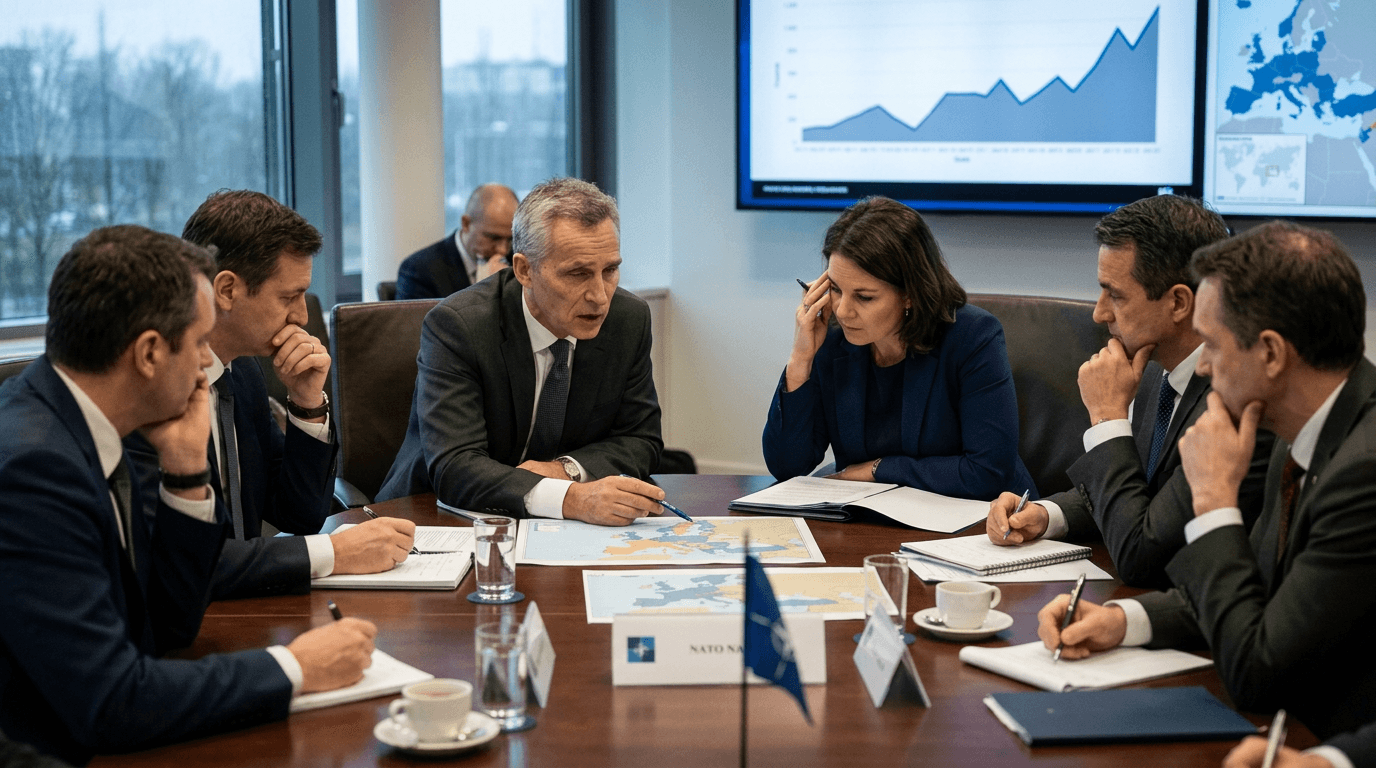
The Strait of Hormuz has emerged as the epicenter of global financial uncertainty. Since the U.S. and Israel initiated military actions against Iran on February 28, 2026, Iran has effectively closed this critical oil corridor. This disruption, a chokepoint through which nearly 20 million barrels of crude oil once flowed daily, has triggered what many analysts are calling a global economic crisis. On March 18, NATO Secretary General Mark Rutte announced that intensive discussions among alliance members are underway. Both political and military solutions are being explored at the highest levels to reopen this vital artery of global commerce.
A Coalition Forms Around Hormuz
Seven U.S. allies have pledged support for a potential coalition to reopen the Strait of Hormuz for commercial and oil tanker traffic. However, this support comes with a crucial caveat: these allies have not committed naval resources or military assets to ensure safe passage. This distinction is key to understanding the current state of alliance unity. While this symbolic backing provides political cover and showcases transatlantic solidarity, it falls short of the direct military intervention repeatedly called for by President Trump. NATO Secretary General Rutte has highlighted that allies are "intensely discussing" the optimal approach to this crisis, reflecting the complexity of coordinating a multilateral response to an escalating regional conflict.
This support statement represents a middle ground between Trump's aggressive calls for immediate military action and the reluctance of several major European nations to become directly involved in what they see as an expanding Middle East conflict. This tension within the alliance reveals fundamental disagreements about risk tolerance and NATO's role in non-Article 5 situations.
Market Implications and Oil Price Volatility
The closure of the Strait of Hormuz has already pushed global oil prices up by more than 40%, according to multiple reports. For traders, this presents both a significant risk and a potential opportunity, depending on portfolio positioning. As of mid-March 2026, the disruption has effectively halted nearly all tanker traffic through the strait, creating an immediate supply shock that ripples through every energy-dependent market globally.
Energy futures have responded dramatically to the uncertainty surrounding when and how the waterway will be reopened. Initial assessments suggest that the timeline for reopening spans weeks, creating an extended period of elevated geopolitical risk premium in oil markets. This uncertainty is particularly significant for traders managing exposure to energy stocks, airline companies, shipping indices, and global equity markets sensitive to commodity prices. Refineries worldwide are adjusting their sourcing strategies, alternative shipping routes are becoming congested, and inventory levels are drawing down at unsustainable rates.
Beyond crude oil, broader market implications extend to inflation expectations, currency valuations, and central bank policy responses. Higher energy costs will likely feed through to consumer price indices, complicating the inflation situation in developed economies and potentially forcing policy adjustments from the Federal Reserve and European Central Bank.
Geopolitical Challenges to Reopening
Despite the rhetorical support from seven allied nations, significant obstacles remain to any coordinated reopening effort. Multiple European nations, including Germany, Italy, the United Kingdom, and Belgium, have explicitly refused calls to deploy naval forces in the strait. This reluctance reflects deep concerns about escalation, the risk of becoming direct targets of Iranian retaliation, and the political cost of military involvement in what many view as a regional conflict beyond NATO's traditional scope.
The military dimension of this challenge cannot be understated. Iran maintains advanced anti-ship capabilities and has demonstrated its willingness to use them through both direct attacks and the closure of the waterway itself. Any coalition operation would need to establish sufficient naval presence to protect commercial traffic while avoiding actions that might be perceived as offensive operations—a delicate balance that has historically proven difficult to achieve.
Additionally, the absence of formal NATO participation creates a more fragile operational framework. Ad-hoc coalitions lack the command structures, interoperability standards, and burden-sharing mechanisms that formal alliance operations provide. This structural weakness could undermine the effectiveness and endurance of any reopening effort.
Trader Takeaways and Strategic Positioning
For SimFi participants and real-market traders, several key considerations emerge from this unfolding situation. Energy sector volatility is likely to remain elevated until a clear path to reopening emerges. Diversification away from energy exposure may be prudent, though selective long positions in companies positioned to benefit from supply constraints could offer compelling risk-reward profiles. Monitor statements from NATO leadership and regional powers closely, as any announcement regarding military operations or diplomatic breakthroughs will produce immediate market reactions.
The extended timeline for resolution suggests sustained elevated risk premiums across multiple asset classes. Position sizing should reflect this uncertainty, and hedging strategies become particularly valuable in volatile environments. Finally, watch for any shifts in allied commitment levels, as fractures in coalition unity could dramatically alter market expectations about outcomes and timelines.
The coming weeks will determine whether diplomatic and military coordination among Western powers can overcome both technical and political hurdles to restore one of global commerce's most vital chokepoints.
News Impact Score: 8