
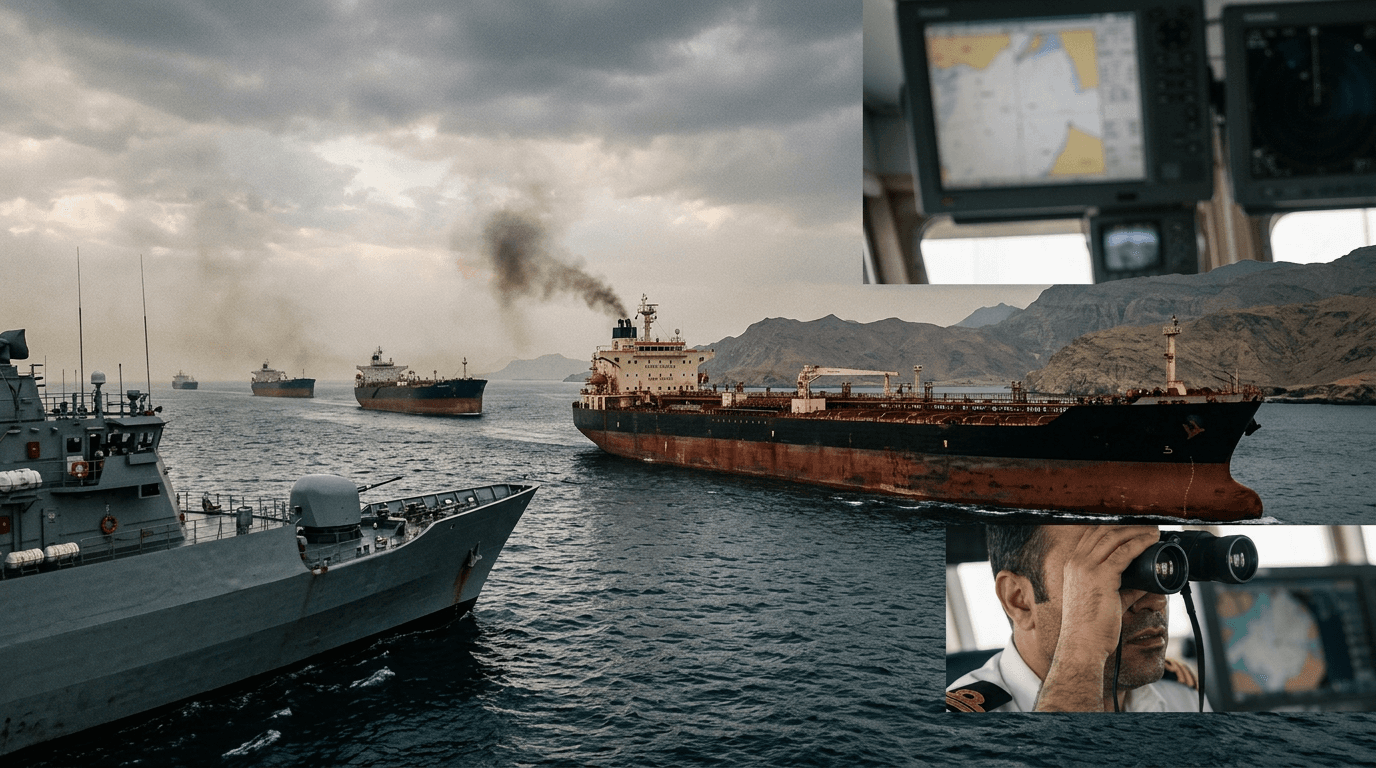
Trump's Ultimatum and the Strait of Hormuz: Unraveling the Implications for Global Oil Markets
The Geopolitical Shockwave
The Trump administration has issued a stark ultimatum to Iran, demanding the reopening of the Strait of Hormuz within 48 hours or face targeted U.S. military strikes on power infrastructure. This move presents one of the most profound geopolitical tremors to hit global energy markets in recent memory, coinciding with an already tense regional backdrop. For traders and investors, grasping the full implications of this ultimatum is critical for navigating the increasingly turbulent energy landscape.
Understanding the Stakes: The Strait's Indispensable Role
The Strait of Hormuz stands as the world's most pivotal energy transit chokepoint. An estimated 84% of crude oil and condensate traversing this strait is destined for Asian markets, with China, India, Japan, and South Korea together accounting for 69% of all Hormuz-bound crude flows. This concentrated dependency implies that any interruption will not merely cause localized disruptions but will send shockwaves throughout the entire global economy.
Currently, the global energy sector is under significant strain, with disruptions threatening up to 400 million barrels of oil supply. Reports indicate that key oil fields, ports, and terminals are under threat, and the Strait of Hormuz remains in jeopardy. Market volatility is already palpable, with analysts cautioning that ongoing escalation could lead to sustained high oil prices and broader economic repercussions.
Market Dynamics: Winners and Losers
Regions face differing exposures to a potential closure of the Strait. Asian economies are particularly vulnerable. China imports between 6.5 and 7.5 million barrels per day through the strait, representing approximately 40 to 45% of its total oil imports. A price surge to $150 per barrel from current levels of around $70 would burden China with an additional $560 million daily cost just to maintain current supply levels. This scenario directly translates to increased production costs, diminished profitability for industrial sectors, and inflationary pressures on consumers.
Japan faces an even more precarious situation, relying on the Strait of Hormuz for roughly 90% of its oil needs, importing 3.2 million barrels daily. A sharp price hike would cost Japan an additional $256 million per day, straining financial reserves and elevating living costs for Japanese citizens. Similarly, South Korea, importing 2.8 million barrels daily through the strait—covering 75% of its crude needs—could see potential daily cost increases reaching $224 million.
India's exposure is equally severe, importing 4.5 to 5 million barrels per day through the strait to fulfill 60 to 65% of its oil demands. Disruptions will sharply raise energy costs, impacting India's balance of payments and exacerbating domestic inflation.
Western economies, including the United States and Europe, enjoy more insulation from direct oil dependency, but they are not immune. The global oil market is interconnected, and any significant supply shortfall immediately impacts prices across all markets, leading to higher energy costs that ripple through their economies.
Beyond Crude: The Supply Chain Disruptions
While many traders focus on crude oil prices, research from Morgan Stanley highlights that secondary consequences could prove even more damaging. The Middle East is a critical global supplier not only of crude oil but also of petrochemicals, fertilizers, and metals like aluminum—key materials for international manufacturing networks.
As energy-related disruptions intensify, supply shortages and logistical delays for these commodities are emerging, increasing costs for agriculture, construction, and consumer goods manufacturing. Trade flows worth billions are at risk, with aluminum and plastics singled out as particularly vulnerable components for finished goods production. Fertilizer supply chains, especially for nitrogen-based varieties reliant on natural gas, are notably fragile.
These secondary supply chain effects may persist far longer than the conflict itself. A return to normal oil shipments would not immediately resolve manufacturing and supply chain issues, as recovery efforts would likely prioritize restoring energy exports over downstream production capabilities. Consequently, the conflict's economic implications could extend well beyond elevated fuel costs, potentially driving sustained inflationary pressures and trade disruption.
Alternative Routes: Limited Relief
A mitigating factor in the worst-case scenarios is the existence of alternative routes. Saudi Arabia and the UAE possess pipeline infrastructure capable of bypassing the Strait of Hormuz entirely. Industry estimates suggest that approximately 2.6 million barrels per day of spare capacity from Saudi and UAE pipelines could be activated in a disruption scenario. While this provides some relief, it cannot fully substitute the strait's capacity, meaning a significant portion of global exports would remain disrupted regardless of price levels.
Strategic Insights for Traders
For investors and traders, this situation necessitates immediate portfolio adjustments. Energy sector positioning should reflect the heightened geopolitical risk premium now embedded in oil prices. Diversification away from Asian industrial stocks—given their acute exposure to energy cost shocks—warrants consideration. Defensive sectors and companies with pricing power to pass through cost increases may outperform. Finally, closely monitoring the 48-hour deadline and ensuing negotiations is crucial; any de-escalation could trigger sharp reversals in energy markets, while further escalation could elevate prices to levels that fundamentally alter economic projections.
NEWSIMPACTSCORE: 9