
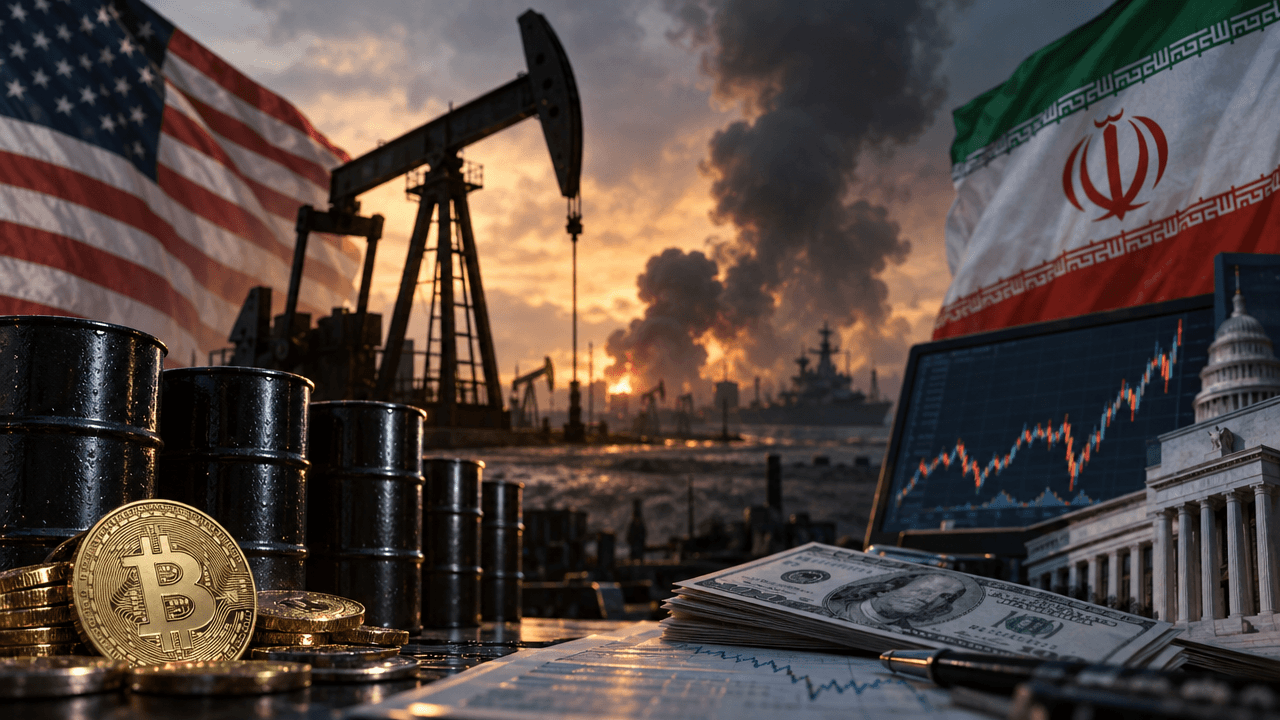
Oil’s return to triple-digit territory is a powerful reminder that geopolitics still matters just as much as economics in energy markets. Brent crude has pushed above $100 and recently traded around $107 per barrel as tensions between the United States and Iran intensify and attacks disrupt shipping and infrastructure across the Gulf region.[2][5][9] For traders, this is not just an oil story—it is a macro, cross‑asset volatility story.
WHY OIL IS BACK ABOVE $100
The latest rally in crude prices has been driven by a sharp escalation in military and proxy activity involving U.S. and Iranian forces, including strikes on tankers and attacks on Saudi energy facilities.[2][8][9] These events have amplified fears that supplies from one of the world’s most important producing regions could face prolonged disruption.[2][3][9]
Brent crude, the global benchmark, has climbed firmly into triple digits for the first time since mid‑year, posting gains of 3–7% in single sessions as headlines hit the tape.[2][3][9] In some recent trading, front‑month Brent has moved through the $107 level as traders price in a higher risk premium for Gulf barrels.[5][11][14] Physical market indicators, such as dated Brent assessments, have also remained above $100, confirming that the move is not purely speculative.[9]
For fundamental traders, the key takeaway is that this is a supply‑risk‑driven rally, not just a demand story. When price moves are dominated by geopolitical premia, the path of oil can become more binary and headline‑sensitive, which has implications for position sizing, hedging, and scenario planning.
Geopolitical Flashpoint: The Strait Of Hormuz
At the center of market anxiety is the Strait of Hormuz, the narrow chokepoint through which a significant share of global seaborne crude and refined products flows.[1][11][13] Recent attacks on tankers and an Iranian vessel in and around Hormuz, alongside damage to Saudi pipelines, have reminded markets how vulnerable these routes are.[11][13]
Any sustained disruption or credible threat to traffic through Hormuz can tighten global supply even if no barrels are immediately lost. Traders know that insurance costs rise, shipping routes are re‑evaluated, and some buyers seek alternative crude grades, all of which can push benchmarks higher.[2][11][13]
In practical terms, this means geopolitical monitoring becomes as important as traditional data such as inventory reports or OPEC+ production targets. For active traders and those practicing on SimFi platforms, tracking timelines of attacks, diplomatic statements, and military deployments around Hormuz is now a key part of the oil trading playbook.
Macro Ripple Effects: Inflation And Monetary Policy
Triple‑digit oil is arriving at a sensitive time for the global macro narrative. Higher energy prices feed directly into fuel and transportation costs, and indirectly into goods and services, reviving concerns that inflation could re‑accelerate or stay uncomfortably high.[2][3][8][10] Recent moves in Brent and U.S. crude have already sparked warnings about renewed inflationary pressure for households and businesses worldwide.[2][8][10]
When inflation risks rise, central banks are less willing to cut rates aggressively, and the probability of “tighter for longer” policy increases. Several market commentaries around the latest oil spike highlight the risk that rate cuts could be delayed or come in smaller increments if energy‑driven price pressures persist.[2][3][10] That backdrop matters for risk assets because discount rates, valuations, and funding conditions are closely tied to expectations for monetary policy.
For traders, the main macro takeaway is that oil above $100 is not just a sector‑specific shock. It feeds into interest‑rate expectations, yield curves, and inflation swaps. Incorporating crude scenarios into macro views can improve conviction in trades across bonds, equity indices, and FX.
Cross-asset Market Reaction
The surge in crude has already been reflected in volatility across other asset classes. Higher oil prices typically weigh on rate‑sensitive parts of the equity market and on long‑duration assets, as investors reassess the path of policy rates and growth.[2][3][10] Episodes of sharp energy rallies have historically pressured broad indices, with cyclical sectors and consumer‑facing companies often underperforming.
Bond markets tend to respond through higher yields at the long end, as inflation expectations tick up, while short‑term rates re‑price toward a more cautious central‑bank stance.[2][10] Credit spreads can widen if markets start to worry about weaker corporate margins or slower growth due to higher input costs.
Crypto assets, which have benefited in prior periods from abundant liquidity and lower real yields, can also feel the strain when markets pivot toward a higher‑for‑longer rate narrative. Even without direct energy exposure, digital assets sit within the broader “risk asset” complex and can see de‑risking flows during macro shocks.
For multi‑asset traders, the lesson is clear: an oil move of this magnitude is a cross‑asset event. Aligning views on energy, rates, and risk sentiment can help avoid contradictory positions—for example, being aggressively long high‑beta equities while also forecasting a persistent energy‑driven inflation shock.
How Traders Can Use Simulated Finance To Prepare
Platforms like E8 Markets give traders a sandbox to test strategies around complex geopolitical and macro environments without real‑world capital at risk. In a SimFi setting, the current oil spike can be treated as a live case study for building and stress‑testing frameworks.
Traders can design scenario‑based strategies—such as “Hormuz disruption worsens,” “diplomatic de‑escalation,” or “central banks react hawkishly to energy inflation”—and simulate how portfolios of oil futures, energy equities, bond futures, and crypto exposures might behave under each path. This helps clarify which positions are robust and which are overly dependent on one outcome.
SimFi environments are also ideal for practicing headline‑driven risk management. By replaying recent sessions where Brent gapped higher on breaking news of attacks or diplomatic setbacks,[2][5][9] traders can examine whether their stop‑loss levels, position sizes, and diversification would have held up. Doing this in simulation builds discipline that can be applied when trading live markets.
Finally, simulated trading allows participants to explore hedging ideas—such as pairing long oil exposure with short positions in rate‑sensitive equity sectors or using options to cap downside during highly uncertain periods. The goal is not to predict every headline, but to build a structured approach to managing geopolitical and macro risk.
Conclusion
Oil’s surge above $100, with Brent trading around $107 amid escalating U.S.-Iran tensions and Hormuz‑related risks, underscores how quickly geopolitical shocks can reshape the global macro landscape.[2][5][11] The move is reviving inflation concerns, complicating the outlook for monetary policy, and triggering re‑pricing across bonds, equities, and crypto.
For traders, the opportunity lies in treating this episode as a chance to refine cross‑asset frameworks, deepen understanding of energy geopolitics, and stress‑test strategies in simulated environments before committing real capital. Those who can connect the dots between barrels, inflation, and central banks will be better positioned the next time oil reminds markets that geopolitics still carries a price.