
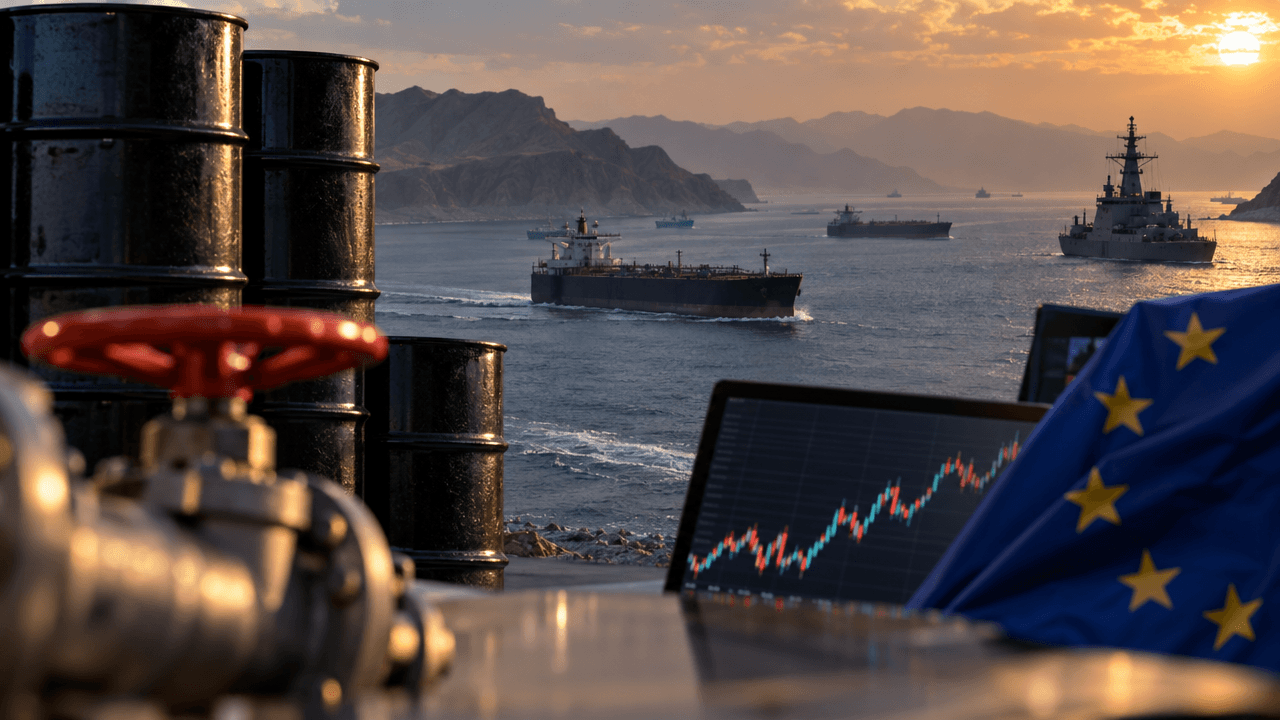
Energy markets are climbing again as continued attacks and shipping disruptions around the Strait of Hormuz raise fears that vital oil and liquefied natural gas supplies could be interrupted. Crude futures are trading near or above $100 per barrel, while European benchmark gas has moved back toward levels last seen during the 2022 energy crisis. Brent recently reached $117.64 per barrel, with West Texas Intermediate above $104. [15]
The immediate market reaction is straightforward: traders are pricing in a higher risk premium. The more difficult question is what happens next. If the disruption remains temporary, prices could retreat as supply routes reopen and panic fades. If the tension persists, however, energy costs could spread through transportation, electricity, manufacturing and household heating, reviving inflation concerns just as central banks attempt to manage economic growth.
Why The Strait Of Hormuz Matters
The Strait of Hormuz is one of the world’s most important energy chokepoints. Oil producers in the Persian Gulf rely heavily on the narrow waterway to reach global consumers, and a significant share of Middle Eastern LNG shipments also passes through it.
That concentration creates an unusual market dynamic. Physical supply does not need to stop completely for prices to rise. A tanker attack, insurance repricing, delayed voyage or temporary rerouting can be enough to make buyers compete for alternative cargoes. European gas prices have risen partly because LNG normally passing through Hormuz must be replaced by supplies from other regions. European and Asian buyers may therefore compete for the same limited tanker capacity and cargoes.
European wholesale gas prices briefly touched €100 per megawatt-hour in late October, the highest level since December 2022. The November contract was recently quoted near €93.60 per megawatt-hour, roughly triple its level before the current conflict. [3][4]
Why Oil And Gas Can Move Differently
Oil and gas are both responding to the same geopolitical shock, but their market structures are different.
Oil is a globally traded commodity supported by strategic inventories, multiple production regions and relatively flexible shipping routes. A disruption in one area can still be serious, but buyers and sellers may adjust through stockpiles, alternative producers and longer voyages. Even so, expectations matter. If traders believe that exports could be disrupted for weeks or months, futures prices can rise before a physical shortage appears.
European natural gas is often more sensitive to timing and regional shortages. Gas storage, pipeline availability, weather and LNG tanker schedules all influence prices. As winter approaches, the market has less room for error. A cold spell would increase heating demand at precisely the moment when imported LNG flows are uncertain.
This is why gas prices may remain volatile even if oil prices stabilize. European gas traders must continuously reassess storage levels, weather forecasts, shipping risks and competition from Asian buyers. A single headline can trigger a sharp price move in either direction.
The Inflation Channel
Higher energy prices affect inflation through several channels. Fuel becomes more expensive for households and businesses. Transport and logistics costs rise. Manufacturers face higher electricity, heating and input costs, while energy-intensive industries may reduce production or pass expenses to customers.
The impact is not always immediate. Wholesale prices can rise quickly, but retail energy bills often adjust with delays because of fixed contracts, government support schemes or regulated pricing. The economic effect may therefore arrive months after the original market shock.
Research from Allianz estimates that a 10% increase in oil prices can add approximately 0.1 to 0.2 percentage points to inflation in the short term. A prolonged conflict that pushes oil toward $100 or higher could add around 0.5 percentage points to inflation. [14]
This creates a difficult problem for central banks. Raising interest rates can help contain second-round inflation effects, such as higher wages and broader price increases, but it cannot produce more oil or LNG. Keeping rates high may restrain demand while worsening pressure on households and energy-intensive businesses. Cutting rates may support growth but risk allowing inflation expectations to become less stable.
Market Effects For Traders
Energy-linked currencies may receive support when oil prices rise. The Canadian dollar, Norwegian krone and Australian dollar are often watched because their economies or exports have meaningful commodity exposure. However, currency performance depends on more than commodity prices. Interest-rate expectations, risk appetite and the strength of the US dollar can overwhelm the energy effect.
The US dollar may also benefit during periods of geopolitical stress because it is widely used as a reserve and funding currency. That can create mixed signals: oil rises in dollar terms, while a stronger dollar makes commodities more expensive for buyers using other currencies.
Equity markets face a similar split. Energy producers may benefit from higher realized prices, while airlines, transport companies, chemical manufacturers and other heavy energy users may face margin pressure. European utilities and industrial companies are especially sensitive to gas volatility.
For SimFi traders, the key lesson is to trade the scenario rather than the headline. Before entering a position, identify whether the thesis depends on a temporary disruption, a prolonged closure, a diplomatic de-escalation or a colder-than-expected winter. Define the invalidation point in advance, use position sizes that match the volatility and avoid treating correlated oil, gas and commodity-currency trades as independent bets.
What To Watch Next
The most important indicators are tanker traffic through Hormuz, official statements from regional governments, insurance and freight costs, European gas storage, LNG flows and the shape of the oil futures curve. A sustained rise in prompt-month prices would suggest immediate supply anxiety, while strength farther out the curve could indicate expectations of a longer disruption.
Traders should also monitor central-bank communication. If policymakers focus on second-round inflation risks, rate expectations could push bond yields and currencies even as growth forecasts deteriorate. If they emphasize the temporary nature of the shock, energy prices may have less influence on broader markets.
Conclusion
The latest rise in oil and European gas prices is more than a simple commodity rally. It is a test of how quickly geopolitical risk can move through shipping, inventories, inflation expectations, currencies and monetary policy.
The most responsible approach is to remain flexible. Energy prices can surge on fear, but they can also reverse rapidly when supply resumes or tensions ease. For traders, disciplined risk management and scenario planning matter more than predicting the next headline. In an uncertain market, the goal is not to eliminate volatility, but to understand its transmission and control the risk taken in response.