
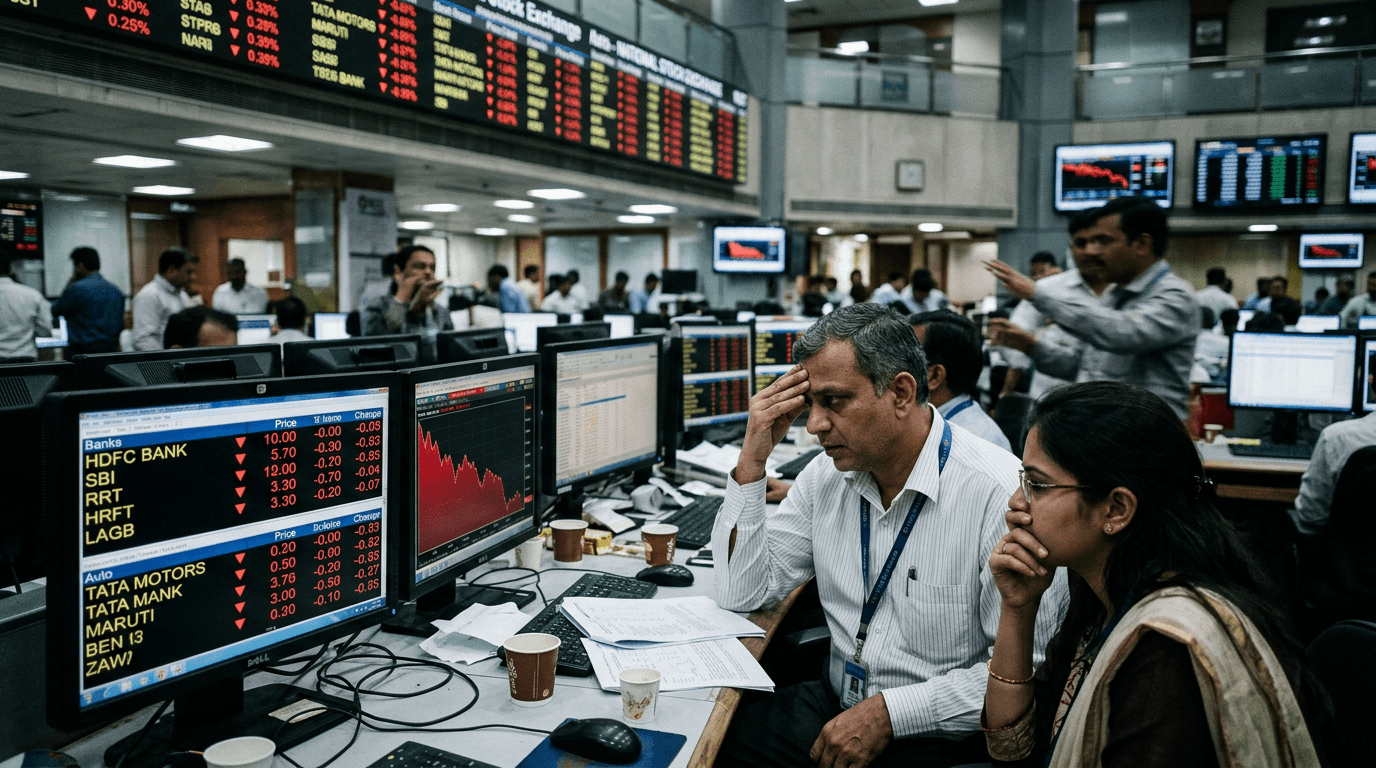
Indian equity markets closed slightly lower, with the Sensex and Nifty 50 slipping into the red as banks and auto stocks led the decline amid higher crude prices and a spike in global bond yields[6][9][11][14]. The pullback was modest in index terms, but sector moves were more pronounced, underscoring how sensitive India’s cyclical and rate‑linked segments are to shifts in global macro conditions[6][9][11][14].
Market Snapshot
Benchmarks have been under pressure as investors reassess risk in light of elevated oil prices and rising yields abroad, which together dampen risk appetite for emerging markets like India[5][6][11]. Banks, financials and autos were the primary drag on the indices, reflecting concerns about funding costs, asset quality and consumer demand in a higher‑rate, higher‑fuel‑cost environment[6][9][14][15]. In contrast, select energy‑linked names and defensives saw comparatively better support as traders rotated toward sectors perceived to benefit from higher crude or offer earnings stability[7][9][10].
The broader backdrop is one of cautious positioning after a period of strong gains in Indian equities, with foreign portfolio investors selectively booking profits and trimming exposure to rate‑sensitive sectors[5][6][8][11]. The rupee has also faced intermittent pressure, as increased oil‑related dollar demand and risk‑off flows into safe‑haven assets weigh on emerging‑market currencies[6][8][10]. This nexus of weaker equities, a softer currency and sector rotation is central to understanding the latest market move[5][6][8][11].
Why Higher Crude Matters For India
Higher global crude prices pose a dual challenge for India, a large net importer of oil whose trade balance and inflation trajectory are closely linked to energy costs[2][6][8][10][14]. As benchmark Brent crude climbs above key levels, markets quickly price in a larger import bill, potential upside risks to headline inflation and pressure on fiscal space via elevated fuel subsidies or delayed tax rationalisation[2][6][8][10][14]. These macro headwinds typically translate into a more cautious stance from foreign investors, who reassess earnings forecasts, margins and valuation multiples for energy‑intensive sectors[5][6][8][10].
Equity traders tend to focus on second‑order effects: higher fuel costs can compress operating margins for autos, logistics and consumer discretionary names, while also eroding household purchasing power and dampening vehicle demand[2][6][8][9][10]. At the same time, energy producers and upstream oil & gas companies may benefit from stronger pricing, leading to a sectoral divergence where oil‑linked stocks outperform while broader cyclicals lag[7][9][10]. Understanding these cross‑currents is essential for both directional investors and options traders who build strategies around sector spreads and relative value[5][6][8][11].
Global Yield Spike And Pressure On Banks
Rising global bond yields add another layer of complexity, particularly for financials that are sensitive to funding costs, loan growth and mark‑to‑market impacts on their investment books[11][14][15]. Higher yields abroad can lift domestic rate expectations, even without immediate changes from the Reserve Bank of India, as markets price tighter global liquidity and potential capital outflows from risk assets[11][14]. For banks, this can translate into narrower net interest margins if deposit costs rise faster than lending rates, and into slower credit demand from corporates and households wary of higher borrowing costs[11][14][15].
Investor sentiment toward banking stocks has accordingly turned more cautious, with heavyweights in the private and public sectors leading declines on days when crude and yields spike together[6][9][13][15]. The combination raises questions about asset quality in rate‑sensitive segments such as retail loans and small businesses, and about the sustainability of strong credit growth narratives seen earlier in the cycle[11][14][15]. Derivatives linked to bank indices and financials have reflected this shift, with increased hedging activity and higher implied volatility as traders brace for further macro data or policy signals[5][6][11].
Auto Stocks In The Crosshairs
Autos sit at the intersection of oil and rates, making them particularly vulnerable in the current environment[2][6][9][14]. Higher fuel prices not only increase operating expenses for commercial fleets but also influence consumer perceptions of total cost of ownership, potentially delaying purchases of passenger vehicles and two‑wheelers[2][6][9][10]. When this is compounded by higher financing costs due to rising yields, the sector faces a squeeze from both demand and affordability channels[9][11][14].
Recent sessions have seen notable declines in auto and related stocks, with key constituents of the Nifty Auto index underperforming the broader market on days marked by oil spikes and global risk aversion[2][6][9]. Earnings resilience and differentiated product portfolios can soften the blow for some companies, but the sector as a whole tends to react quickly to macro shocks because order books, inventory decisions and dealer sentiment are highly sensitive to fuel and financing conditions[2][6][9][11]. Options and futures linked to auto indices have thus become a key venue for expressing views on the macro cycle, allowing traders to position for volatility without taking single‑stock risk[5][6][11].
Takeaways For Traders And Simulated Investors
For active traders and those using simulated finance platforms such as E8 Markets, the current environment offers a useful case study in how interconnected macro drivers ripple through sectors and instruments[5][6][8][11]. The move in Indian equities has been modest at the index level, but beneath the surface, sector rotation, currency swings and derivatives repricing reveal a much more dynamic picture of risk transfer[5][6][8][11].
Three practical angles to focus on are particularly relevant[5][6][8][11]:
1) Scenario testing for oil and rates: Simulate different paths for crude prices and global yields, and observe how bank and auto exposures respond across equity, futures and options positions[2][5][6][8][11][14][15].
2) Relative‑value strategies: Explore pair trades between beneficiaries of higher crude (such as upstream energy names) and sectors hurt by it (autos and select consumer plays), assessing how spreads behave under stress[7][8][9][10][11].
3) Risk management and hedging: Use index futures and sector‑specific derivatives to test hedging frameworks that protect portfolios against simultaneous shocks to oil, yields and currency moves, especially in emerging‑market settings[5][6][8][11].
Working through these scenarios in a SimFi environment helps traders understand not only price action but also margin requirements, drawdown profiles and psychological responses to volatility, all without real‑world capital at risk[5][6][8][11].
Conclusion
Indian equities edging lower on the back of higher crude and a global yield spike is less about a single day’s index move and more about the market signaling discomfort with the current macro mix[5][6][11][14]. Banks and autos, sitting at the heart of India’s growth and consumption story, have absorbed much of that pressure, reflecting investor concern about the durability of earnings in a world of costlier energy and tighter financial conditions[6][9][11][14][15]. For traders, investors and SimFi participants, the episode reinforces the importance of linking sector views to macro drivers and using diversified tools—from cash equities to derivatives and simulation platforms—to navigate an increasingly complex landscape[5][6][8][11].