
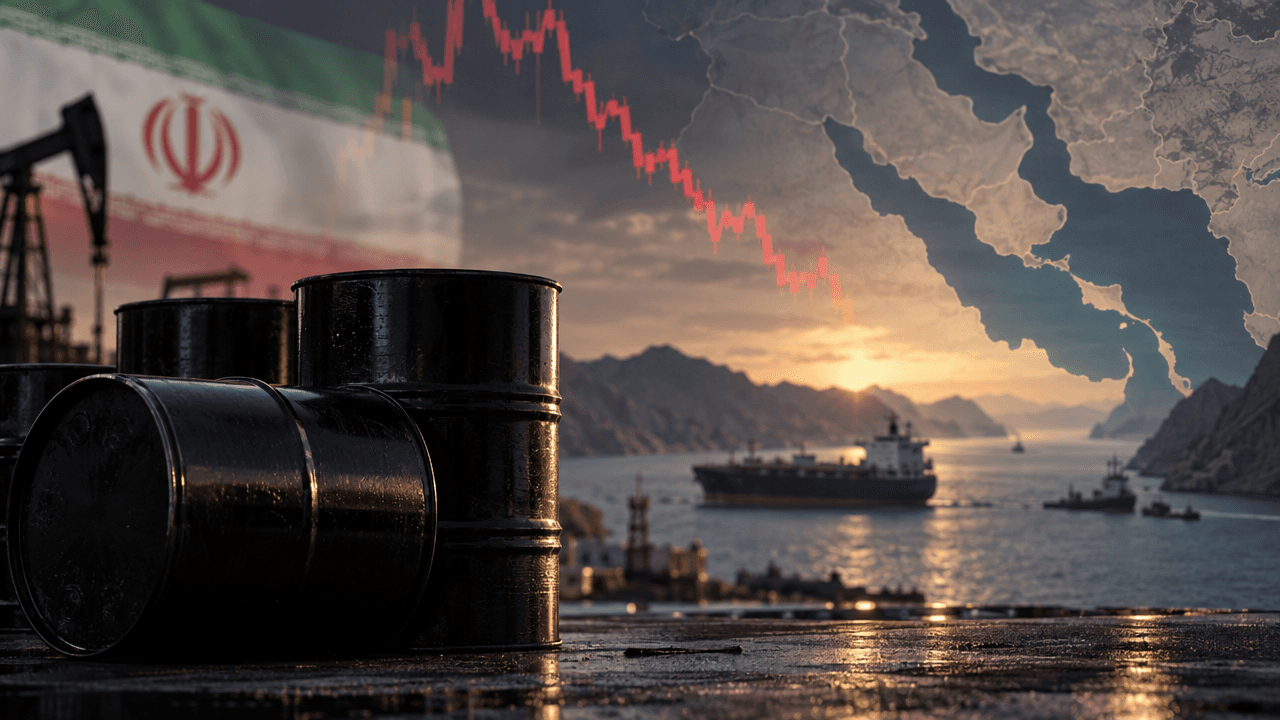
Oil prices dropped sharply as traders reassessed the risk of a prolonged conflict between the United States and Iran. Brent crude fell about 2.2% to $90.52 a barrel, while U.S. West Texas Intermediate crude declined to $84.94. The move followed President Donald Trump’s statement that Iran was “militarily effectively over,” reducing expectations of an immediate escalation. [10]
The decline is significant because oil markets had been pricing in the possibility of further disruptions across the Middle East. As that risk premium began to unwind, crude prices moved lower, inflation concerns eased, and global equity sentiment improved. However, the market is not treating the conflict as fully resolved. Shipping conditions around the Strait of Hormuz remain a critical variable for the next phase of the oil market.
Why Oil Prices Fell
Oil prices often respond to expectations before physical supply changes occur. In recent weeks, traders had been concerned that further military action could threaten production facilities, tanker routes, or export infrastructure. Any disruption in the region could remove substantial volumes from global supply and create a rapid price spike.
Trump’s latest comments changed that calculation. By signaling that additional military strikes were not immediately necessary, the president reduced the probability of a fresh escalation. Brent briefly fell below $90 for the first time since August before recovering slightly, while WTI traded in the mid-$80s. [3]
The selloff was also amplified by concerns that the market could be moving toward oversupply. High prices have pressured fuel consumption, while producers continue to bring crude to market. If demand slows at the same time that geopolitical fears recede, the premium built into oil prices can disappear quickly.
For traders, this illustrates an important principle: crude oil is priced not only on current production and consumption, but also on the probability of future supply disruptions.
Why The Strait Of Hormuz Still Matters
The apparent easing in U.S.-Iran tensions does not eliminate the main logistical risk facing the energy market. The Strait of Hormuz is one of the world’s most important oil shipping routes, and continued attacks on vessels in and around the strait are keeping insurance, freight, and supply concerns elevated. [4]
A lasting decline in oil prices will likely require more than reassuring political statements. Markets will want to see sustained normalization of tanker traffic, fewer attacks, and evidence that energy infrastructure is secure. Analysts have warned that Brent could retain a geopolitical risk premium unless there is a meaningful diplomatic breakthrough and shipping flows return to normal. [2]
This creates a delicate balance. Prices may continue lower if traders gain confidence that the conflict is winding down. But any confirmed attack on a tanker, closure of a shipping lane, or damage to a major energy facility could reverse the move rapidly.
For that reason, oil’s current decline should be viewed as a reduction in perceived risk rather than proof that risk has disappeared.
What Lower Oil Means For Inflation
Cheaper crude can provide relief across the economy. Oil affects gasoline, diesel, jet fuel, transportation, petrochemicals, plastics, and many manufactured goods. When crude prices fall, businesses may face lower operating costs, while consumers can benefit from reduced fuel prices over time.
Lower energy costs can also improve the outlook for inflation. If headline inflation moderates, central banks may face less pressure to keep interest rates restrictive. That possibility can support stocks, bonds, and other risk-sensitive assets.
The effect is not immediate or uniform. Retail fuel prices can take time to reflect changes in futures markets, and local taxes, refining margins, and currency movements influence what consumers ultimately pay. Still, a sustained drop in crude prices would remove one important source of inflationary pressure.
Markets are therefore watching oil not only as an energy asset, but also as an indicator of future monetary policy conditions.
Implications For Global Markets
Lower oil prices tend to benefit industries that consume large amounts of energy. Airlines, transportation companies, manufacturers, and consumer businesses may see improved margins if fuel and logistics costs decline. Emerging economies that import energy can also receive support through lower import bills and improved trade balances.
Energy producers face the opposite dynamic. Falling crude prices can pressure cash flow, reduce capital-spending plans, and weigh on oil and gas equities. The impact is especially important for companies with high production costs or heavy debt burdens.
Currency markets may respond as well. Oil-exporting nations can face weaker revenue expectations, while importers may experience better external balances. These shifts can influence exchange rates, sovereign bonds, and regional equity performance.
For SimFi traders, the key lesson is to avoid treating the initial market reaction as the entire trade. Oil’s decline may support equities, but the relationship can change if geopolitical headlines return or if economic data points to weakening demand.
Practical Takeaways For Traders
First, monitor both political headlines and physical market evidence. Statements about de-escalation matter, but tanker traffic and infrastructure conditions will determine whether the trend is sustainable.
Second, watch Brent’s behavior around the $90 area. A sustained break below that level could signal that the geopolitical premium is fading. A sharp rebound would suggest that traders still view the region as unstable.
Third, track the connection between crude prices and inflation-sensitive assets. Falling oil may support equity indexes and government bonds, but stronger-than-expected economic data could offset that benefit by keeping interest-rate expectations elevated.
Finally, manage volatility carefully. Geopolitical markets can reverse without warning, and leverage can magnify both gains and losses. Scenario planning, defined risk, and smaller position sizes are often more valuable than trying to predict the next headline.
Conclusion
Oil’s move below $91 reflects growing optimism that the Iran conflict may be entering a less dangerous phase. The decline is easing inflation fears and improving sentiment across global markets, but the rally in confidence remains conditional.
The Strait of Hormuz is still the market’s stress point. Until shipping flows normalize and diplomatic progress becomes durable, crude is likely to retain a measure of geopolitical risk. Traders should therefore focus on confirmation rather than assumption: lower prices may mark the beginning of a broader downtrend, but renewed disruption could quickly put the risk premium back into the market.