
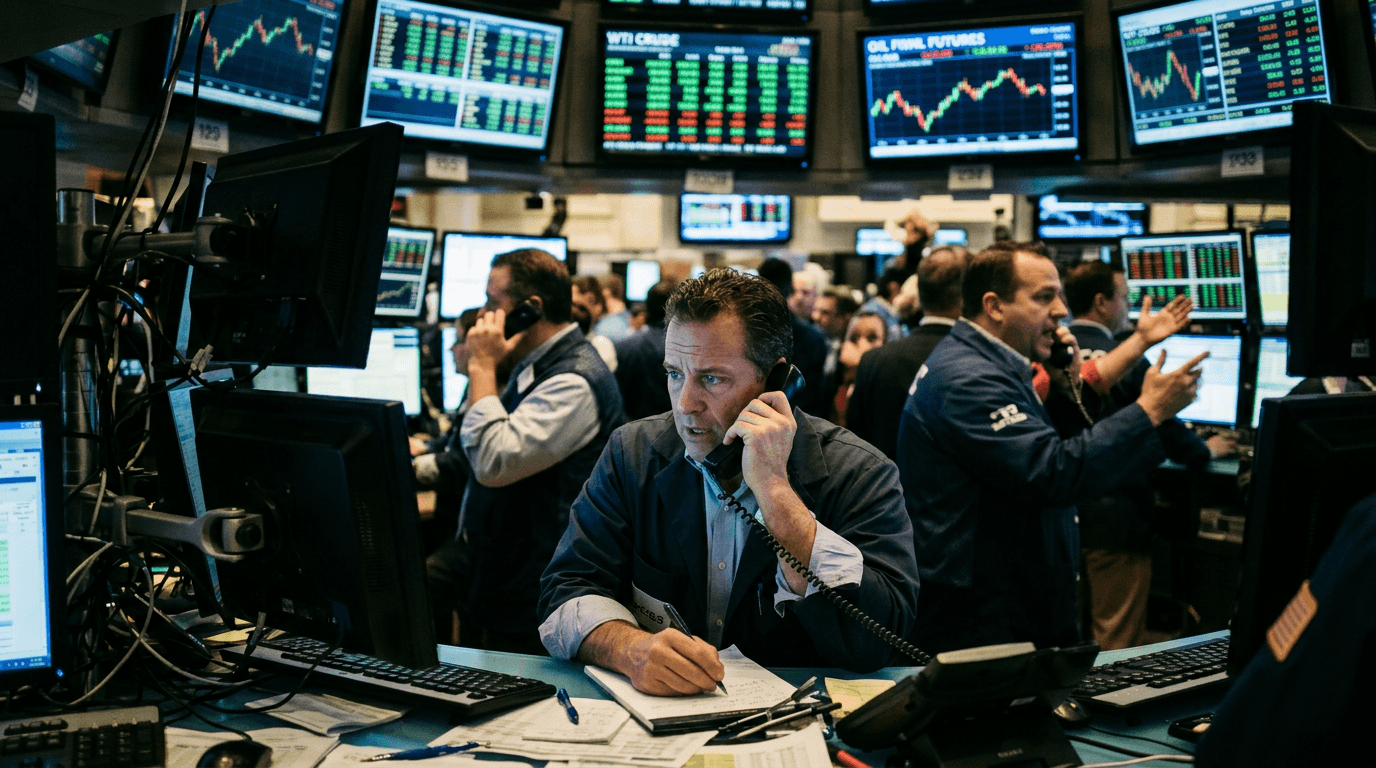
Oil markets are once again at the center of global risk, with futures swinging sharply as conflict in the Middle East raises the prospect of supply disruptions, stickier inflation, and shifting interest rate expectations.[2][4][7][9][3] WTI and Brent futures have surged on war headlines and then retraced, but prices remain around multi‑month extremes, keeping volatility elevated and traders on edge.[2][4][7][3]
Market Backdrop: From Oil Shock To Whipsaw Volatility
Since late February, the US‑ and Israeli‑led campaign against Iran has turned oil into one of the most sensitive barometers of geopolitical risk.[2][4][7][14] Brent crude futures briefly pushed above $120 per barrel and even hit around $126, levels last seen during earlier energy crises, before sharply retreating as markets reassessed the likelihood of a prolonged war.[2][4][7] U.S. WTI futures followed a similar path, at one point having risen close to 90% from pre‑conflict levels as traders priced in worst‑case supply scenarios.[4][2]
More recently, prices have see‑sawed as headlines oscillate between escalation and negotiation.[3][11][13] Brent has slipped back toward the mid‑70s to upper‑70s per barrel, while WTI trades in the low‑70s, reflecting a tug‑of‑war between supply fears and demand worries tied to inflation and growth.[3][6][8] Intraday swings of 2–3% have become common, with oil futures repeatedly spiking on strike announcements and then fading as the market discounts the probability of a full closure of key shipping routes.[3][8][11]
For traders, this backdrop means oil is not trending cleanly; it is whipsawing around elevated levels, reacting minute‑by‑minute to new information and forcing a more dynamic approach to risk management.[11][7]
Supply Risk And The Strait Of Hormuz
At the heart of the market’s anxiety is the Strait of Hormuz, the narrow chokepoint through which roughly a fifth of the world’s traded oil and significant volumes of liquefied natural gas pass.[4][7][9] The conflict has already disrupted flows and raised the specter of partial or temporary closures, dramatically increasing the optionality embedded in oil futures prices.[4][7]
Analysts estimate that a sustained closure or severe restriction of traffic through Hormuz, even for several weeks, could push benchmark prices significantly higher than recent spikes and keep them elevated for months.[5][7] One scenario from Goldman Sachs suggests that a move in oil from $70 to $85 per barrel tied to Hormuz disruptions could add around 0.7 percentage points to regional inflation in Asia alone.[5] Physical benchmarks tied to Middle Eastern deliveries, such as Dubai crude, have displayed even more extreme volatility than paper futures, underscoring the real‑world stress in the supply chain.[7]
This asymmetric risk profile—limited downside while conflict persists and outsized upside if supply is materially impaired—helps explain why volatility remains high even after the initial surge in prices has partially retraced.[2][4][7] Traders must therefore think in probabilities and scenarios, not single‑point forecasts, when evaluating oil futures exposure.
INFLATION EXPECTATIONS AND CENTRAL BANKS’ DILEMMA
Elevated and volatile oil prices are feeding directly into inflation expectations and central bank reaction functions.[1][5][9][15] The IMF has highlighted that historically a 10% increase in oil prices is associated with roughly a 0.4 percentage point rise in global inflation and a 0.15 percentage point drag on economic growth.[1][9] With oil still trading materially above pre‑war levels, that rule of thumb implies a meaningful macro impact if the current shock persists.[9]
Regional studies reinforce this picture. Goldman Sachs and BMI estimate that the conflict‑driven oil shock could add between 0.7 percentage points and up to around 0.27 percentage points (27 basis points) to consumer inflation across parts of Asia, with energy‑intensive economies like Thailand and South Korea particularly exposed.[5] BlackRock has suggested that the conflict could lift global headline inflation by about 0.8 percentage points, tightening the policy backdrop for central banks already wrestling with above‑target price pressures.[15]
In the U.S., policymakers are watching energy closely but have so far refrained from drastic shifts in guidance.[3][10] New York Fed officials have noted that they do not yet expect a sustained surge in energy prices for the rest of the year, even as tensions remain high.[3] However, bank research indicates that a renewed spike toward $100 oil could add 3–4 basis points to monthly core inflation readings, complicating the path back to the 2% target.[10] This uncertainty is reflected in rate‑path pricing: longer‑dated yields and interest rate futures now embed a wider distribution of outcomes, while expectations for near‑term cuts have become more sensitive to every move in crude.[6][10][15]
For traders in commodity‑linked currencies and rates, the oil tape has effectively become a macro indicator: sharp rallies tend to support exporters and push up breakeven inflation, while retracements ease pressure on importers and give central banks more breathing room.[5][15]
CROSS‑ASSET RIPPLE EFFECTS AND WHAT THEY MEAN FOR TRADERS
Oil’s swings are not confined to the energy complex; they are rippling through equities, bonds, and foreign exchange.[5][9][15] Higher oil prices can boost earnings expectations in energy and shipping sectors while squeezing margins in transportation, manufacturing, and consumer‑facing industries.[4][7][14] Equity indices in net‑importing regions have underperformed during the sharpest spikes, reflecting concerns that rising fuel and input costs will weigh on household spending and corporate profitability.[9][5]
On the fixed‑income side, inflation scares linked to oil have steepened yield curves at times, as markets price in higher term premiums and a slower trajectory of rate cuts.[6][10][15] Sovereign bonds in vulnerable emerging markets have also faced spread widening, as higher energy import bills strain fiscal balances and foreign reserves.[5][9] Meanwhile, commodity‑linked currencies such as those of oil exporters tend to outperform when crude surges, while import‑dependent economies see their currencies come under pressure, particularly where central banks are perceived as behind the curve.[5][15]
In simulated trading environments like E8 Markets’ SimFi platform, these cross‑asset dynamics offer rich learning terrain. Traders can test how oil shocks transmit into equity sectors, FX pairs, and yield curves, and practice constructing hedges that balance direct exposure in futures with indirect exposure in correlated assets. Running these scenarios without real capital at risk enables a deeper understanding of how a single geopolitical catalyst can reverberate across an entire portfolio.
How Traders Can Navigate Oil Futures Volatility
In this kind of headline‑driven market, discipline and preparation matter more than prediction. Practical steps traders can take include:
1. Build scenario maps for oil and inflation, with price bands (e.g., $70, $85, $100) and corresponding assumptions for rates, FX, and equities based on historical sensitivities.[1][5][10]
2. Use simulated trading to stress‑test portfolios under extreme but plausible oil moves, including temporary Hormuz disruptions and rapid de‑escalation, to understand drawdowns and margin needs before they happen.[4][7][9]
3. Focus on position sizing and optionality; options on oil futures, energy equities, or commodity currencies can cap downside while retaining upside exposure to sudden spikes.[11][7]
4. Monitor central bank communications and inflation data releases as closely as Middle East headlines, since shifts in rate expectations can quickly change the risk‑reward profile of energy trades.[3][10][15]
5. Diversify across time horizons: combine short‑term, event‑driven strategies with longer‑term thematic views on energy transition, supply resilience, and demand trends to avoid over‑concentration on any single news cycle.[1][7][9]
Conclusion
The current Middle East conflict has turned oil futures into a live stress test for the global economy, central banks, and trading strategies.[2][4][7][9] Prices may have retreated from their peak, but they remain elevated and volatile, reflecting unresolved supply risks and persistent uncertainty around inflation and growth.[3][6][8] For traders, this environment is challenging—but also full of opportunity for those who can read cross‑asset signals, respect risk, and adapt quickly.
Simulated finance platforms like E8 Markets give market participants a valuable sandbox to experiment with oil‑linked strategies, test macro scenarios, and refine decision‑making before deploying capital in live markets. By combining data‑driven analysis with disciplined risk management and the right tools, traders can turn the swings in oil futures from a source of anxiety into a catalyst for learning and more resilient portfolios.