
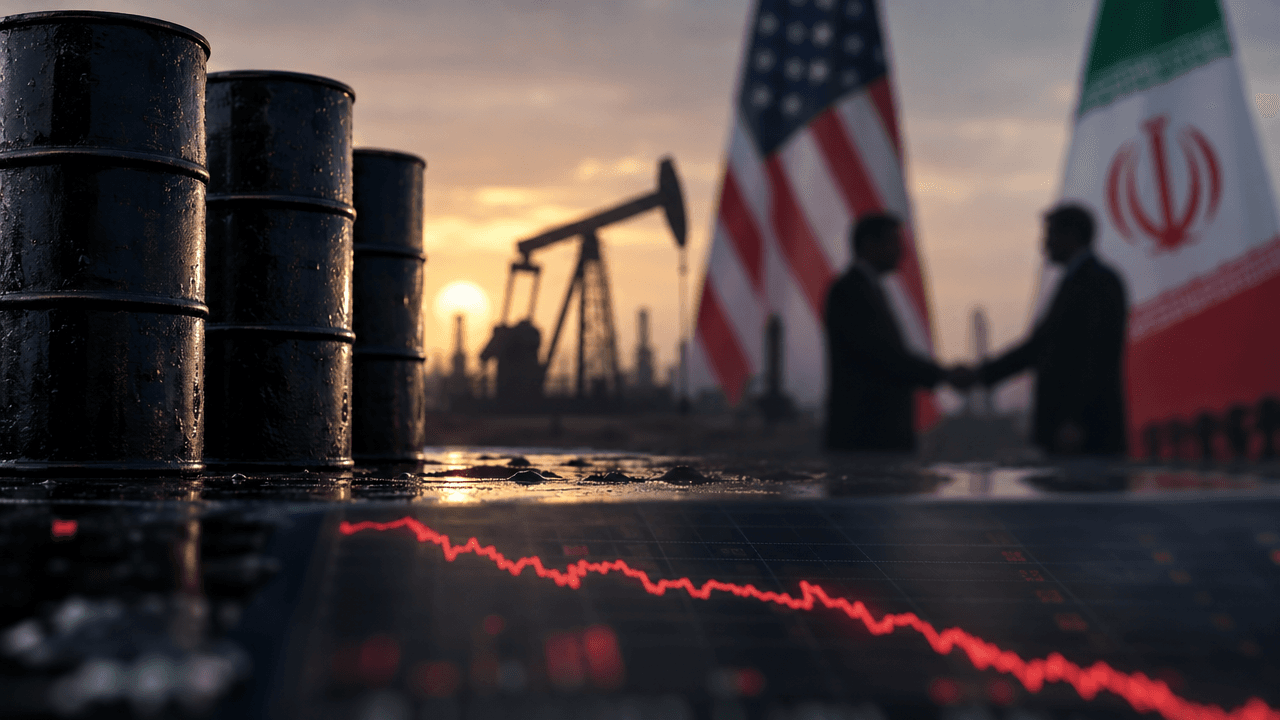
Oil futures have plunged as traders price in a greater chance that U.S.–Iran tensions could move toward diplomacy rather than prolonged military confrontation. The decline marks a sharp reversal from the risk premium that had pushed crude prices higher and highlights how quickly geopolitical expectations can reshape energy markets.
In the latest weekly update, West Texas Intermediate futures fell roughly 13.6%, while Brent declined about 14%. Other market reports showed even steeper losses depending on the contract and measurement period, with Brent down more than 16% and WTI down nearly 13% for the week. [8][9] By Friday, Brent settled near $98.32 per barrel and WTI near $90.83, despite modest gains during the session. [9]
For traders, the central message is clear: oil prices are no longer reflecting only current supply and demand. They are also measuring the probability of escalation, negotiation, disruption and recovery.
Why Diplomatic Expectations Matter
Oil prices had previously incorporated the possibility that conflict involving the United States and Iran could threaten production, exports or shipping through key regional routes. When markets anticipate disruption, buyers often bid futures higher before barrels are actually removed from supply.
The opposite happens when the perceived risk of disruption declines. Reports of a possible diplomatic path, including communication through regional intermediaries, have encouraged traders to reduce positions established during the earlier surge. WTI had previously traded above $100 per barrel as concerns over the conflict intensified. [3]
This does not mean the geopolitical risk has disappeared. Market participants are assessing whether negotiations can produce a durable reduction in tensions, whether security around critical shipping routes will improve and whether military action could resume. Analysts have warned that an unresolved conflict leaves room for prices to rise again. [1]
That uncertainty explains why oil has fallen sharply without necessarily entering a stable downtrend. Futures markets can react violently when expectations change, but they can reverse just as quickly when headlines alter the perceived probability of disruption.
The Inflation Channel
Lower oil prices can influence the economy through several channels. The most immediate is the cost of fuel. Cheaper crude can eventually reduce gasoline, diesel, transportation and heating costs, although the impact is delayed and depends on refining margins, taxes, currency movements and regional supply conditions.
Energy also affects the prices of goods and services indirectly. Transportation companies pay less for fuel, manufacturers may face lower input costs and households may have more disposable income after filling their vehicles or heating their homes. Those effects can reduce headline inflation pressure over time.
Research from Allianz estimates that a 10% increase in oil prices can lift short-term inflation in the United States and Europe by approximately 0.1 to 0.2 percentage points. [5] The reverse is not always perfectly symmetrical, but a sustained oil decline can still provide welcome relief for consumers and policymakers.
The key word is sustained. A one-week collapse in futures prices may not immediately change inflation data. Central banks will want evidence that energy costs are stabilizing and that lower prices are passing through to consumers before treating the move as a durable disinflationary development.
What It Means For Central Banks
Oil’s decline could influence expectations for interest rates. If energy prices remain lower, headline inflation may cool, reducing pressure on central banks to tighten policy. It could also improve household purchasing power and support economic activity at a time when markets are already concerned about slower growth.
Recent analysis has emphasized that energy prices, inflation expectations and central-bank policy are closely connected. A normalization in oil markets could make it easier for policymakers to consider easing if broader inflation pressures are also moderating. [6]
However, traders should avoid assuming that cheaper oil automatically guarantees rate cuts. Core inflation, wage growth, employment and services prices typically matter more for long-term policy decisions. In addition, central banks may hesitate to respond to volatile commodity prices because temporary energy movements can reverse quickly.
The Bank of England has already cautioned that previous declines linked to easing Middle East tensions proved to be temporary. [10] That is an important reminder: policymakers may welcome lower oil prices while remaining cautious about changing their broader policy direction.
Practical Lessons For Simfi Traders
For simulated finance traders, the oil selloff offers a useful case study in risk management and cross-market analysis.
First, distinguish between a price move and its catalyst. The decline was not caused by one traditional supply-demand report alone. It reflected changing expectations about geopolitical risk. That means a new diplomatic announcement, military incident or shipping disruption could produce an outsized reversal.
Second, monitor both Brent and WTI. Brent is the primary international benchmark, while WTI is more closely tied to U.S. crude markets. Their prices can move differently because of transportation constraints, inventories, export flows and regional demand.
Third, watch related markets. Falling oil can pressure energy equities and currencies linked to commodity exports, while potentially supporting transportation companies, consumer sectors and bonds if inflation expectations decline. The U.S. dollar may also react as traders reassess global risk and Federal Reserve policy.
Finally, use position sizing rather than predictions as the main defense. Volatile markets can make a correct long-term view unprofitable if leverage is too high or the position is entered before a headline-driven reversal.
The Road Ahead
Oil futures have repriced the risk of a prolonged U.S.–Iran confrontation, but the market has not received a guarantee of lasting peace. For prices to remain lower, diplomatic progress must translate into improved security, uninterrupted energy flows and reduced expectations of escalation.
The next phase may be defined by volatility rather than a straight-line decline. Traders should track diplomatic developments, inventory data, shipping conditions, inflation expectations and central-bank communication together instead of relying on any single signal.
The broader lesson is that energy markets are forward-looking. Oil can fall before supply increases, simply because traders believe future disruption is less likely. For SimFi participants, that makes the current episode a valuable reminder: geopolitical risk is not an abstract headline. It is a tradable expectation that can quickly affect commodities, inflation, interest rates and portfolios across the financial system.