
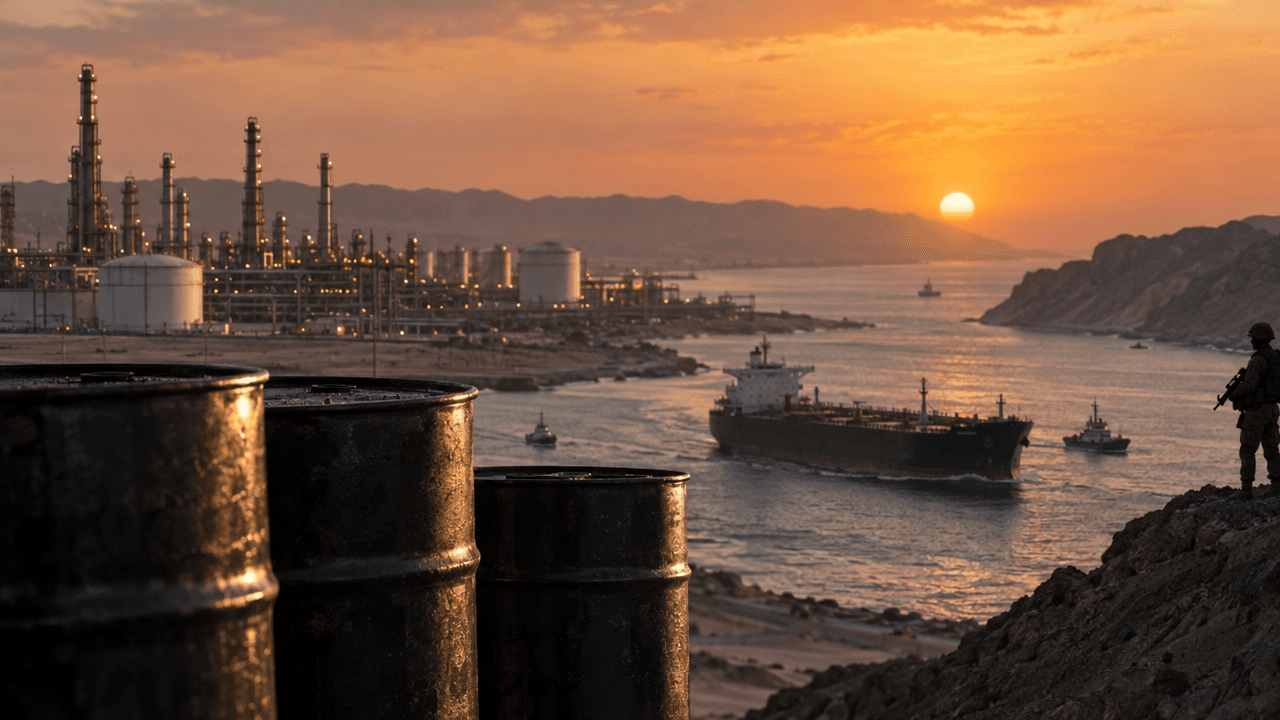
Oil futures moved higher as traders priced in a renewed risk of supply disruption following reports of attacks near Saudi Arabia’s energy infrastructure and shipping incidents around the Strait of Hormuz. Brent crude traded in the mid-$90s per barrel, while West Texas Intermediate moved above $84, extending gains from the previous session. Brent had settled at $94.61 after rising 3.5%, while WTI gained 2% to close at $83.68. [8][13]
The immediate market reaction reflects more than concern about one refinery or one vessel. Saudi Arabia is one of the world’s most important oil producers, and the Strait of Hormuz is a critical transit route for global energy supplies. When threats emerge in both areas at the same time, traders tend to add a geopolitical risk premium to crude futures.
Why The Market Reacted
Reports indicated that Yemen’s Iran-aligned Houthi movement claimed an attack on Saudi Arabia’s Ras Tanura refinery, one of the country’s major energy facilities. Separately, reports linked shipping disruptions and possible mine strikes to the Strait of Hormuz, a narrow waterway connecting the Persian Gulf with the Gulf of Oman. Brent prices were recently reported near $94.96, while other market updates placed Brent around $95.25 and WTI near $84.32. [3][9]
The key issue for traders is uncertainty. An attack does not automatically mean that physical oil production has been lost. However, even a limited incident can raise fears of additional attacks, precautionary shutdowns, insurance costs, vessel delays, or a broader military response.
Futures markets react to expected future conditions rather than only confirmed losses today. If market participants believe that crude exports could be interrupted in the days or weeks ahead, they may buy futures contracts immediately. That buying can push prices higher before any measurable decline appears in global supply data.
Why The Strait Of Hormuz Matters
The Strait of Hormuz is strategically important because large volumes of oil, refined products, and liquefied natural gas pass through it. A serious disruption would force ships to wait, reroute, or operate under elevated security risks. Even when the waterway remains technically open, delays and higher freight premiums can reduce the efficiency of global energy trade.
Recent reports said a container ship was targeted and stopped while traveling near the strait. Iranian Revolutionary Guard officials described the vessel’s route as unauthorized, adding another layer of uncertainty for commercial operators. [2][13]
For oil traders, the concern is not limited to the cargo aboard one ship. Shipping companies may become more cautious, and insurers may increase premiums for vessels entering the area. Some operators could avoid the route altogether. Those responses can tighten regional availability and increase the cost of delivering crude to refiners.
The market also watches the Strait of Hormuz because alternative export routes are limited. Pipelines and other shipping corridors can absorb only part of the affected volume. As a result, even a temporary disruption may create significant price volatility.
Supply Risk Versus A Possible Surplus
The latest price increase is occurring against a complicated market backdrop. Traders are balancing geopolitical threats against expectations of a potential global oil surplus. If production outside the affected region continues to grow while demand remains moderate, the market may eventually have enough supply to offset some disruption fears.
That tension helps explain why crude prices can rise sharply on alarming headlines and then retreat just as quickly. A reported attack may create an immediate risk premium, but prices can fall if the damage is limited, shipping resumes, or diplomatic efforts reduce the possibility of escalation.
For this reason, traders should distinguish between three separate developments: an attack claim, confirmed physical damage, and a sustained loss of exports. The first can move prices quickly. The second may create a larger and more durable response. The third is what most directly changes the global supply-demand balance.
Inflation And Broader Market Effects
Higher oil prices can affect the economy well beyond the energy sector. Crude is a major input for gasoline, diesel, aviation fuel, petrochemicals, plastics, and transportation services. If prices remain elevated, businesses may pass higher costs to consumers, adding pressure to headline inflation.
That creates a challenge for central banks. A temporary oil spike caused by geopolitical risk may not require a policy response if it fades quickly. But a prolonged increase can influence inflation expectations and complicate interest-rate decisions. Higher fuel costs can also reduce household purchasing power, potentially weakening demand in other parts of the economy.
Financial markets may react through several channels. Energy producers can benefit from higher crude prices, while airlines, transportation companies, and fuel-intensive manufacturers may face margin pressure. Government bond yields, currencies, and equity indexes can also respond if traders begin to expect slower growth or more persistent inflation.
Practical Takeaways For Traders
First, monitor confirmation rather than reacting to every headline. Official statements, refinery operating updates, vessel-tracking information, and export data can help separate genuine supply losses from unverified claims.
Second, watch both Brent and WTI. Brent is more directly connected to global seaborne oil markets and often responds strongly to Middle East supply risks. WTI reflects U.S. market conditions and can behave differently because of domestic production, inventories, and infrastructure.
Third, pay attention to volatility and position sizing. Geopolitical markets can produce sharp gaps, rapid reversals, and wider spreads. A well-reasoned trade can still lose money if leverage is too high or a stop is placed without considering normal price volatility.
Finally, consider the time horizon. A short-lived attack headline may create a temporary price premium, while repeated incidents near production facilities or major shipping lanes can produce a deeper and more persistent repricing.
Conclusion
The rise in oil futures reflects the market’s attempt to price uncertainty surrounding Saudi energy infrastructure and the Strait of Hormuz. Brent near $95 and WTI above $84 show that traders are taking the reports seriously, but the durability of the move will depend on verified damage, export disruptions, shipping conditions, and the risk of further escalation.
For SimFi traders, the episode is a useful reminder that oil markets respond not only to current barrels in storage, but also to perceived threats to future supply. The strongest approach is to combine headline awareness with confirmation, disciplined risk management, and a clear understanding of how geopolitical events can spread from energy prices to inflation, interest rates, and the wider financial markets.