
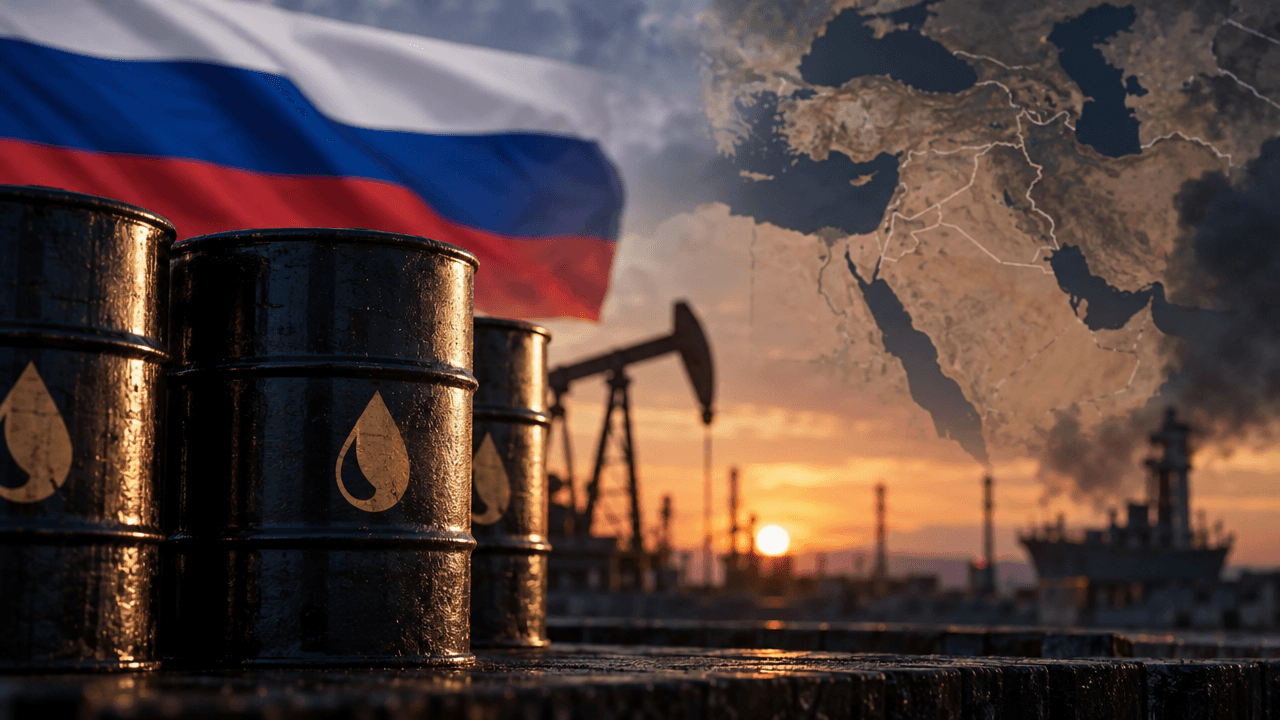
Oil futures moved lower on Monday as traders reassessed the global supply outlook following a U.S. decision to ease certain sanctions and tariffs affecting Russia. Brent crude declined roughly 1.5% to 1.6% toward $108 a barrel, while West Texas Intermediate slipped about 0.7% to approximately $100.70. The move pulled prices back from recent highs and showed how quickly geopolitical developments can reshape expectations in energy markets.
The decline was not driven by a sudden collapse in demand. Instead, it reflected the possibility that more Russian crude and refined products could remain available to international buyers. Reports indicated that December Brent futures traded near $107.86, while WTI was quoted below $100 in some market updates, highlighting the volatility surrounding the announcement. [1][2]
Why The Russia Sanctions Decision Matters
Russia remains one of the world’s most important energy producers. Any change in restrictions on its oil exports can influence global prices, shipping routes, refinery activity, and the availability of fuel products such as diesel and jet fuel.
The sanctions waiver does not necessarily mean that all restrictions on Russian energy have disappeared. Earlier sanctions remain in place, and many companies, banks, insurers, and shipping operators may continue to approach Russian transactions cautiously. Even so, the possibility of fewer obstacles to exports was enough to alter the market’s expectations.
Oil prices are determined not only by barrels being produced today but also by what traders believe will be available in the weeks and months ahead. If the market expects more Russian supply to reach customers, the risk premium embedded in crude prices can decline. That is what appeared to happen on Monday.
The reaction also illustrates the difference between physical supply and perceived supply. Russian production may not change immediately, but a policy shift can improve confidence that existing production will continue reaching the market.
Supply Relief Meets Middle East Risks
The bearish impact of the sanctions decision was limited by continuing risks in the Middle East. Concerns involving shipping through the Strait of Hormuz, attacks on tankers, and disruptions affecting regional energy infrastructure remain important sources of uncertainty.
The Strait of Hormuz is especially significant because it carries a substantial share of global oil exports. If shipping becomes more difficult or expensive, the resulting supply disruption could quickly offset any additional Russian barrels. Market participants therefore face two competing forces: improved Russian export prospects on one side and the possibility of Middle Eastern transportation disruptions on the other.
There are also questions surrounding attacks on Russian oil facilities and infrastructure. Damage to production, storage, or refining capacity could reduce the amount of energy available for export, even if sanctions become less restrictive. This helps explain why oil prices fell but did not collapse.
For traders, the key lesson is that geopolitical markets often respond to the balance of risks rather than to a single headline. A policy announcement can create downward pressure, while military or logistical developments can reverse that move just as quickly.
Why Lower Oil Prices Matter For Other Markets
Crude oil influences far more than gasoline prices. Energy is a major input for transportation, manufacturing, chemicals, agriculture, and household heating. When oil prices decline, investors often reassess the outlook for inflation and interest rates.
Monday’s lower oil prices supported U.S. Treasury markets and helped nudge U.S. equity futures higher. The logic is straightforward: cheaper energy can reduce inflation pressure, potentially giving central banks more flexibility. Lower fuel costs can also improve profit expectations for industries that depend heavily on transportation and energy.
Airlines, delivery companies, manufacturers, and consumer businesses may benefit when fuel expenses fall. Conversely, energy producers and oilfield-service companies can face pressure if lower prices reduce revenue and investment plans.
The market response should not be interpreted as a guaranteed bullish signal for stocks. Falling oil prices can also reflect concerns about economic growth if the decline is caused by weakening demand. In this case, however, the initial move was more closely connected to expectations of increased supply and reduced sanctions-related friction.
What Traders Should Watch Next
The next phase of the oil move will depend on whether the policy change produces measurable improvements in Russian exports. Traders should monitor tanker movements, refinery operations, export data, insurance availability, and the willingness of international buyers to transact with Russian suppliers.
Price action around the $100 level for WTI and the $108 area for Brent may also become important reference points. A sustained move below those levels could suggest that supply concerns are easing more broadly. A rebound above recent highs would indicate that Middle East risks, infrastructure attacks, or limited practical effects from the sanctions waiver remain dominant.
Inventory data will provide another important signal. Rising crude and refined-product inventories could confirm that supply is loosening. Falling inventories would suggest that demand or logistical problems are absorbing available barrels.
Traders should also avoid treating the first market reaction as a complete forecast. Oil often experiences sharp reversals when new information changes expectations. Position sizing, stop-loss planning, and awareness of headline risk are particularly important when geopolitical policy is driving price movement.
Practical Takeaways
The oil market’s decline reflects a changing supply outlook, not the disappearance of geopolitical risk. Potentially greater access to Russian energy reduced the premium attached to supply shortages, while Middle East tensions continued to limit the downside.
For investors, lower crude prices may ease inflation concerns and benefit energy-intensive industries, but the effects will vary by sector. For active traders, the most important variables are whether Russian exports actually increase, whether Middle East shipping remains secure, and whether global demand holds up.
The broader lesson is that energy markets price expectations before outcomes are confirmed. A sanctions waiver can move futures within minutes, but the lasting direction of oil prices will depend on physical barrels, transportation capacity, inventories, and demand. Until those factors become clearer, volatility is likely to remain a defining feature of crude trading.