
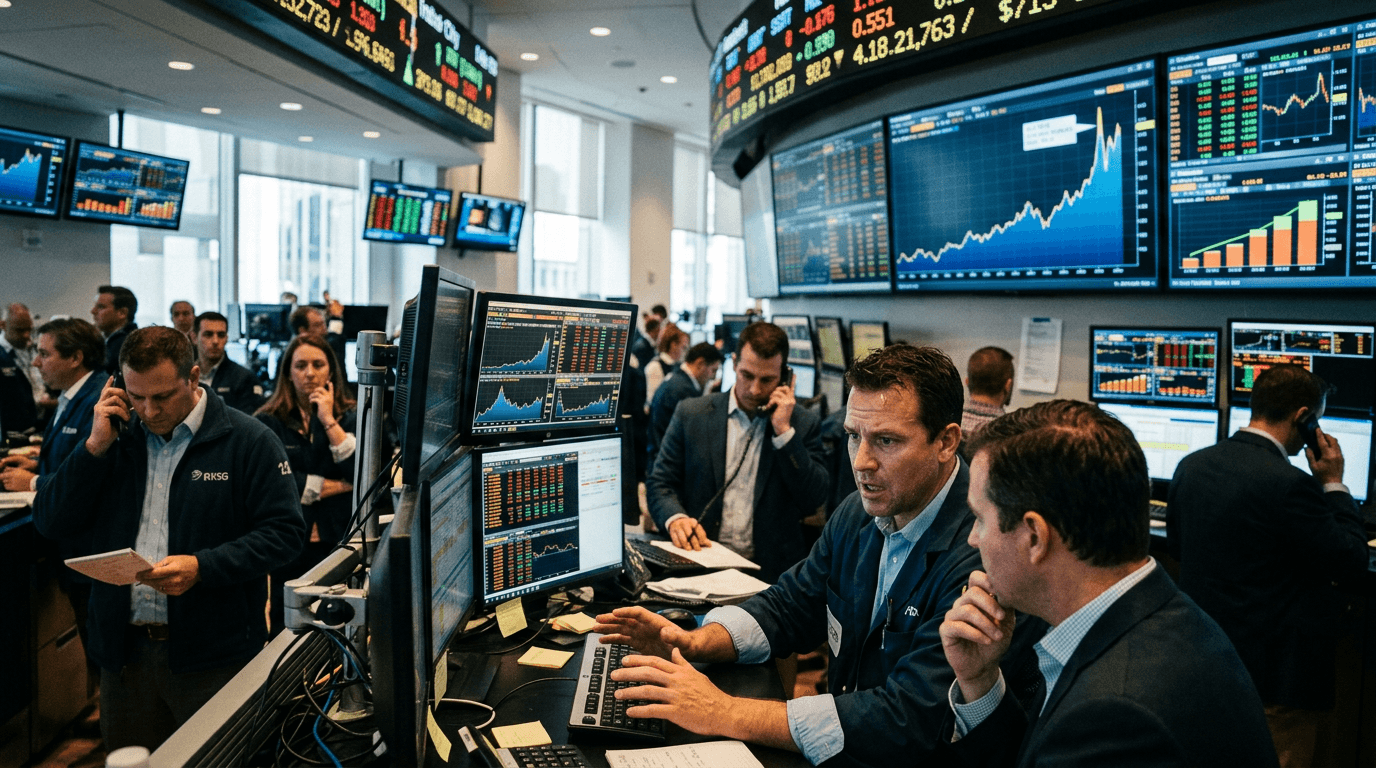
Oil futures surged as the war with Iran intensified, pushing U.S. crude to its highest levels since 2024 and forcing markets to rapidly reprice energy risk. Front-month West Texas Intermediate (WTI) briefly traded above $81 per barrel while Brent approached $86, reflecting a sharp jump in the geopolitical risk premium. The move hit U.S. equities, boosted energy stocks, and revived inflation-hedge trades, underlining how quickly commodity shocks can ripple through the broader financial system.
WHAT IS DRIVING THE OIL SPIKE?
The immediate catalyst is escalating conflict involving Iran, a key player in the Middle East and a major actor around the Strait of Hormuz, one of the world’s most critical energy chokepoints. Roughly one-fifth of global oil shipments typically pass through this narrow waterway. Any threat to traffic in the Strait—whether from military action, sanctions, or shipping disruptions—forces traders to re-evaluate the odds of supply interruptions.
Importantly, markets are not necessarily reacting to a confirmed collapse in physical supply. They are reacting to the increased probability of a severe disruption. Futures prices embed expectations about the future, not just current flows. When risk of a major outage rises, even before it happens, traders demand higher prices to hold exposure. That “risk premium” is what we are seeing reflected in the latest spike, layered on top of already tighter conditions after months of firm demand and disciplined OPEC+ supply management.
For traders, the key point is that geopolitical shocks often move markets not because today’s barrels disappear, but because tomorrow’s barrels become less certain.
How Futures Markets Are Repricing Risk
The biggest moves have appeared in front-month futures, where liquidity concentrates and short-term supply fears are most acute. When nearby contracts rally faster than later-dated ones, the futures curve can tilt into deeper backwardation—where near-term prices are higher than those further out.
A sharper backwardation typically signals
- Strong immediate demand for physical barrels
- Perceived risk of short-term shortages
- Incentives for holders of inventory to sell now rather than store for later
If the Iran conflict persists or escalates, the curve could remain steep, rewarding traders who are long nearby contracts versus deferred ones through calendar spreads. Conversely, if tensions ease, front-month prices may normalize faster than longer-dated contracts, flattening the curve and punishing late long entries.
Options markets also play a key role during such episodes. When uncertainty spikes, implied volatility on crude options tends to jump, raising the cost of hedging but also offering opportunities for volatility-focused strategies. Skew—whether calls or puts are more expensive—can show whether the market is more worried about explosive upside (supply shock) or sudden downside (peace deal or policy response).
For both directional and spread traders, understanding how the term structure and volatility surface respond to geopolitical news is just as important as tracking the headline price level.
Ripple Effects Across Global Markets
Oil is not just another commodity; it’s a macro asset that sits at the intersection of growth, inflation, and geopolitics. The latest spike has already triggered a classic cross-asset pattern:
- Equities: Broad indices have come under pressure as higher energy costs threaten corporate margins and consumer spending. At the same time, energy sector stocks and oilfield services names have generally outperformed, benefiting from higher price expectations and improved cash flow prospects.
- Fixed income and inflation: Rising crude prices tend to lift inflation expectations, particularly breakeven rates in inflation-linked bonds. If markets start to believe that higher energy costs will be persistent rather than temporary, nominal yields can rise as investors demand compensation for future price pressures.
- Currencies: Commodity-linked currencies such as the Canadian dollar and Norwegian krone often find support when oil rallies, while major net importers’ currencies can come under strain. For emerging markets dependent on imported energy, a sustained oil shock can widen trade deficits and increase pressure on central banks.
- Alternative inflation hedges: Assets like gold, broad commodity indices, and inflation-protected securities often catch a bid as investors look for ways to hedge the combination of geopolitical risk and potential inflation.
For traders, the takeaway is that an oil shock is never just about oil. It’s a macro volatility event that can alter correlations, change sector leadership, and shift central bank expectations.
What Traders Should Watch Next
In an environment driven by geopolitical risk, price action will remain headline-sensitive. But beyond the news flow, several indicators can help traders gauge whether the spike has legs or is more of a short-lived squeeze:
1. Physical flows and shipping: Actual disruptions to tanker traffic through the Strait of Hormuz or rerouting of cargoes will be critical. If shipping data and port activity show material delays or declines, the fundamental case for higher prices strengthens.
2. OPEC+ and policy responses: Producers within and beyond OPEC+ may adjust supply to offset disruption risks, while major consuming nations could consider coordinated releases from strategic reserves. Either move can cap extreme upside if seen as credible.
3. Inventory data: Weekly U.S. inventory reports and global stock estimates will indicate whether higher prices are drawing out additional supply or dampening demand. Falling inventories alongside rising prices point to genuine tightness.
4. Volatility and positioning: Elevated implied volatility and crowded speculative positioning in futures can make the market vulnerable to sharp reversals on any sign of de-escalation. Monitoring positioning data and volatility regimes helps traders judge whether the risk-reward still favors chasing moves or shifting to mean-reversion strategies.
The most disciplined traders treat these signals as a framework, not a prediction machine—using them to adjust risk, not to guess the next headline.
Practical Lessons And The Role Of Simulated Trading
Geopolitical shocks like the Iran conflict are exactly the kind of environment that exposes weaknesses in trading plans. Price gaps, slippage, widened spreads, and headline-driven whipsaws can quickly overwhelm strategies that worked well in quieter markets.
A few practical lessons stand out
- Position sizing matters more than ever in high-volatility regimes. Even “small” leverage can become dangerous when daily ranges expand dramatically.
- Hard stops and soft stops both have trade-offs. Hard stops protect against extreme moves but can suffer poor fills in gaps; soft, discretionary stops require discipline and can be undermined by emotion.
- Scenario planning beats prediction. Thinking in terms of “if X, then I do Y” (for example, escalation vs. de-escalation, policy intervention vs. inaction) helps avoid impulsive decisions when headlines hit.
- Cross-asset awareness is essential. If you trade indices or FX, understanding what oil is doing—and why—can prevent you from being blindsided by moves that are actually energy-driven.
Simulated Finance environments are particularly valuable in this kind of market. They allow traders to stress-test strategies under elevated volatility, experiment with hedging approaches (such as pairing index exposure with energy longs), and practice execution during fast conditions—without exposing real capital. The goal is not to perfectly predict the outcome of the conflict, but to learn how your system behaves when the unexpected becomes the norm.
Conclusion
The surge in oil futures as the Iran war escalates is a reminder that geopolitics can reassert itself as a dominant market driver at any time. U.S. crude pushing to its highest levels since 2024 reflects not only current fundamentals, but a rapidly rising risk premium on future supply. The consequences extend far beyond the oil pit, affecting equities, currencies, bond markets, and inflation expectations.
For traders, the opportunity is real—but so is the risk. Those who understand how futures curves, volatility, and cross-asset relationships shift during geopolitical shocks will be better positioned than those trading purely off headlines. Using structured frameworks and simulated environments to refine strategies can turn a chaotic tape into a valuable learning lab, and, over time, into a source of more resilient performance when the next shock inevitably arrives.