
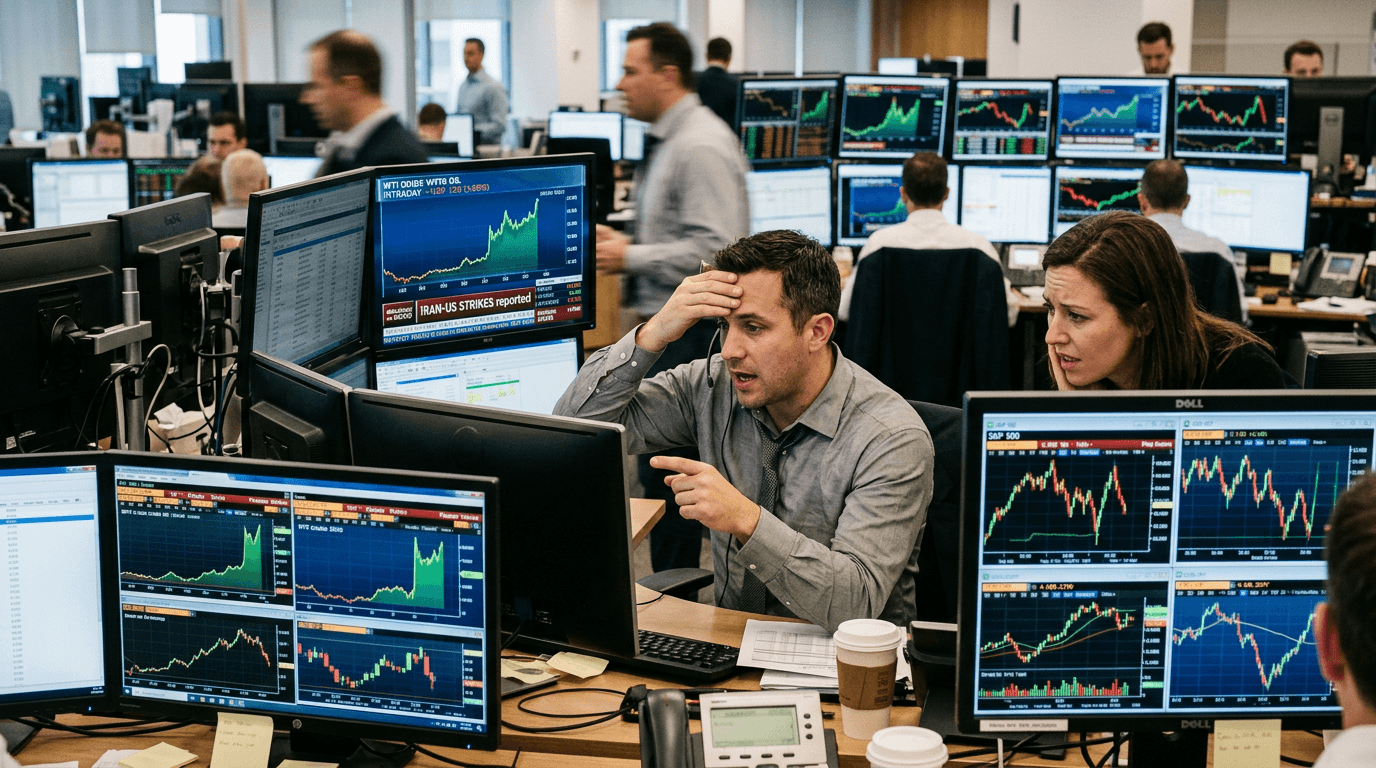
Oil futures snapped higher in their latest session, with West Texas Intermediate (WTI) crude jumping more than 5% toward $90 per barrel and Brent climbing around 4.5% into the mid‑$90s as renewed Iran–US strikes reignited concerns over Middle East supply disruptions.[7][8][13] The move has reintroduced a meaningful geopolitical risk premium into energy markets, unsettling global equities while underpinning energy stocks and commodity‑linked currencies.
MARKET MOVE: HOW BIG IS A 5% SPIKE?
A single‑session gain of 4–5% in crude is a notable shock for markets, especially given that prices were already elevated after months of simmering tensions in the region.[7][13][15] WTI futures are now trading near $90, with intraday ranges stretching above $92 as volatility picks up.[2][8] Brent, the global benchmark, has pushed above $95 in recent trading, extending its largest daily advance since late July.[7][13] For traders, this means option premiums are rising, margin requirements can adjust quickly, and positions that looked manageable at lower volatility may now carry outsized risk.
The magnitude of the move also matters from a macro perspective. Energy is a core input cost across industries, so a sustained rally raises questions about corporate margins, inflation expectations, and, eventually, central bank reaction functions. While one session does not make a trend, the size and geopolitical driver of this spike signal that markets are repricing tail‑risk scenarios rather than simply reacting to routine data.
Drivers: Geopolitics And Shipping Choke Points
The catalyst for the latest rally has been renewed US airstrikes on Iranian targets and retaliatory actions from Tehran, ending a brief lull and dimming hopes for a quick de‑escalation.[7][13][15] Reports indicate strikes on military and infrastructure sites, alongside threats to widen the conflict, which markets interpret as a direct risk to energy flows from the Gulf.[6][13] The Strait of Hormuz, a narrow channel through which roughly 20% of global oil and liquefied natural gas shipments pass, once again sits at the center of traders’ maps.[6]
Previous episodes this year have shown how quickly prices react when shipping through key routes is threatened. When conflict‑related strikes escalated in the spring, tankers and cargo vessels began avoiding the Strait due to rising insurance costs and outright loss of coverage, sending global shipping rates for oil and gas sharply higher.[6] More recently, analysts have warned that Iran’s willingness to target tankers or infrastructure could force exporters like Saudi Arabia and the UAE to reroute flows through alternative ports and pipelines, adding transit time and cost.[6][12] All of this feeds into a higher risk premium in futures: traders are not only paying for current barrels, but also for the possibility that future barrels are harder to deliver.
Supply Risk, Inventories, And The Risk Premium
The oil market’s sensitivity to Middle East headlines is amplified by relatively lean inventories and the fading cushion from strategic stockpiles. Analysts note that commercial inventories in key consuming regions are sitting near multi‑year lows, while most planned releases from strategic petroleum reserves (SPRs) are already behind us.[12] With less “buffer” in storage, any credible threat to supply—or even transport—forces prices to adjust more aggressively.
Recent research on Middle East shocks suggests that in a severe disruption scenario, where Iranian export infrastructure is materially damaged, global supply could be cut by up to 1.75 million barrels per day for several months before gradually recovering.[3] Even without direct damage, a combination of shipping constraints, insurance issues, and rerouting can effectively tighten supply, especially for certain grades or destinations.[6][9] Earlier in the summer, Brent briefly traded above the psychological $100 mark as markets grappled with a “triple supply shock” from regional tensions and attacks on refining assets, highlighting how quickly risk premium can inflate when multiple stressors overlap.[9]
For traders, this environment demands close attention to curve structure. Backwardation—where near‑term futures trade above longer‑dated contracts—can deepen as the market prices immediate scarcity.[11] That can make roll strategies more expensive for long‑only participants, while offering opportunities for relative‑value traders who actively manage calendar spreads.
CROSS‑ASSET RIPPLE EFFECTS
The latest oil spike is not happening in isolation. Rising crude prices are weighing on global equity indices, particularly in energy‑intensive sectors such as airlines, transportation, and some manufacturing segments, while simultaneously supporting energy producers and oilfield services names.[4][12] Commodity‑linked currencies, including those of major exporters, have found support as their terms of trade improve with higher realized and expected energy revenues.[7][9]
Bond markets and inflation expectations are also in play. Higher oil lifts headline inflation and, if sustained, can seep into core measures as firms pass through costs. That complicates the outlook for central banks that were cautiously shifting toward easing, forcing them to balance growth concerns against renewed price pressures. For SimFi traders on platforms like E8 Markets, this creates a rich environment for scenario testing: how does a persistent $90–$100 crude regime affect equity indices, FX pairs like USD/CAD or AUD/USD, and yield curves?
Implications For Traders And Simfi Participants
For discretionary and systematic traders alike, the current episode underscores the importance of integrating geopolitical risk into market frameworks rather than treating it as an occasional shock. Price action over the past months shows that Middle East headlines can flip the market from complacency to risk‑off in a matter of hours, with crude moving several dollars and volatility gauges responding in kind.[6][7][13]
SimFi environments offer a controlled way to test and refine strategies around such events. Traders can:
1. Stress‑test portfolios under different crude price scenarios, from a quick mean reversion back below $85 to an extended move above $100.
2. Explore cross‑asset relationships by simulating how energy shocks impact equity indices, exporter currencies, and inflation‑linked instruments.
3. Practice event‑driven trading around scheduled risk points—such as policy statements, OPEC+ meetings, or conflict‑related briefings—while tracking how liquidity and slippage behave during volatile windows.
4. Refine risk management rules, including dynamic position sizing tied to realized volatility in crude futures and correlated assets.
What To Watch Next
Looking ahead, traders should focus on three key variables. First, the trajectory of Iran–US hostilities: continued strikes or any explicit targeting of energy infrastructure would likely sustain or extend the current risk premium.[6][13] Second, shipping conditions through the Strait of Hormuz and surrounding routes: evidence of more vessels avoiding the area or insurers tightening coverage would reinforce tightness in physical markets.[6][15] Third, policy responses from major producers and consuming nations, including potential output adjustments or strategic reserve releases aimed at calming markets.[3][12]
In a market already primed by low inventories and elevated geopolitical tension, a 5% spike is less an anomaly and more a reminder of how fragile the current balance can be.[7][12][13] For traders on SimFi platforms, the opportunity lies in turning this volatility into a learning laboratory—building, testing, and refining strategies that can withstand not just routine data releases, but also the sudden reality of geopolitically driven price shocks.