
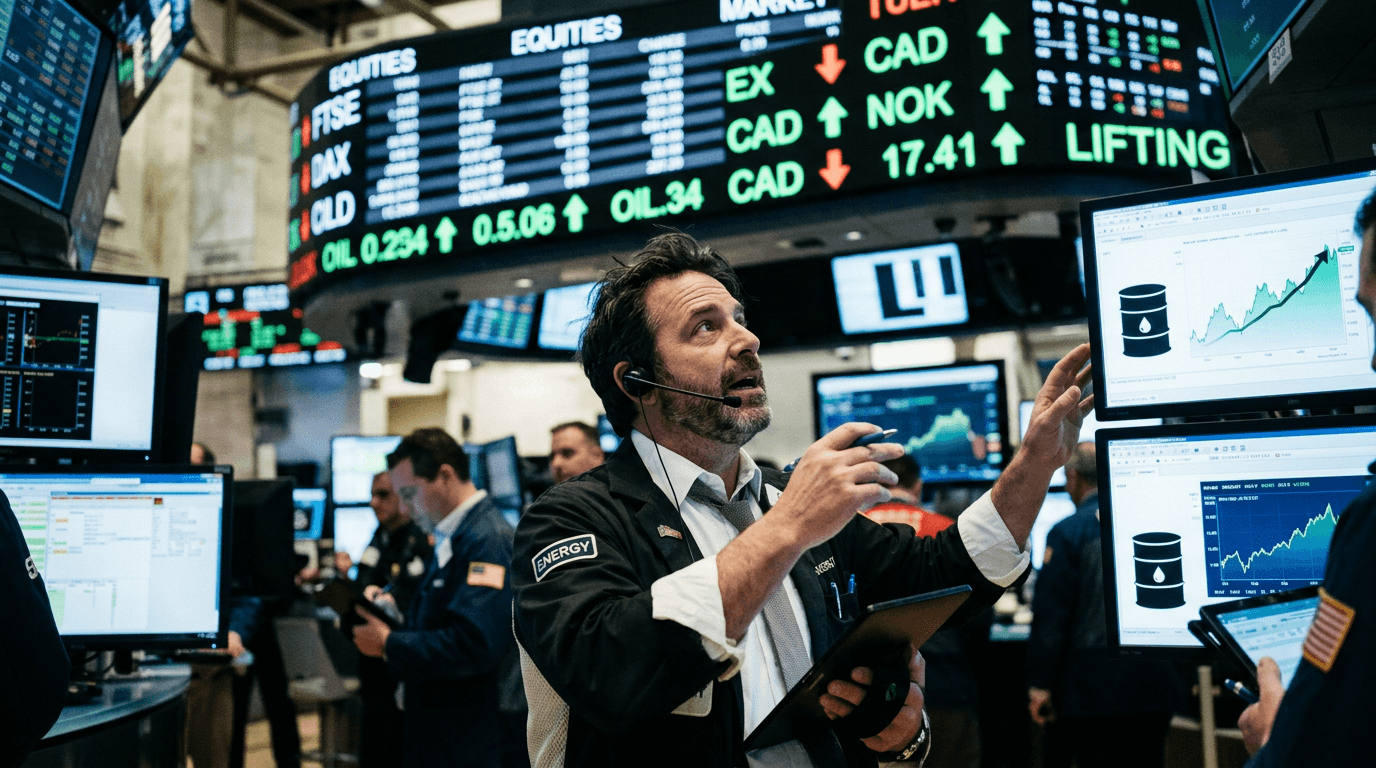
Oil and energy-linked futures are climbing again as renewed Middle East tensions revive the market’s focus on supply risk, shipping disruption, and the knock-on effects for global inflation and risk assets. Fresh headlines around infrastructure vulnerability and tanker routes are pushing traders to reprice energy risk premiums, with crude benchmarks and refined product futures moving higher alongside gas and LNG contracts.
Global Oil And Energy Futures Reprice Risk
The latest flare-up in the Middle East is coming at a time when oil markets were already tight enough for geopolitical shocks to matter more than usual. Reports of U.S. strikes on Iranian targets and threats to choke off regional energy exports have refocused attention on the Strait of Hormuz, the narrow corridor that handles roughly a fifth of the world’s oil and liquefied natural gas trade.[7] When war-risk insurance costs rise and shipping companies reroute vessels to avoid conflict zones, futures markets respond quickly.
Crude futures have been edging higher for several sessions as traders factor in higher odds of sustained supply disruption. Brent and WTI have both extended gains, building on earlier spikes seen when missile exchanges and infrastructure strikes first intensified.[2][3] Refined product futures are also reacting: gasoline and gasoil contracts have recorded outsized moves in recent bouts of tension, reflecting both the direct impact on regional refining capacity and the broader repricing of global fuel costs.[3]
Natural gas and LNG-linked futures in Europe and Asia have similarly firmed in past episodes of Middle East escalation, particularly when pipeline and shipping bottlenecks overlap.[3] For energy traders, these moves are not just about the headline price of crude; they are about the entire complex of contracts tied to production, transport, and refining. The result is a broad-based rally across energy-linked futures whenever conflict risk rises and visibility on physical flows deteriorates.
Why Energy-linked Futures Are Moving
Geopolitical events affect energy futures through several channels, and understanding those mechanisms is critical for anyone trading or simulating strategies in this environment.
First, there is the risk premium: markets assign a higher price to barrels that might be harder to deliver, even if actual production has not yet fallen. Futures curves often reflect this by pushing up near-term contracts disproportionately when logistics and infrastructure face immediate threats.
Second, there is logistical fragility. Tanker traffic through chokepoints like the Strait of Hormuz can be disrupted by military actions, blockades, or insurers pulling coverage.[3][7] That impacts not only crude but also LNG and refined products, making shipping futures and freight-related instruments more volatile.
Third, there is positioning and volatility. When tensions rise, systematic strategies may reduce exposure, options markets reprice implied volatility, and hedgers rush to lock in prices. This flow-driven component can amplify moves, producing multi-day rallies even if the fundamental supply impact is uncertain or potentially short-lived.[6][9] Simulated trading environments allow participants to observe how these dynamics play out in real time without capital at risk, which can be invaluable for learning.
Ripple Effects On Equity Futures And Inflation Expectations
Oil shocks rarely stay confined to the energy complex. Equity index futures, sector futures, and inflation expectations are all sensitive to significant moves in crude and refined products.
Higher energy prices tend to weigh on broader equity futures by tightening financial conditions and squeezing corporate margins, especially in energy-intensive industries such as transportation, chemicals, and manufacturing.[16] At the same time, energy and some commodity-linked sectors may outperform, producing sharp rotations beneath the surface of headline indices. In past Middle East flare-ups, U.S. stock futures have often turned choppy or moved lower as oil spiked, reflecting renewed uncertainty over earnings and consumer demand.[16]
Inflation expectations are another key transmission channel. When traders see oil and gas futures moving higher on geopolitical risk, they reassess the path of headline inflation and, by extension, central bank policy. Breakeven inflation rates, inflation-linked bonds, and interest-rate futures can all react as markets debate how persistent the energy shock might be. If higher fuel costs are perceived as temporary, policy expectations may not shift much; but a prolonged conflict scenario can revive fears that the inflation battle is not fully behind us.[2][9][16]
For macro-focused traders, this environment demands an integrated view: energy futures, equity futures, and rates markets are all responding to the same set of headlines, but with different sensitivities and time horizons. SimFi platforms are well suited to testing cross-asset strategies that hedge or take advantage of these linkages.
Commodity Currencies In The Spotlight: Cad And Nok
Renewed Middle East tensions and rising oil prices also shine a spotlight on commodity-linked currencies, notably the Canadian dollar (CAD) and Norwegian krone (NOK). Both economies are significant energy exporters, and their currencies often exhibit a positive correlation with oil prices over medium-term horizons.
When crude futures climb on supply risk, markets tend to reassess the external balances and fiscal positions of oil-producing countries. That can support CAD and NOK, especially if higher prices are seen as durable enough to boost export revenues and government receipts. At the same time, global risk sentiment matters: if equity markets sell off sharply, risk aversion can offset some of the commodity boost and lead to mixed currency reactions.
Central banks in these economies also have to weigh the inflationary impact of higher energy prices against growth considerations. A sustained rally in oil may prompt markets to price in relatively tighter policy paths for commodity exporters compared with import-dependent economies, further influencing FX futures and options positioning. For traders, watching CAD and NOK alongside energy futures offers a more complete picture of how the shock is being priced across markets.
Practical Takeaways For Traders And Simfi Participants
In periods of renewed Middle East tension, there are several practical principles traders and SimFi participants can apply:
First, map the chain of transmission. Start with crude and gas futures, then trace the impact on refined products, shipping, equity sectors, inflation expectations, and commodity currencies. This helps identify where markets may be underpricing or overpricing risk.
Second, separate short-term volatility from longer-term scenarios. Options markets and front-month futures tend to react most violently to immediate headlines, while deferred contracts and macro instruments reflect views on how long the disruption might last.[6][9] Scenario analysis—short-lived shock versus prolonged conflict—can clarify which trades are tactical and which are strategic.
Third, use risk management and position sizing that respect the current volatility regime. Energy-linked contracts can gap on news, and correlations between assets can change rapidly. Simulated environments provide a safe space to test how strategies behave under stress, from stop-loss placement to cross-asset hedging structures.[16]
Finally, treat geopolitical risk as an ongoing process rather than a one-off event. Even if the market consensus leans toward a swift de-escalation, past episodes have shown that conflicts can ebb and flow, delivering repeated shocks to prices and expectations.[9][16] Staying adaptive—updating views as new information arrives—matters as much as getting the initial call right.
As renewed Middle East tensions lift oil and energy-linked futures, the signal for traders is clear: this is not just an energy story, but a cross-asset repricing of risk. Whether you are trading live markets or refining strategies in a SimFi setting, the current environment offers a real-time case study in how geopolitics, supply chains, inflation, and currencies intersect—and why understanding those linkages is essential for navigating modern markets.