
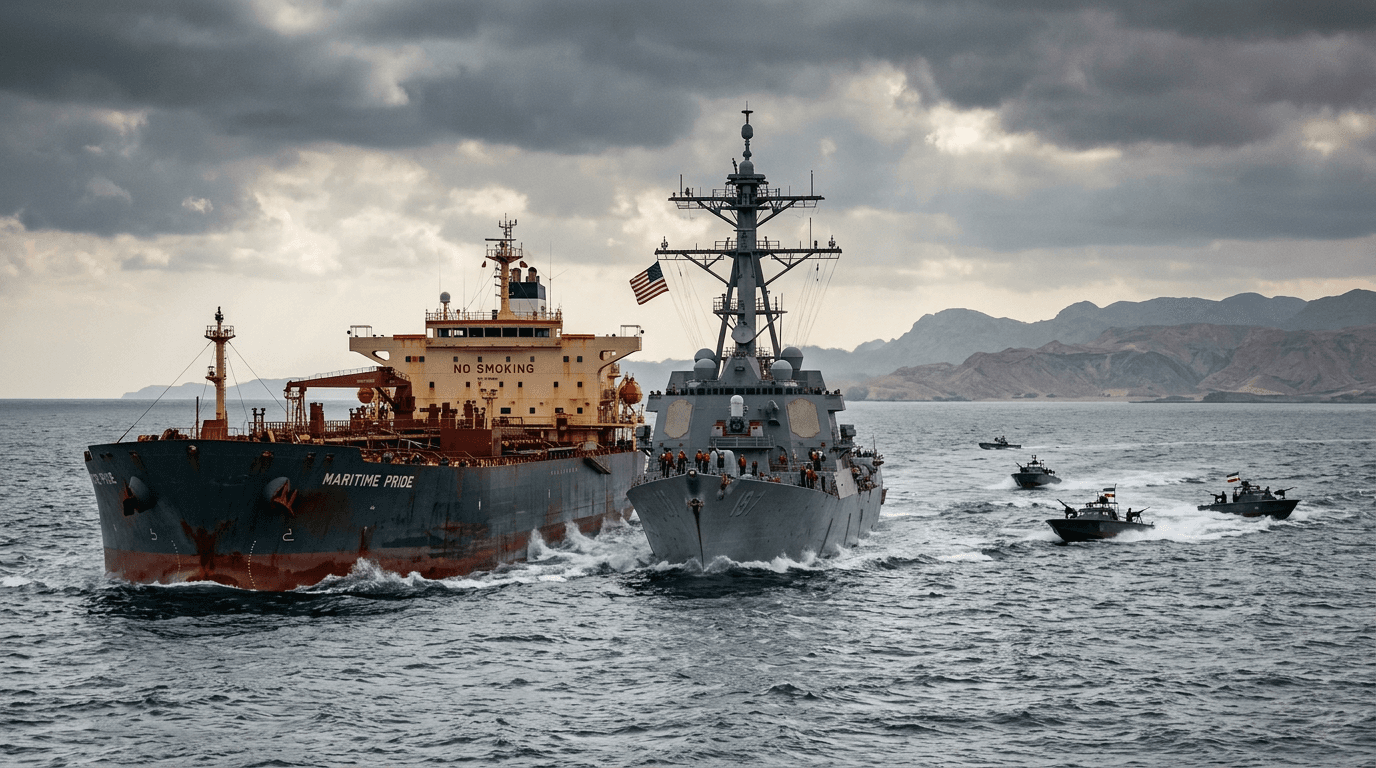
Oil futures snapped their losing streak and pushed higher after reports that Iran attacked a ship in the Strait of Hormuz, violating a fragile cease-fire agreement and reigniting concerns about a wider U.S.–Iran conflict. For traders, this is more than a headline: it’s a real-time lesson in how geopolitics, inflation, and cross-asset pricing are tightly intertwined.
Market Reaction: From Weekly Loss To Geopolitical Rally
Before the attack, crude was drifting lower and on track for a third straight weekly decline as markets focused on softer demand signals and hopes for a lasting cease-fire.[4] The confirmation that Iran had violated the deal by striking a ship abruptly shifted sentiment, sending oil futures higher as traders reassessed the risk of supply disruption and escalation.
Historically, signs of rising U.S.–Iran tensions have tended to lift oil prices as markets price in possible disruptions to shipping and energy infrastructure.[2][3][9] Even limited strikes or attacks can trigger sharp intraday moves as algorithms and discretionary traders alike react to news flow. In this case, the attack has revived concerns that earlier optimism about reopening the Strait of Hormuz and stabilizing prices may have been premature.[4][5]
For simulated traders, this pattern underscores a critical point: trend-following based on recent price action can be upended instantly when geopolitical risk re-enters the picture. A market that looked comfortably bearish on oil can flip bullish in hours when a key chokepoint is threatened.
Why The Strait Of Hormuz Matters So Much
The market’s sensitivity to this attack stems largely from the strategic importance of the Strait of Hormuz. Roughly one-fifth of global oil shipments pass through this narrow waterway, making it one of the most critical energy corridors in the world.[5] When tankers can’t move freely through Hormuz, the effective supply available to global markets is at risk, even if production capacity hasn’t changed.
Recent episodes during the U.S.–Iran conflict have shown how quickly oil prices respond to changes in perceived navigational safety in the strait. Announcements pointing to a cease-fire and hopes that tankers could resume normal transit coincided with steep drops in crude benchmarks.[5] Conversely, renewed threats, military strikes, or attacks on ships tend to push prices higher as traders price in:
- Higher insurance costs for shipping
- Potential rerouting or delays
- The risk of broader regional escalation affecting infrastructure
In a physical sense, it may take time for actual flows to be disrupted. But futures markets react immediately to perceived risk. That disconnect between real-world logistics and near-term pricing is precisely where informed trading decisions can add value, whether in live markets or a SimFi environment.
Inflation, Central Banks, And Cross-asset Spillovers
The latest rally in oil futures is not just a story for energy traders; it carries broader macro implications. Higher crude prices feed directly into fuel costs and indirectly into transportation, manufacturing, and food prices, reinforcing inflation pressures just as many central banks have been looking for room to ease policy.[4][5]
When inflation risks flare up again
- Central banks may delay or scale back interest-rate cuts.
- Rate expectations embedded in bond futures and swaps can shift quickly.
- Real yields and risk premia across assets can reprice.
Earlier signs of progress toward peace and lower oil prices had been associated with falling bond yields and reduced inflation concerns.[4][5] A renewed oil rally complicates that narrative and forces policymakers and traders to reconsider the path of monetary easing.
The spillover into FX and equities can be significant:
- Currencies of major oil importers may weaken as terms of trade deteriorate.
- “Petrocurrencies” tied to energy exports may find support from higher crude.
- Equity sectors respond unevenly: energy shares often outperform, while fuel-intensive industries such as airlines, transport, and some consumer sectors can come under pressure.[1][5]
For multi-asset traders, this means an oil shock is simultaneously an inflation shock, a policy shock, and a sector-rotation catalyst. In a SimFi context, it’s an ideal scenario to practice cross-asset thinking: what happens to energy stocks, rate-sensitive growth names, and FX pairs when oil spikes on geopolitical risk?
How Traders Can Navigate Geopolitical Oil Shocks
Geopolitical catalysts are inherently unpredictable, but the way markets respond tends to follow recognizable playbooks. Traders—both live and simulated—can improve their performance by preparing for these dynamics rather than reacting emotionally to headlines.
Key practical approaches include
- Scenario mapping: Before events occur, outline how different outcomes (cease-fire holds, limited violation, full escalation) might impact energy, FX, bonds, and equities. This helps avoid impulsive decision-making when news hits.
- Time-frame discipline: Intraday spikes on headlines may fade if the situation de-escalates, while sustained disruption can support a longer-term trend. Define whether you are trading the immediate reaction or the medium-term narrative, and size positions accordingly.
- Volatility awareness: Oil rallies driven by conflict risk often come with higher implied volatility. That can affect stop-loss placement, position sizing, and the attractiveness of options strategies.
- Correlation management: When oil moves sharply, correlations across assets can change. What was a diversifying position yesterday might become more tightly linked today. Simulated portfolios allow traders to see how correlation shifts can amplify or dampen overall risk.
In simulated finance, these events are valuable training grounds. You can test how your strategy responds to surprise shocks, adjust your risk management rules, and evaluate whether your assumptions about macro linkages hold up under stress—all without real capital at risk.
Key Takeaways For Simulated Traders
For traders using platforms like E8 Markets, the oil futures rally on renewed U.S.–Iran conflict concerns offers several actionable lessons:
- Geopolitics can abruptly override recent price trends, especially when a critical chokepoint like the Strait of Hormuz is involved.
- Energy moves are macro moves: higher crude can reshape inflation expectations, central-bank paths, FX trends, and sector performance in equities.
- Preparedness matters: pre-built scenarios, clear time frames, and volatility-aware risk rules help turn chaotic news into structured trading opportunities.
- Simulated environments are ideal for stress-testing strategies against complex, multi-layered shocks where politics, economics, and market microstructure intersect.
By approaching this kind of event not just as breaking news but as a rich trading case study, you can sharpen your understanding of how global markets digest risk—and position yourself to navigate the next geopolitical shock with greater confidence and discipline.