
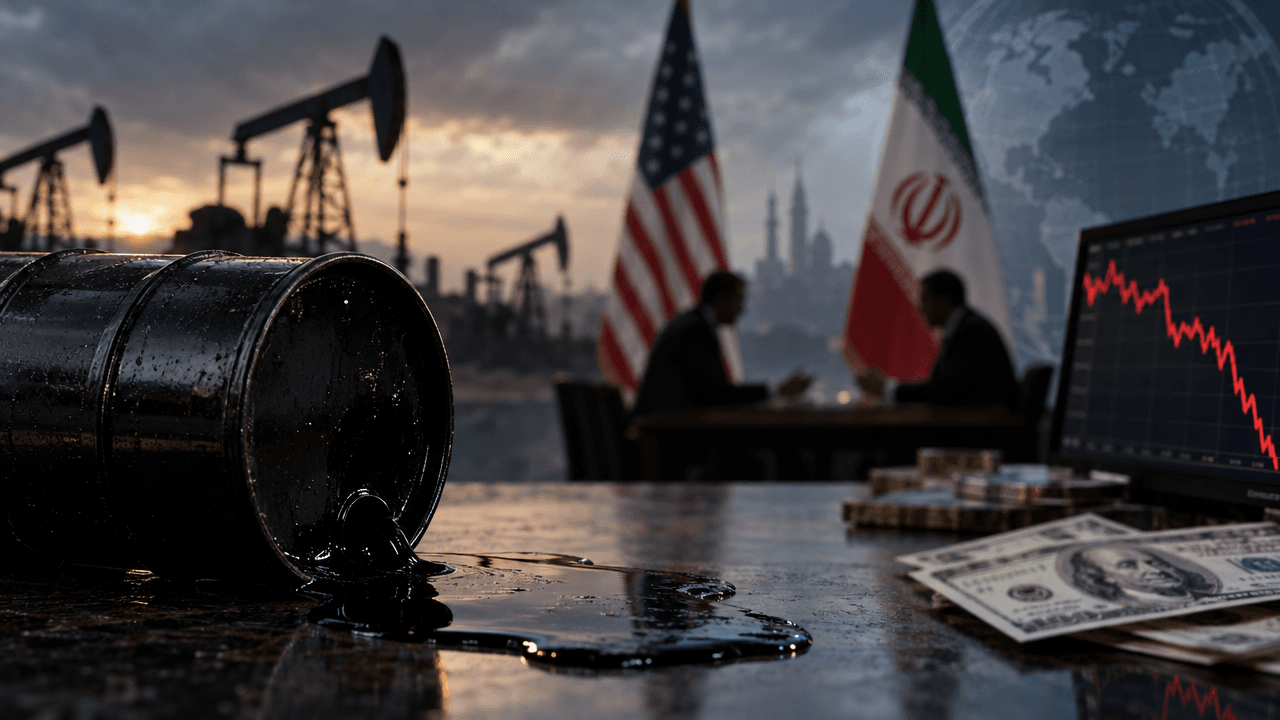
Crude oil has become the market’s central macro signal again. WTI and Brent futures reportedly lost roughly 14% over the week as investors priced in a possible diplomatic path toward ending the U.S.–Iran conflict. The decline followed reports that Washington and Tehran could pursue negotiations, reducing fears of prolonged supply disruptions across the Middle East. [1][3]
The move is important because oil is more than an energy-market story. Crude prices influence inflation, interest-rate expectations, currencies, corporate margins, consumer spending, and global risk appetite. When oil falls this quickly, traders across asset classes must reassess whether the shock is temporary, geopolitical, or the beginning of a broader shift in the macro environment.
Why Oil Is Driving Markets
Oil prices had incorporated a substantial geopolitical premium during the conflict. That premium reflected the possibility of further escalation, damage to energy infrastructure, or disruption to shipping routes such as the Strait of Hormuz. When diplomatic headlines suggested that the conflict might move toward negotiations, traders began unwinding those positions.
The immediate reaction was sharp. On November 2, WTI fell 7.36% to settle at $96.46 per barrel, while Brent declined 7.63% to $104.77. Both benchmarks recorded their steepest daily declines since July. [1][2]
This is a classic example of expectations moving faster than physical supply. Oil production does not instantly rise when peace talks begin, and disrupted logistics may take time to normalize. However, futures markets price anticipated conditions. If traders believe that supply risks will ease in the future, they may sell contracts today.
For SimFi traders, the lesson is straightforward: follow the reason behind a price move, not only the size of the move. A large decline driven by changing geopolitical expectations can behave differently from a decline caused by weak global demand or rising inventories.
Inflation Expectations Move Lower
Cheaper crude can reduce inflation pressure through several channels. The most direct impact is lower gasoline, diesel, jet fuel, and heating costs. Energy also affects transportation, manufacturing, agriculture, and distribution expenses, so a sustained decline can eventually influence the prices of many goods and services.
Lower energy prices may therefore reduce near-term inflation expectations. That can affect government bond yields because investors may expect central banks to face less pressure to keep interest rates elevated. If the market begins pricing a friendlier rate environment, bonds and other rate-sensitive assets can benefit.
The relationship is not automatic. Inflation depends on wages, housing, services, currency movements, fiscal policy, and supply conditions. A temporary oil selloff will not necessarily change the central-bank outlook. Traders should distinguish between a one-day geopolitical reversal and a sustained decline supported by improving supply conditions.
Still, the direction matters. Falling oil can remove one source of inflation risk at a time when markets are highly sensitive to interest-rate expectations.
Currencies And Global Assets
Oil-linked currencies are particularly exposed to a sharp crude decline. The Canadian dollar, Norwegian krone, and currencies of several energy-exporting economies can face pressure when expected export revenues fall. The effect depends on each country’s fiscal position, trade balance, monetary policy, and the degree to which oil is central to its economy.
The U.S. dollar can respond in more complicated ways. Lower oil may support the U.S. economy by reducing household and business costs, but changing risk sentiment, Treasury yields, and expectations for Federal Reserve policy can push the dollar in either direction.
Equity-market effects are equally mixed. Airlines, transportation companies, consumer businesses, and manufacturers may benefit from lower fuel costs. Energy producers, oil-service firms, and highly leveraged producers may face weaker revenue expectations. Broad equity indexes can gain if lower inflation supports growth and interest-rate-sensitive sectors, but they can also weaken if the oil decline signals collapsing global demand.
That is why oil should be treated as a cross-asset transmission mechanism rather than a standalone trade.
What Traders Should Watch Next
The first priority is whether diplomacy produces verifiable progress. Headlines can move crude dramatically, but negotiations may stall or reverse. Reports have already emphasized that optimism about talks must be balanced against the possibility of renewed escalation. [4][7]
The second priority is physical-market confirmation. Traders should monitor shipping activity, export flows, inventory data, refinery demand, and official production guidance. A durable bearish oil trend would be more credible if improving geopolitical conditions were accompanied by recovering supply and subdued demand.
The third priority is the bond market. If Treasury yields decline alongside oil, markets may be interpreting the move as disinflationary. If yields rise despite cheaper crude, investors may be focusing on growth, fiscal concerns, or other inflation sources.
Finally, watch correlations rather than isolated charts. A falling oil price combined with stronger bonds and weaker energy currencies tells a different story from falling oil alongside falling equities and widening credit spreads.
Practical Takeaways For Simfi Traders
Avoid treating a dramatic oil decline as an automatic buy or sell signal for every asset. Begin with the catalyst, identify which markets are directly exposed, and then test whether price action confirms the macro narrative.
Use scenario planning. A diplomatic breakthrough could lead to additional downside in crude, while a breakdown in negotiations could restore part of the geopolitical premium. Position sizes should reflect that two-sided risk.
Track the calendar and headlines, but do not chase every move. Volatility often increases when traders respond to unconfirmed reports. Predefined entry levels, stop-loss rules, and maximum-risk limits are especially important when markets are reacting to geopolitical developments.
Most importantly, remember that oil futures are forward-looking. The market is not simply reporting today’s supply; it is continuously repricing tomorrow’s risk.
Conclusion
The crude plunge has made oil the dominant macro driver because it connects geopolitics with inflation, interest rates, currencies, bonds, and equities. Hopes for an end to the U.S.–Iran conflict have encouraged traders to remove part of the risk premium embedded in energy prices, while the resulting disinflationary impulse is reshaping expectations across financial markets.
For SimFi traders, the best response is disciplined observation. Follow the diplomatic catalyst, confirm it with physical-market data, compare oil’s move with bonds and currencies, and build scenarios instead of relying on a single forecast. Oil may remain volatile, but its signals can become a powerful guide to broader market behavior when interpreted in context.