
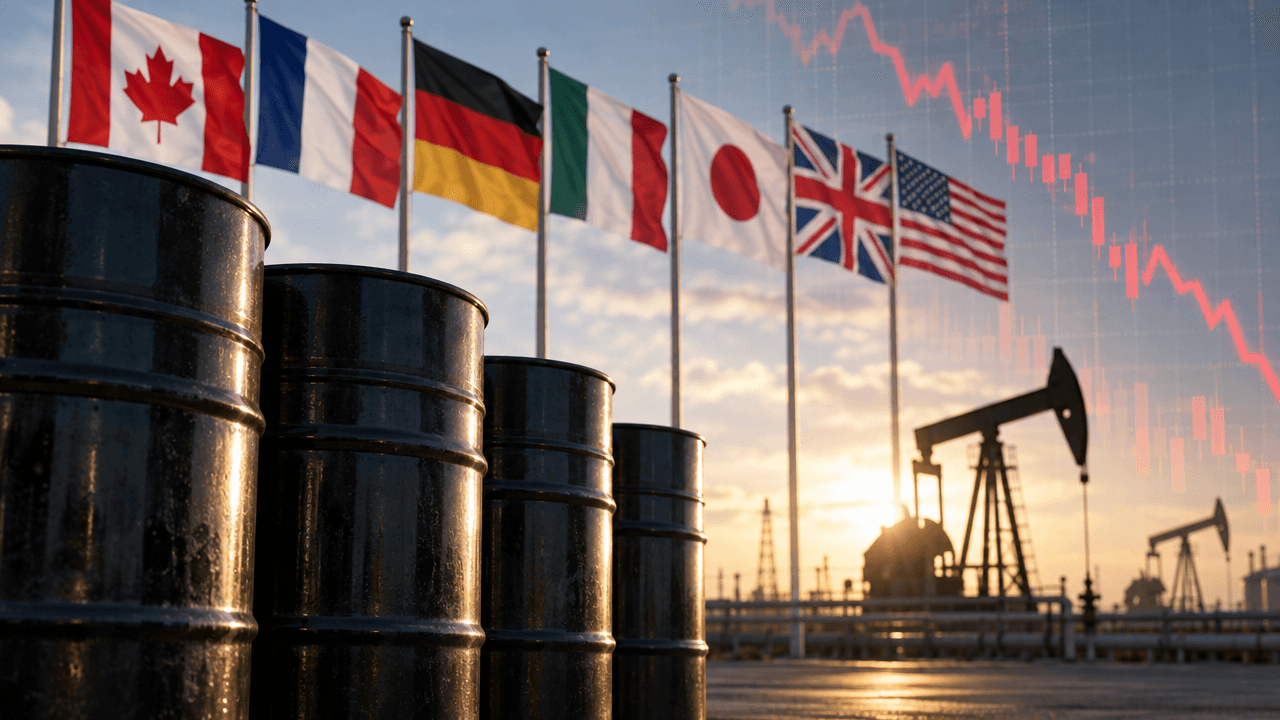
Oil futures are under renewed pressure as the Group of Seven (G7) nations move ahead with a coordinated release of 100 million barrels from strategic reserves, temporarily easing supply fears and cooling some of the heat in energy markets[1][2]. WTI crude has slipped back toward recent lows near the high‑$80s per barrel, reminding traders how quickly sentiment can shift when governments deploy emergency barrels into the market[2]. For active and simulated traders alike, this is a textbook example of how policy decisions can alter the risk–reward landscape in commodities almost overnight[1][3].
What The Strategic Reserve Release Really Means
The G7 plan involves releasing up to 100 million barrels of crude and diesel over roughly four months, coordinated through the International Energy Agency (IEA)[1][3]. A substantial portion of diesel is scheduled to be “front‑loaded,” with significant volumes hitting the market in the first 20 days of the program[3][6]. This is designed to target one of the tightest parts of the barrel—diesel and middle distillates—which have been driving many of the recent price spikes for consumers and businesses[5][7].
Strategic reserves are emergency stockpiles built up over years to safeguard against disruptions, whether from geopolitical crises, natural disasters, or supply bottlenecks[7]. While the total potential reserves among G7 countries are estimated at several hundred million barrels, that still equates to less than a couple of weeks of their combined oil consumption[7]. In other words, this release can influence prices in the short term, but it does not fundamentally rewrite the longer‑term supply–demand balance[6][11].
For traders, the key takeaway is that strategic releases are tactical tools, not structural solutions. They buy time for markets to adjust—by encouraging more production, improving logistics, or dampening demand—but they do not remove the need to track underlying fundamentals such as OPEC+ policy, shale output, and global growth trends[6][11].
How Strategic Releases Pressure Oil Futures
Futures prices reflect expectations about future supply and demand, so any credible increase in near‑term supply tends to weigh on prices, especially in the front‑month contracts[1][10]. Following the G7 announcement, crude and refined product futures sold off sharply, with WTI and Brent retreating and diesel futures dropping by more than 4–8% at one point[2][5][7]. This reaction shows how sensitive energy markets remain to policy‑driven changes in expected supply.
When emergency barrels come to market, traders reassess both outright prices and the futures curve. If the release is sizable and rapid, it can push the market toward contango—where longer‑dated futures trade above near‑dated ones—as the immediate supply picture improves while longer‑term risks remain[1][10]. Conversely, if the market believes the release is too small or too short‑lived, backwardation (higher near‑term prices) can persist, signaling ongoing tightness despite the policy move[6][11].
Volatility also tends to rise around such announcements, as hedgers, speculators, and algorithmic traders reposition. Price swings in diesel futures following the G7 decision highlight how refined products can move even more aggressively than crude when policy targets specific segments of the market[5][7]. For those using simulated trading environments, this is an ideal scenario to study how different futures contracts react to policy shocks without the capital risk.
Implications For Inflation And Central Banks
Energy prices are a major input into headline inflation, and central banks closely monitor developments in oil and diesel markets[7][14]. By releasing strategic reserves, the G7 aims to soften fuel costs for households and businesses and reduce the risk of a renewed inflation spike[2][6]. Lower crude and diesel prices, if sustained, can help moderate headline inflation readings over the coming months, even if core inflation remains driven by other factors[7][11].
However, many analysts caution that the impact of such releases tends to be temporary[11]. Once the 100 million barrels have been deployed and absorbed by the market, prices may begin to reflect underlying fundamentals again—such as supply discipline from major producers and ongoing geopolitical risks[6][11]. If demand stays robust and inventories do not rebuild meaningfully, energy prices could re‑accelerate, potentially complicating central bank efforts to anchor inflation expectations[7][11].
For traders who care about macro trends, the most important point is that energy policy and monetary policy are increasingly intertwined. A strategic reserve release can influence expectations for future interest rates if it meaningfully shifts inflation forecasts, even if only for a few quarters[7][14]. This creates cross‑asset opportunities and risks, from commodity futures to bond yields and currency moves.
Trading And Simulated Strategies To Consider
In both live and simulated markets, traders can use episodes like the G7 reserve release to test how different strategies perform under policy‑driven shocks. One approach is to examine spread trades along the futures curve—such as calendar spreads between near‑dated and longer‑dated contracts—to capture changes in term structure as emergency barrels hit the market[1][10]. If the front of the curve softens relative to later months, short‑front/long‑back strategies may benefit, while the opposite might favor long‑front/short‑back positioning.
Another avenue is relative value between crude and refined products. Because diesel and gasoline can react more sharply than crude, traders might explore crack spreads (the margin between crude and products) to see how refinery economics change as policy focuses on diesel supplies[5][7]. Simulated trading platforms are particularly useful for testing these ideas, allowing traders to observe P&L behavior across multiple contracts without real‑world execution risk.
Risk management remains critical, even in simulation. Policy announcements can lead to whipsaw moves as markets reassess the scale, timing, and credibility of government actions. Building scenarios around different outcomes—for example, the release being extended, curtailed, or followed by new supply from producers—helps traders develop robust playbooks for future events. This disciplined approach translates well when transitioning from simulated environments to live capital deployment.
Key Takeaways For Simfi Traders
First, understand that strategic reserve releases are powerful short‑term tools that can quickly reshape price expectations, especially in front‑month futures and refined products[1][2][5]. Second, recognize that these measures are finite; once the barrels are deployed, markets will again focus on structural drivers such as production, demand trends, and geopolitics[6][11]. Third, use this episode as a learning opportunity in simulated trading to study how futures curves, spreads, and volatility respond when policy steps into the market.
For traders on SimFi platforms, the current situation offers a live case study in macro‑driven commodities trading: a coordinated policy move, a measurable supply impact, and a direct linkage to inflation and monetary policy expectations[2][7][14]. By observing and testing strategies around these dynamics now, you build the skill set needed to navigate future episodes—whether they involve energy, metals, or other asset classes—where policy and markets meet.